
Imagine a bustling Thai street market, the air thick with tantalizing aromas and the sound of sizzling skewers. One dish that always draws me in is the irresistible Thai Pork Jerky, known as Moo Dad Deaw. With each bite, you experience a perfect harmony of sweet, savory, and slightly peppery flavors that dance on your palate.
I was on the hunt for a protein-packed snack that could satisfy my cravings without any preservatives, and this recipe fit the bill perfectly. Not only is it freezer-friendly, making it a great option for meal prep, but it also allows for endless customization. Whether you prefer the tender, chewy texture of dehydrated jerky or the crispy crunch from frying, this recipe offers the best of both worlds.
Join me as we delve into crafting this delicious, traditional treat from Northeastern Thailand, perfect for anyone tired of the same old fast food routine!
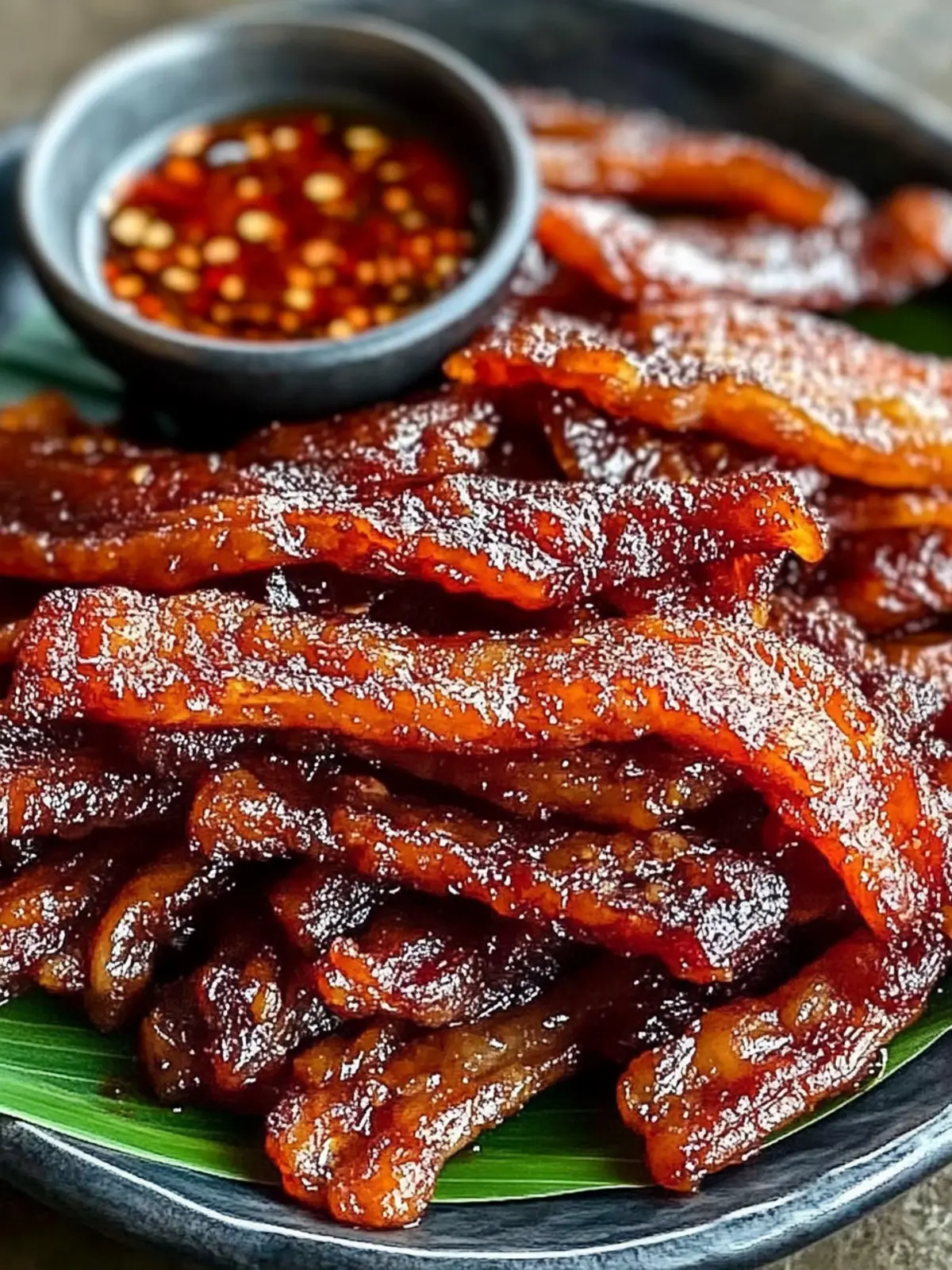
Why is Thai Pork Jerky so addictive?
Savory goodness: With its unique marinade of garlic, coriander, and fish sauce, every bite of this jerky is an explosion of flavor.
High-protein delight: Packed with protein, it’s a guilt-free snack that satisfies hunger and supports an active lifestyle.
Freezer-friendly: Make a batch ahead of time, and simply thaw when you’re craving something delicious.
Versatile cooking methods: Whether you prefer frying for crunch or dehydrating for a chewy bite, this recipe accommodates your cooking style.
Cultural flavor: Bringing a taste of Northeastern Thailand to your kitchen, each piece of jerky is a celebration of authentic street food traditions.
Craft this delightful snack and discover your new favorite alternative to fast food!
Thai Pork Jerky Ingredients
For the Marinade
- Pork (shoulder or butt) – This is the main protein source; feel free to substitute with beef or chicken for variety.
- Garlic – Adds a pungent aroma and depth; feel free to increase for more flavor.
- Roasted coriander seeds – Essential for that earthy taste; omitting is okay, but you’ll miss the authentic flavor.
- Roasted cumin seeds – Offers warmth and depth; ground cumin can be used if whole seeds aren’t available.
- Roasted black peppercorns – Delivers heat and complexity; freshly ground is always best!
- Salt – Enhances flavor; adjust it based on taste preferences.
- Palm sugar – Provides a distinct sweetness; brown sugar is a substitute, yet it changes the flavor profile.
- Fish sauce – Contributes umami; coconut aminos are a great alternative for those avoiding seafood.
How to Make Thai Pork Jerky
-
Roast spices: Lightly roast the coriander, cumin, and black peppercorns in a dry pan for about 20 seconds, or until they become fragrant. This step unlocks their rich flavors!
-
Crush spices: Use a mortar and pestle to create a fine paste with the roasted spices, adding in the garlic. You want a smooth mixture that will coat the pork beautifully.
-
Marinate pork: In a bowl, combine the spice paste with the palm sugar, fish sauce, and salt. Coat the pork slices thoroughly, ensuring every piece is well-covered. Let them marinate for at least 4 hours or overnight for best flavor.
-
Dehydrate pork: Spread the marinated pork slices on a drying rack in direct sunlight for 6–12 hours, or use a dehydrator set at 145–160°F for 5–7 hours, until the jerky is firm but not hard.
-
Cook pork:
- For frying: Deep-fry the pork slices in hot oil at 350–375°F for 3–5 minutes, just until they are golden brown and crispy.
- For grilling: Grill them spaced apart, turning occasionally, until they are nicely charred and cooked through.
- Serve: Enjoy your Thai Pork Jerky hot, either on its own or paired with sticky rice and a spicy dipping sauce for a delightful snack experience!
Optional: Serve with fresh cilantro for garnish and an extra burst of flavor.
Exact quantities are listed in the recipe card below.
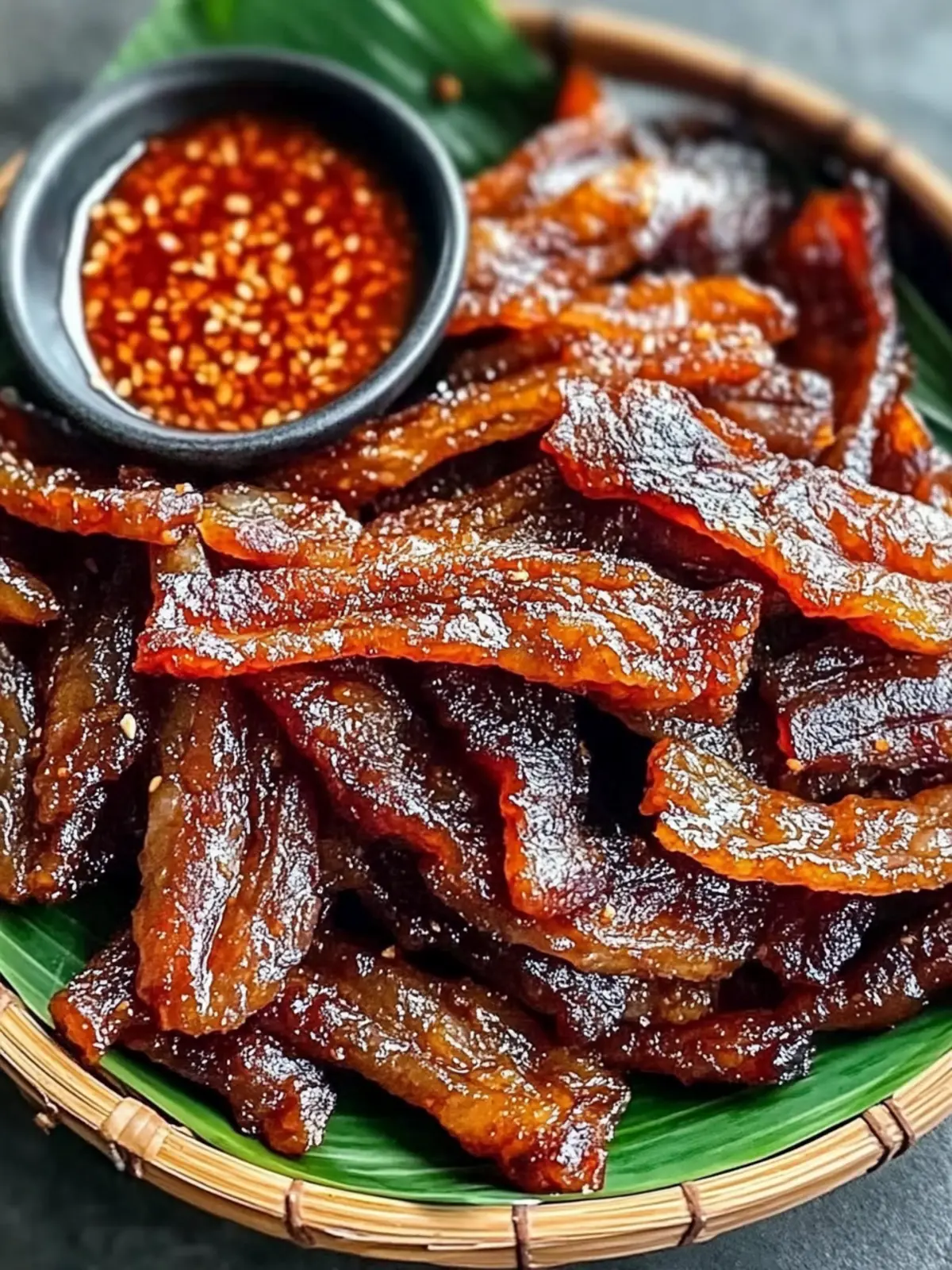
Expert Tips for Thai Pork Jerky
-
Spice Selection: Use whole spices for a richer flavor. Roasting them enhances their aromatic oils, which is essential for flavorful Thai Pork Jerky.
-
Marination Time: Don’t rush the marination! Allowing the pork to soak overnight in the spice blend results in deeper flavors and tender textures.
-
Temperature Control: When frying, maintain the oil temperature between 350–375°F to ensure the jerky is crispy without burning. A thermometer helps!
-
Dehydrator Use: If sunlight drying isn’t an option, a dehydrator ensures consistent results. It also locks in flavors, making the pork jerky just right!
-
Freezing Tips: For convenience, freeze your marinated pork before cooking. This allows you to enjoy homemade Thai Pork Jerky at any time!
-
Flavor Customization: Feel free to experiment with additional spices like chili powder or lemongrass to make the jerky uniquely yours!
What to Serve with Thai Pork Jerky?
Elevate your snacking experience by pairing this flavorful treat with complementary sides and drinks that enhance its vibrant taste.
-
Sticky Rice: A classic companion that offers a comforting base for the savory jerky; it soaks up all those delicious flavors.
-
Nam Jim Jaew: A spicy dipping sauce that delivers a perfect balance of heat and tang; it’s an exciting contrast to the jerky’s sweetness.
-
Cucumber Salad: Fresh cucumbers tossed in vinegar and chili provide a refreshing crunch that cuts through the rich flavors of the jerky.
-
Thai Basil: Fresh Thai basil leaves add a fragrant, herbal note that complements the goodness of Moo Dad Deaw beautifully. Try folding some into your bites for a burst of flavor!
-
Craft Beer or Thai Iced Tea: A cold craft beer adds a refreshing fizz, while sweet, creamy Thai iced tea cools off spice while harmonizing with the dish’s flavors.
-
Mango Slices: Sweet, juicy mango slices create a tropical balance, offering a delightful contrast between heat and sweetness that you won’t want to miss.
With these pairings, every bite of your Thai Pork Jerky can transport you straight to the streets of Thailand!
Make Ahead Options
These Thai Pork Jerky pieces are a meal prep marvel, perfect for busy weeknights! You can marinate the pork slices up to 24 hours in advance, allowing the flavors to intensify. Simply follow the marination steps and refrigerate the coated meat until ready to dehydrate. Additionally, the dehydrated jerky can be stored in an airtight container and lasts for up to 3 days at room temperature, or can be frozen for later use — just thaw it before frying or grilling. To maintain the quality of your Thai Pork Jerky, ensure the meat is spread out evenly while dehydrating, as this helps achieve that ideal chewy texture. When you’re ready to enjoy, simply fry or grill the jerky until crispy and serve, ensuring a delicious protein-packed snack is just minutes away!
Thai Pork Jerky Variations
Feel free to mix things up and make this recipe your own—your taste buds will thank you!
-
Beef Option: Substitute pork with beef for a different protein twist; it’s equally delicious.
Beef adds a richer, deeper flavor that complements the marinade beautifully, making for a heartier snack. -
Chicken Variety: Use chicken thighs instead of pork for a lighter jerky.
Chicken’s mild flavor allows the marinade to shine through, providing a satisfying balance of taste and texture. -
Heat Level Boost: Add crushed red pepper flakes or fresh chilies to the marinade for a spicy kick.
Spice lovers will enjoy the added warmth, making each bite even more exciting. -
Sweetness Balance: Swap palm sugar for honey or maple syrup for a unique sweetness.
Each alternative gives a different flavor profile, introducing delightful nuances to the overall taste. -
Herb Infusion: Incorporate finely chopped lemongrass or Thai basil into the marinade for extra aromatics.
The herbs elevate the flavors, bringing a fresh and fragrant twist to your jerky. -
Nutty Flavor: Add a tablespoon of toasted sesame oil to the marinade for a nutty undertone.
This simple addition enhances the richness of the jerky, making it a truly gourmet treat. -
Texture Play: For a crunchier option, double fry the jerky after dehydration for a crispy finish.
The extra frying step turns your jerky into an irresistible snack that’ll be hard to put down! -
Vegan Delight: Substitute the pork with firm tofu, marinating it the same way for a plant-based experience.
Tofu absorbs flavors beautifully, making it a wonderful, protein-packed alternative for everyone to enjoy.
How to Store and Freeze Thai Pork Jerky
Room Temperature: Store Thai Pork Jerky in an airtight container at room temperature for up to 3 days; keep it in a cool, dry place away from sunlight.
Fridge: For longer freshness, refrigerate the jerky in a tightly sealed container for up to 1 week, ensuring it remains moisture-free.
Freezer: Freeze the jerky in a freezer bag or wrapped tightly in plastic wrap for up to 3 months. Thaw in the fridge before serving or enjoy straight from the freezer for a quick snack.
Reheating: If desired, reheat the jerky in the oven at a low temperature (around 200°F) for a few minutes to restore its texture before serving.
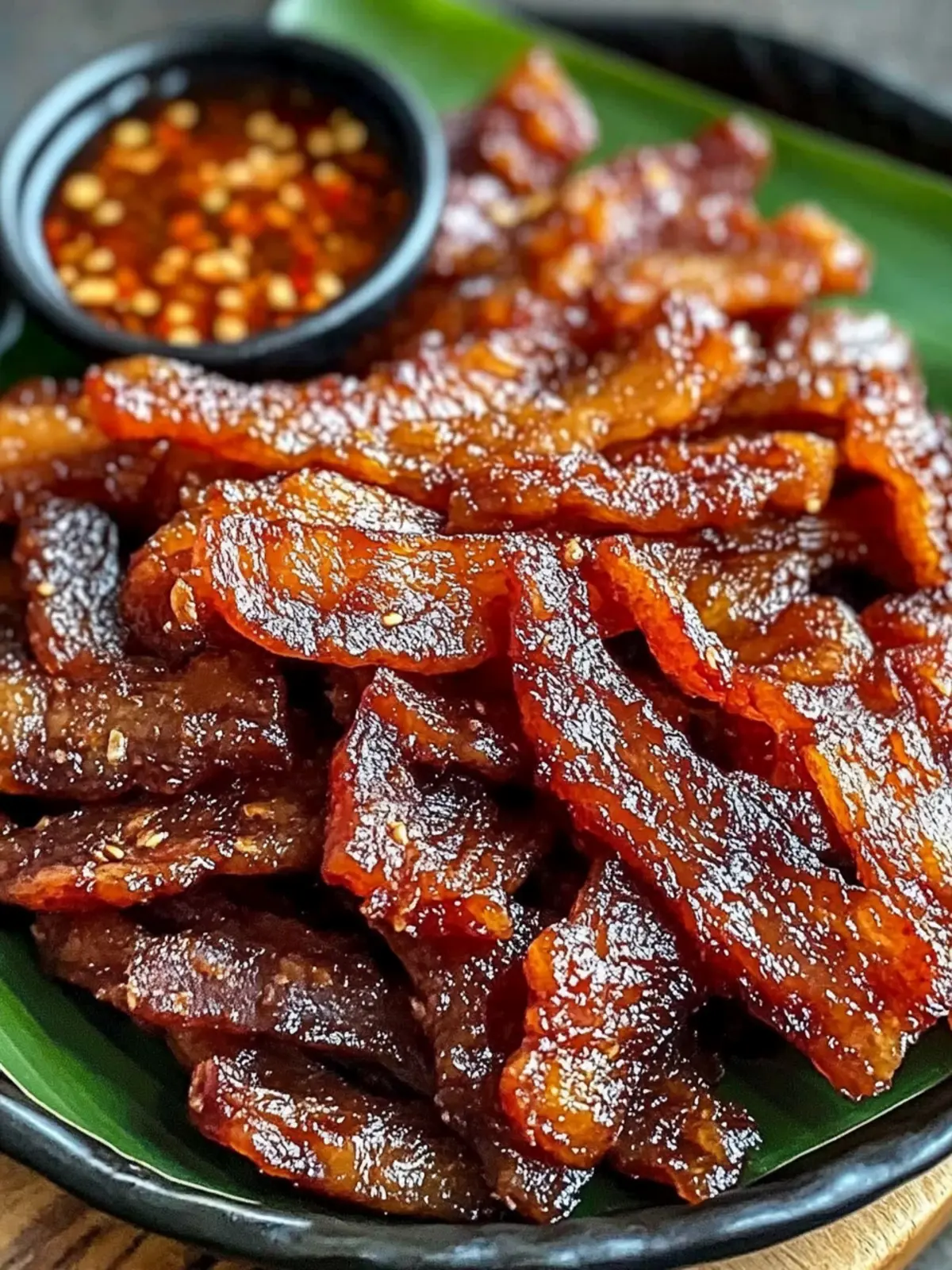
Thai Pork Jerky Recipe FAQs
How do I choose the right pork for Thai Pork Jerky?
Look for pork shoulder or butt with a good balance of fat and meat. Marbled cuts add flavor and tenderness. If you’re looking for alternatives, beef or chicken can also work well; just adjust the cooking times accordingly.
How should I store my homemade Thai Pork Jerky?
Store your jerky in an airtight container at room temperature for up to 3 days. For a longer shelf life, place it in the refrigerator where it can last about 1 week. If you’re keeping it longer, freezing is the best option; it will stay good for up to 3 months in a well-sealed freezer bag.
Can I freeze Thai Pork Jerky?
Absolutely! After dehydrating or cooking your jerky, let it cool completely. Then, wrap it tightly in plastic wrap or place it in a freezer bag. Be sure to remove as much air as possible. When you’re ready to enjoy it, just thaw it in the refrigerator overnight or take it out for a quick snack straight from the freezer.
What if my jerky turned out too chewy or hard?
If you find your jerky is overly chewy, next time try reducing the dehydration time. After marinating, it’s crucial to monitor how long you dry it. Aim for a firm yet slightly pliable texture. If you’re cooking, avoid frying too long; 3-5 minutes is usually sufficient for a crispy finish without losing tenderness.
Are there any dietary considerations for making Thai Pork Jerky?
Be mindful of allergies, particularly to fish sauce if you have seafood sensitivities. For a non-seafood option, coconut aminos can be a suitable substitute for fish sauce. If you’re sharing this treat with pets, remember that many seasonings and garlic can be harmful to them, so keep jerky treats pet-free!
Can I customize the spice levels in the marinade?
Absolutely! One of the wonderful aspects of this Thai Pork Jerky is its adaptability. Start by adding crushed chilies to the spice paste for a kick. If experimenting with spices like lemongrass or chili powder, add them according to your heat preference—just remember, it’s always easier to add than to take away!

Delicious Thai Pork Jerky: A Homemade Protein Snack
Ingredients
Equipment
Method
- Lightly roast the coriander, cumin, and black peppercorns in a dry pan for about 20 seconds, until fragrant.
- Use a mortar and pestle to create a fine paste with the roasted spices, adding in the garlic.
- In a bowl, combine the spice paste with the palm sugar, fish sauce, and salt. Coat the pork slices thoroughly.
- Spread the marinated pork slices on a drying rack in direct sunlight for 6–12 hours, or use a dehydrator at 145–160°F for 5–7 hours.
- For frying, deep-fry the pork slices in hot oil at 350–375°F for 3–5 minutes until golden brown and crispy.
- For grilling, grill the pork slices, turning occasionally, until nicely charred and cooked through.
- Enjoy your Thai Pork Jerky hot or paired with sticky rice and a spicy dipping sauce.