
As the chilly winds of winter sweep in, I find myself craving the comforting warmth of a steaming bowl of Seolleongtang, a traditional Korean beef bone soup that never fails to soothe the soul. The rich aroma of simmering beef bones, mingled with garlic and ginger, fills my kitchen, instantly transporting me to the bustling streets of Seoul. This dish embodies the essence of home-cooked joy: warm, fulfilling, and perfect for sharing with loved ones around a cozy dining table.
You may think that such a complex flavor must take hours of expert culinary technique, but here’s the delightful twist—it’s surprisingly simple to make! With just a handful of ingredients and a bit of patience, you can create a soul-warming soup that’s not only delicious but also a feast for the eyes with its creamy broth and vibrant green garnish. Whether it’s an intimate dinner or a relaxed weekend gathering, this recipe promises to be the highlight, banishing any last cravings for fast food. Get ready to immerse yourself in an experience that celebrates flavor and heritage!
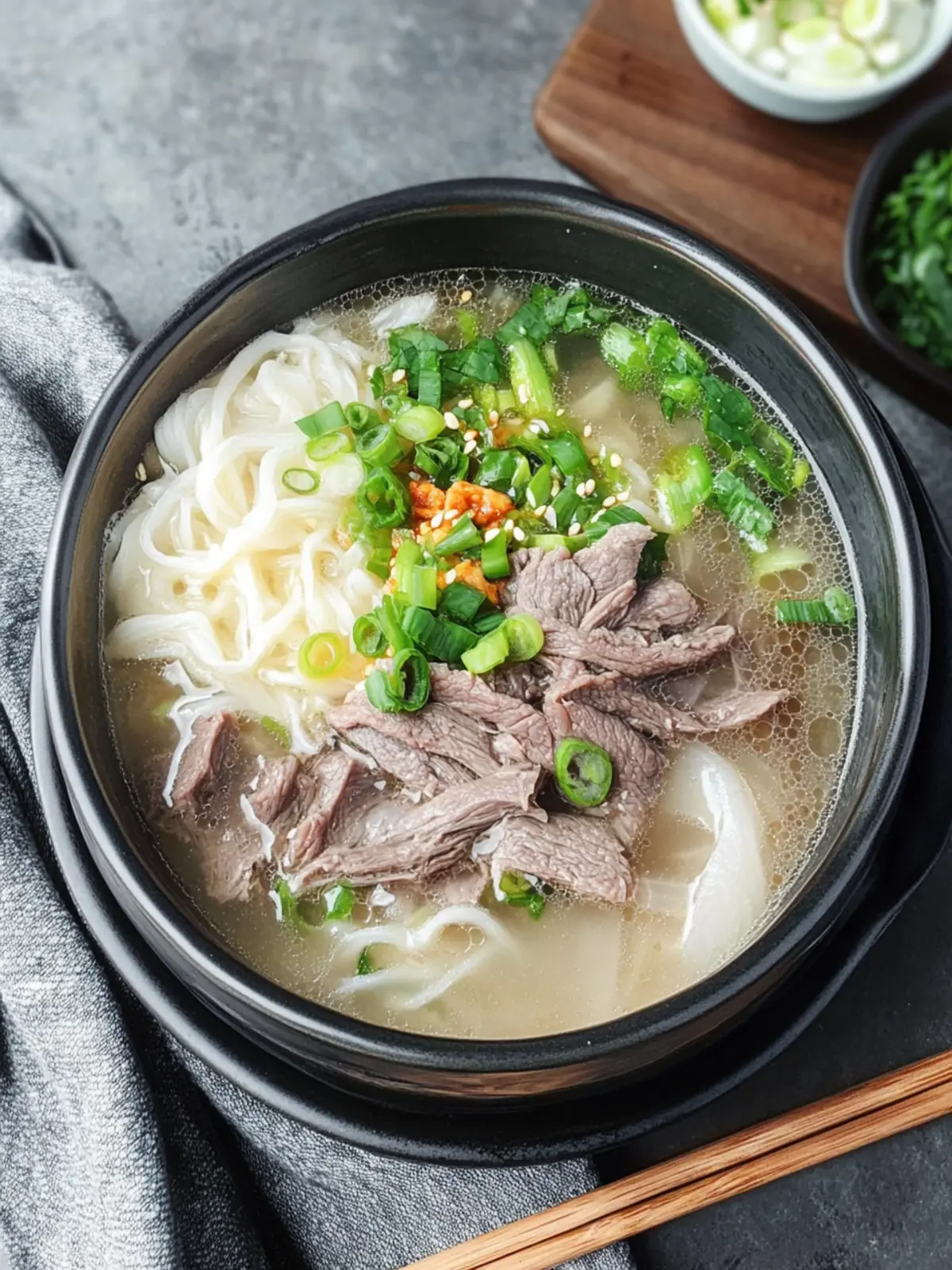
Why is Korean Beef Bone Soup so special?
Soul-warming goodness: This dish is perfect for chilly nights, offering a comforting bowl that soothes both body and spirit.
Simple ingredients: You only need a few pantry essentials, making it easy to whip up a flavorful meal.
Rich, savory broth: The long simmer creates an incredibly depth of flavor that will impress any guest.
Crowd-pleaser: Ideal for family gatherings, everyone will appreciate its heartiness and warmth.
Versatile dish: Enjoy it on its own or serve with rice, enhancing the experience for different occasions.
With this delightful Korean Beef Bone Soup recipe, you’re sure to elevate your home-cooked meal game!
Korean Beef Bone Soup Ingredients
• Gather these essential items to create your delicious Korean Beef Bone Soup!
For the Broth
- Beef bones – the key to a rich and savory broth, choose marrow bones for extra flavor.
- Onion – adds sweetness and depth; quarter it to maximize flavor extraction.
- Garlic cloves – minced for a robust aroma and taste; feel free to adjust to your liking.
- Ginger – sliced to bring warmth and a slight spice, balancing the richness of the beef.
- Salt – season to taste; start with a bit and adjust as the soup simmers.
- Black pepper – just a teaspoon elevates the overall flavor profile, making it delightful.
For Serving
- Green onions – chopped to garnish, adding freshness and a pop of color.
- Cooked rice – serve underneath the soup for a fulfilling meal experience.
With these simple yet essential ingredients, your Korean Beef Bone Soup will not only nourish the body but also bring joy and warmth to your dining table. Happy cooking!
How to Make Korean Beef Bone Soup
-
Rinse the beef bones under cold water, ensuring to remove any impurities or excess blood. This step prepares them for a clean and rich broth.
-
Boil the bones in a large stockpot, covering them with enough water. Bring to a rolling boil, then reduce the heat to a gentle simmer. Allow the bones to simmer for at least 4 hours, stirring occasionally.
-
Add the quartered onion, minced garlic, and sliced ginger to the pot. Season with salt and black pepper. Continue to simmer for an additional hour, letting all the flavors meld beautifully.
-
Strain the broth using a fine mesh strainer or cheesecloth to remove the bones and aromatics. This step will leave you with a crystal-clear, rich liquid ready for serving.
-
Serve the hot Korean Beef Bone Soup over a bowl of cooked rice and finish with a sprinkle of chopped green onions for a fresh, vibrant touch.
Optional: Top with a dash of sesame oil for extra richness.
Exact quantities are listed in the recipe card below.
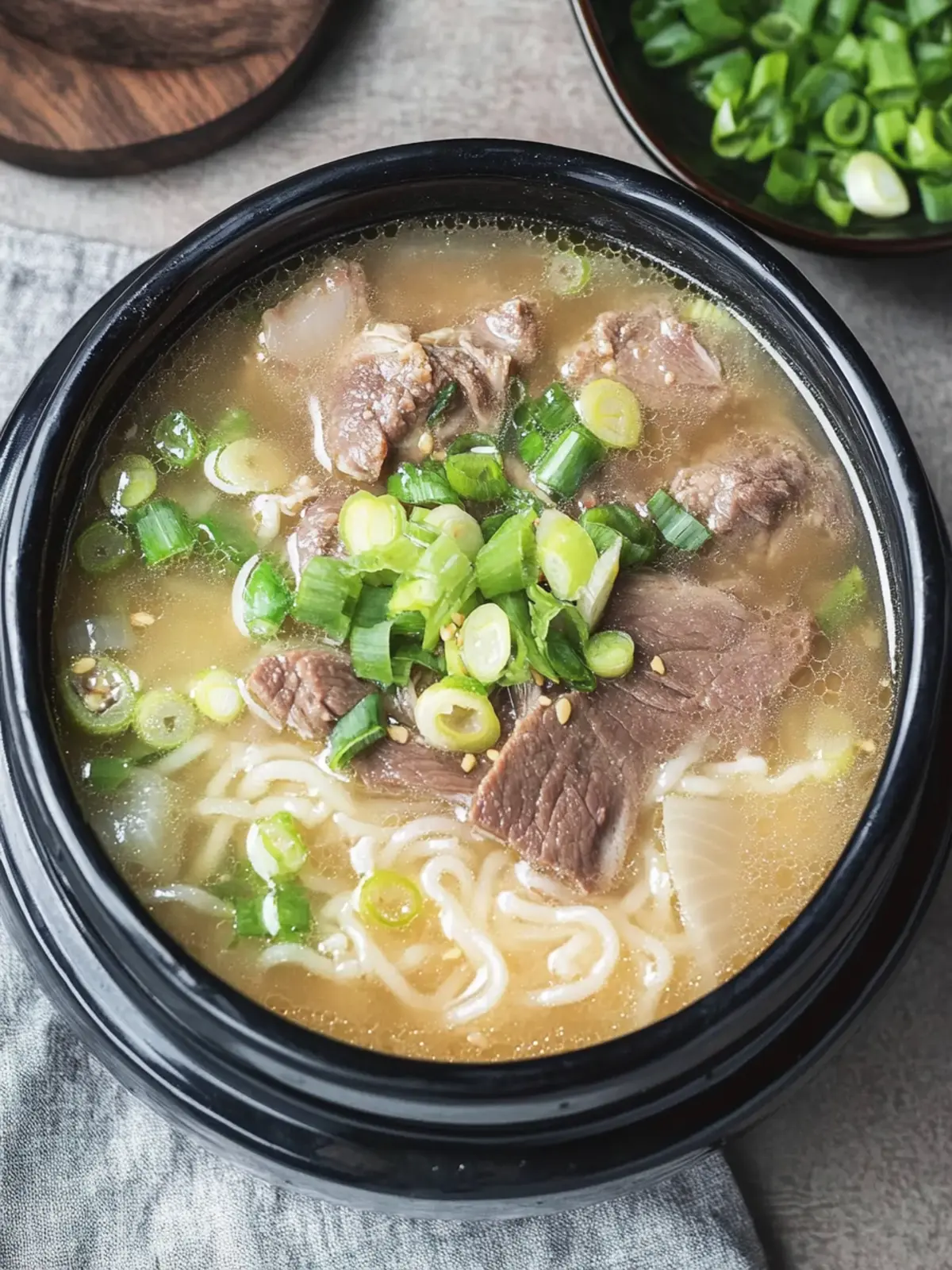
How to Store and Freeze Korean Beef Bone Soup
Fridge: Store leftover soup in an airtight container for up to 3 days. Make sure to cool it completely before refrigerating to maintain freshness.
Freezer: Freeze the Korean Beef Bone Soup for up to 3 months in freezer-safe containers. Leave space for expansion as it freezes to prevent leaks.
Thawing: To enjoy your frozen soup, thaw it overnight in the fridge or use the microwave’s defrost setting. Reheat in a pot over medium heat until piping hot.
Reheating: When reheating, add a splash of water or broth if the soup has thickened. Enjoy your comforting bowl just like the first time!
What to Serve with Korean Beef Bone Soup?
Elevate your meal with delightful accompaniments that enhance the rich flavors of this soul-warming dish.
- Steamed Vegetables: Lightly steamed broccoli and carrots add freshness and color, balancing the richness of the soup.
- Kimchi: The tangy kick of this fermented side dish complements the savory broth beautifully, creating a dynamic flavor experience.
- Manduguk (Korean Dumpling Soup): Serve this alongside the beef bone soup for a feast of comforting flavors and textures, perfect for family gatherings.
- Banchan (Korean Side Dishes): A selection of pickled vegetables, such as cucumber or radish, brightens the meal and provides a crunchy contrast.
- Savory Pancakes: Cheesy scallion pancakes are indulgent and crispy, making them a delightful contrast to the soft, soothing broth.
- Jujube Tea: This sweet and warming beverage enhances the meal’s cozy vibe, making it an ideal drink pairing for those chilly evenings.
- White Rice: While it’s already included in the soup, serving extra rice allows you to savor every drop of that rich broth.
- Sesame Spinach Salad: The nutty flavor and crunch add a fresh element that pairs harmoniously with the hearty soup.
Enjoy crafting a memorable meal that not only satisfies but also brings warmth to your dining table!
Korean Beef Bone Soup Variations
Embrace your creativity in the kitchen by exploring these fun twists on this warming classic!
-
Spicy Kick: Add sliced fresh chili peppers for a zesty and fiery flavor that elevates the broth’s warmth. A little heat can make all the difference!
-
Vegetable Boost: Incorporate carrots, radishes, or mushrooms to enhance the nutrition and add a delightful texture to your soup. Each vegetable brings its unique flavor.
-
Herb Infusion: Toss in fresh herbs like cilantro or thyme during the last simmering minutes for a fragrant, aromatic twist that brightens each bowl. Herbs can really elevate the taste profile!
-
Bone Variety: Experiment with different cuts, like oxtail or short ribs, for a rich and flavorful broth with added complexity. Different bones yield different depth—what’s not to love?
-
Creamy Broth: Stir in a splash of coconut milk or heavy cream at the end for a silky, creamy finish that takes the broth to another level. It’s like a warm hug in a bowl!
-
Noodle Addition: Serve the soup over freshly cooked noodles like rice vermicelli or udon for a heartier meal, perfect for slurping and savoring. Noodles add that comforting carbohydrate magic!
-
Vegetarian Variation: Substitute beef bones with hearty vegetables like portobello mushrooms and use vegetable broth as a base for a delicious vegetarian take. You won’t miss the meat!
-
Ginger Overload: For ginger lovers, increase the amount of sliced ginger and even add ginger juice for extra zing and a refreshing flavor boost. It’s aromatic and simply wonderful!
Make Ahead Options
These Korean Beef Bone Soup preparations are perfect for busy cooks looking to save time! You can prepare the broth up to 24 hours in advance by following all the cooking steps and then refrigerating the strained broth in an airtight container. This not only enhances the flavors but also allows for convenience when you’re ready to serve. When you’re set to enjoy your meal, simply reheat the broth and follow the final step of serving it over cooked rice, garnished with green onions. Just remember to taste and adjust the seasoning after reheating to ensure it’s just as delicious as when it was first made! With these make ahead options, you’ll have a comforting meal waiting for you with minimal effort.
Expert Tips for Korean Beef Bone Soup
- Quality Bones: Choose marrow bones for a richer flavor and creamier texture in your broth; avoid bones that appear dried out or cracked.
- Simmer Low: Maintain a low simmer for at least 4 hours; boiling too hard can make the broth cloudy instead of clear and rich.
- Add Aromatics: Incorporating onion, garlic, and ginger early enhances the depth of flavor; wait too long and they won’t infuse the broth fully.
- Season Gradually: Start with a small amount of salt and adjust as needed; you can always add more, but can’t take it out once it’s in!
- Garnish for Freshness: Don’t skip the green onions; they brighten the dish and add texture, elevating your Korean Beef Bone Soup experience.
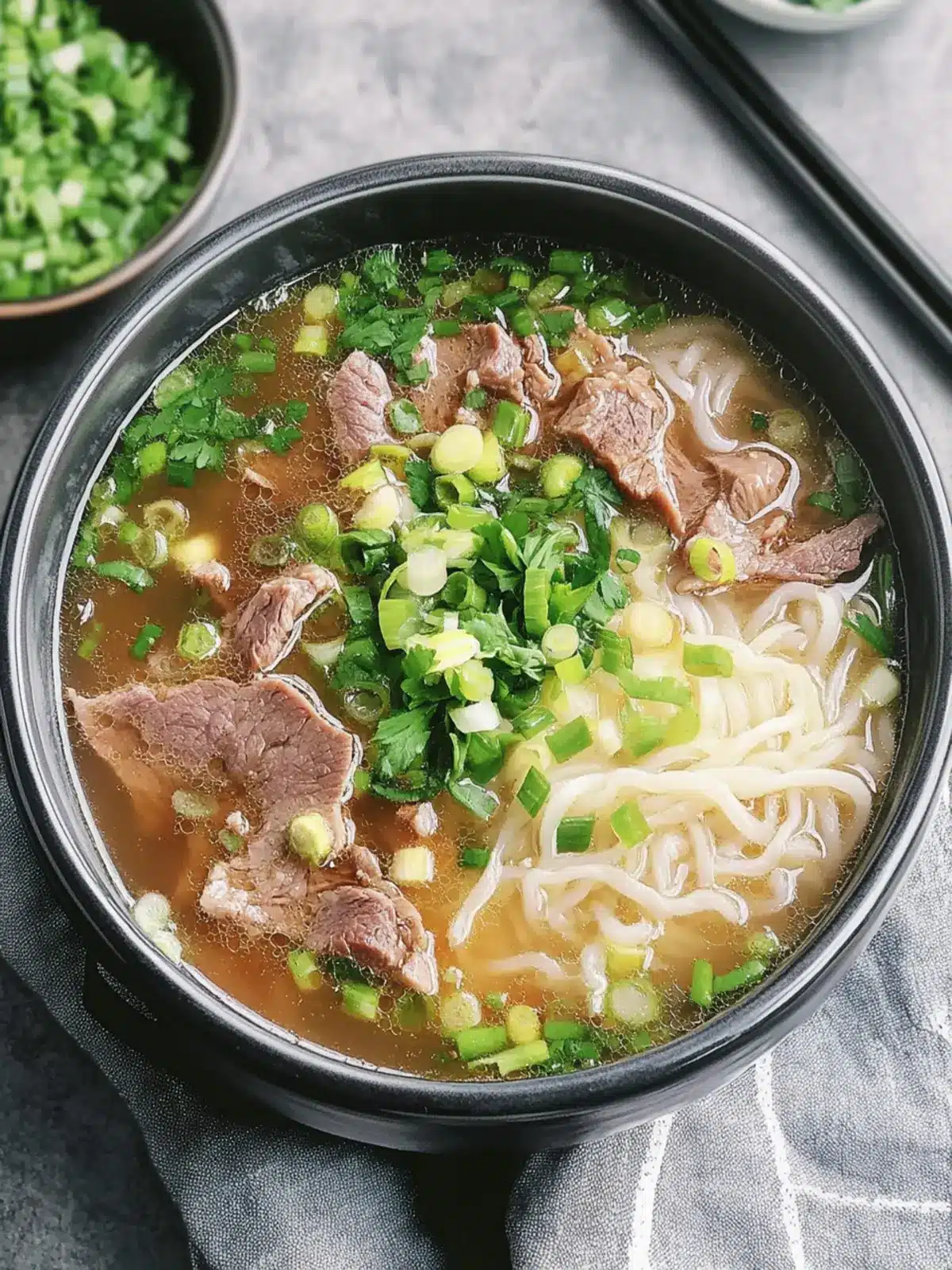
Korean Beef Bone Soup Recipe FAQs
What kind of beef bones should I use for Korean Beef Bone Soup?
Absolutely! I recommend using marrow bones, as they provide a rich flavor and create a creamier broth. Look for fresh bones without cracks or excessive dryness, as these will yield the best results.
How long can I store Korean Beef Bone Soup in the fridge?
Very! You can store your leftover soup in an airtight container for up to 3 days. Be sure to let it cool completely before placing it in the fridge, as this will help maintain its flavor and texture.
Can I freeze Korean Beef Bone Soup? If so, what’s the best method?
Absolutely! To freeze your Korean Beef Bone Soup, pour it into freezer-safe containers, leaving some space at the top to allow for expansion. It will keep well for up to 3 months. When you’re ready to enjoy it again, just thaw it overnight in the fridge or use your microwave’s defrost function before reheating.
How can I reheat frozen Korean Beef Bone Soup without losing flavor?
Very! When reheating, pour the broth into a pot over medium heat and bring it to a gentle simmer. If the soup has thickened during freezing, add a splash of water or broth to reach your desired consistency. Stir occasionally until it’s piping hot, and enjoy!
Can I add other ingredients to the soup?
Absolutely! Feel free to get creative! You could add vegetables like daikon radish or carrots during the last hour of simmering for extra nutrition. Just keep in mind that altering ingredients might change the original flavor profile, so adjust seasoning as needed.
Is Korean Beef Bone Soup suitable for people with food allergies?
Very! This recipe is naturally gluten-free and dairy-free, but always check your specific ingredient labels. If you have a particular allergy, such as to ginger or garlic, you can adjust the ingredients accordingly; just bear in mind that it might alter the soup’s flavor.
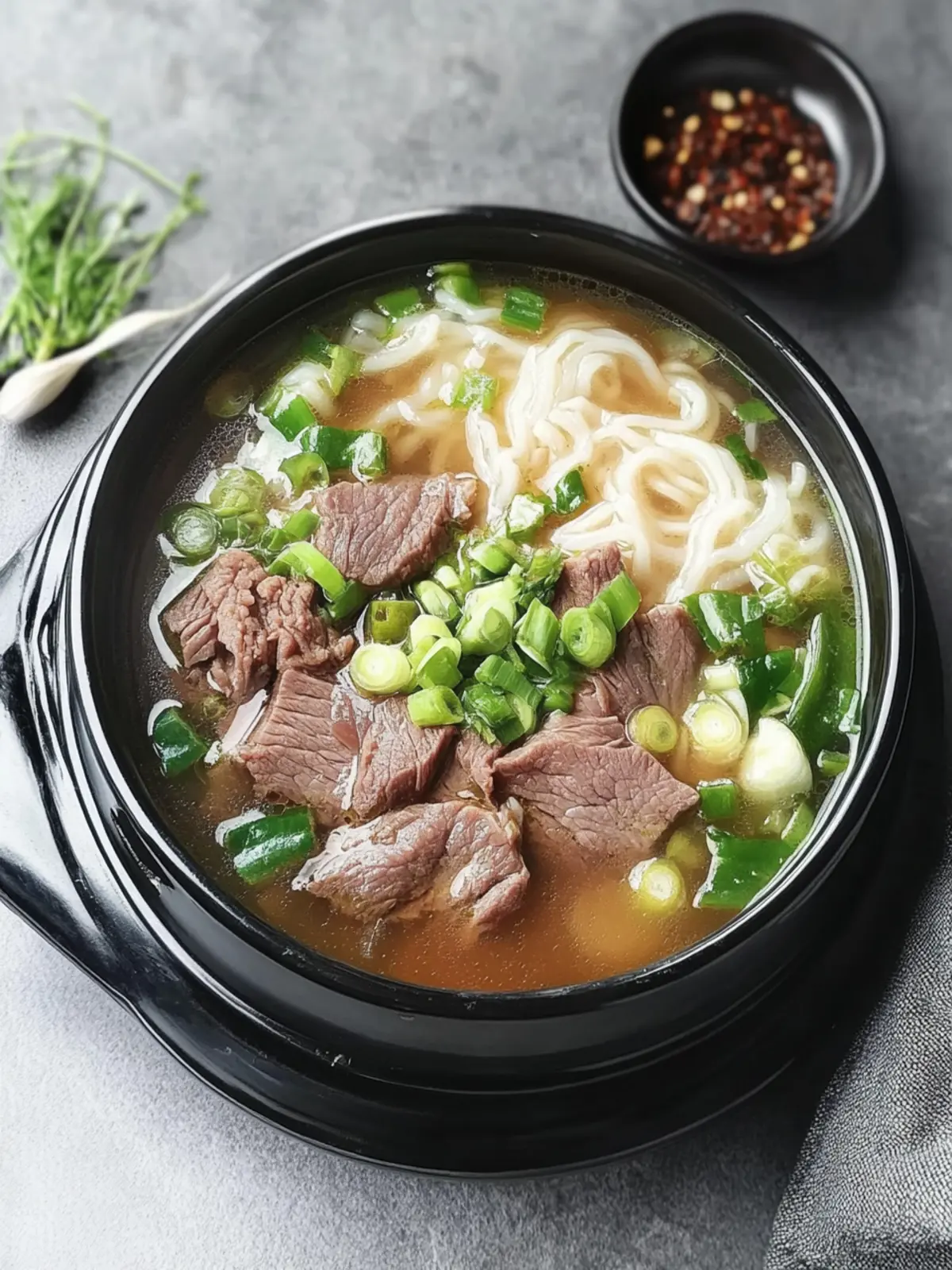
Korean Beef Bone Soup to Warm Your Soul and Satisfy Cravings
Ingredients
Equipment
Method
- Rinse the beef bones under cold water to remove impurities.
- Boil the bones in a large stockpot with enough water for 4 hours, stirring occasionally.
- Add quartered onion, minced garlic, and sliced ginger. Season with salt and black pepper; simmer for an additional hour.
- Strain the broth to remove bones and aromatics.
- Serve the soup over cooked rice and top with chopped green onions.