
As the chill of evening settles in, there’s nothing quite like the warmth of a steaming bowl of Japanese Rice Soup, or Zosui, to wrap you in comfort. The first time I tried this dish, I felt a deep sense of nostalgia that transported me straight to a cozy izakaya in Tokyo. With its delicate mingling of flavors—the nutty undertones of ginger and the silky ribbons of egg—I realized this was more than just a soup; it was a hug in a bowl.
What makes Zosui so enticing is its incredible ease and versatility. You can whip it up in just 17 minutes, using whatever you have on hand, whether that’s leftover rice, fresh veggies, or even some shredded chicken. As I stood by the stove, swirling in the ingredients and inhaling the deliciously fragrant steam, I knew I had discovered a simple yet profound recipe that would conquer my weeknight fatigue, making fast food a distant memory.
Join me in savoring a meal that’s not only heartwarming but also a celebration of simple, homemade goodness. It’s time to cozy up with a bowl of Zosui!
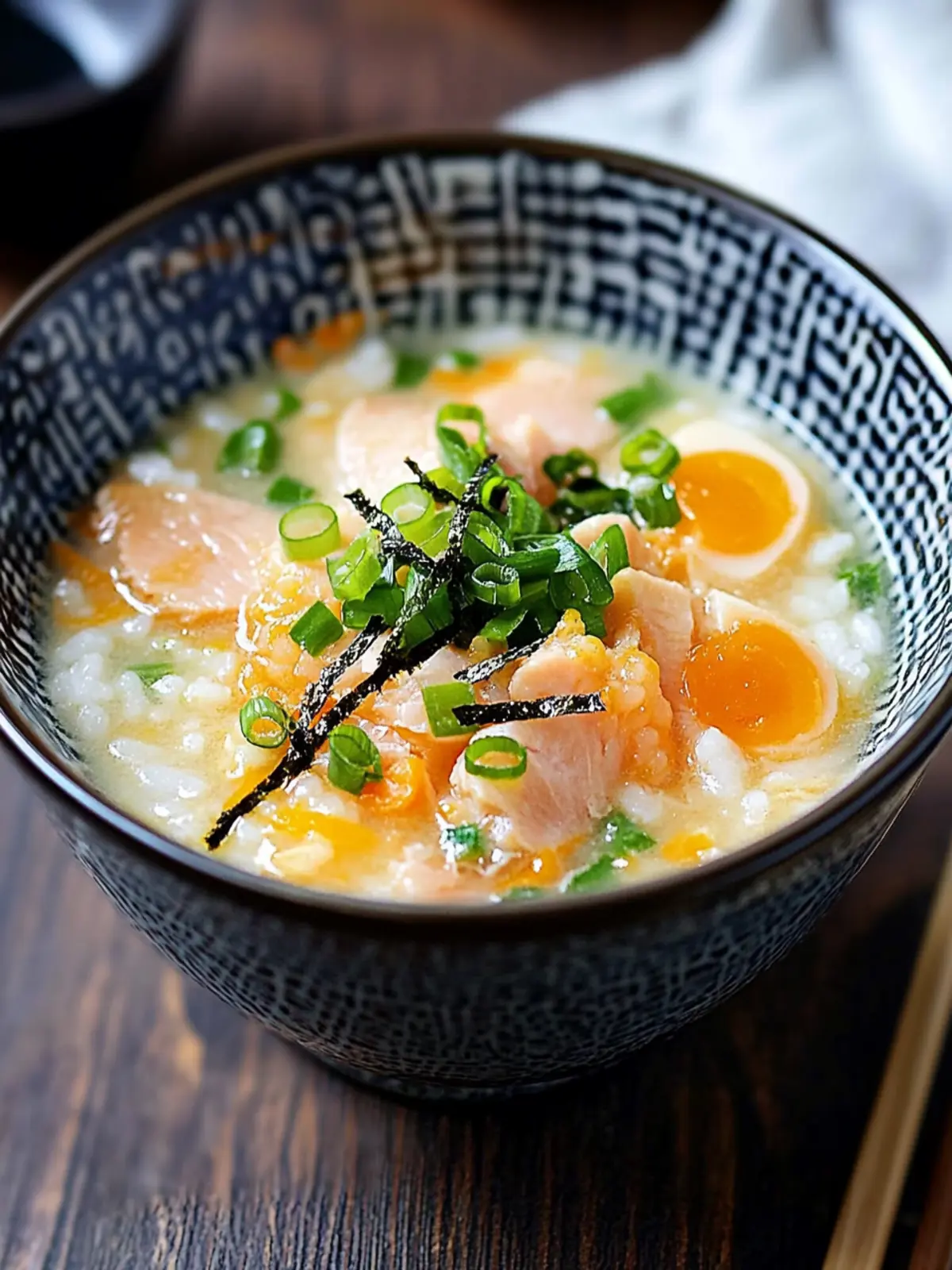
Why is Japanese Rice Soup so beloved?
Simple to Prepare: This comforting dish requires only 17 minutes of your time, making it perfect for weeknight dinners.
Flavorful Comfort: The fragrant ginger and silky egg enrich the broth, offering a delightful umami experience in each spoonful.
Versatility: Use leftover rice and customize with veggies or proteins like tofu or chicken—create a different bowl every time!
Nourishing and Light: Packed with nutrients, this soup is a healthier alternative to heavy takeout meals.
Crowd-Pleaser: Whether you’re gathering family or friends, Zosui’s warm, inviting flavors make it an instant favorite.
Embrace this wholesome dish and say goodbye to fast food fatigue!
Japanese Rice Soup Ingredients
Get ready to gather the essentials for your cozy Japanese Rice Soup!
For the Base
- Cooked rice –½ cup is perfect for soaking up flavors; use leftover rice for easy prep!
- Low-sodium chicken or vegetable broth – 2 cups provide the soup’s comforting foundation; keep it low-sodium to better control flavors.
- Large egg – Whisked and added slowly, it creates luscious ribbons that enhance the soup’s texture.
For Flavor
- Alcohol-free soy sauce or tamari – 1 tablespoon brings in a savory depth; tamari is a great gluten-free option.
- Grated fresh ginger – 1 teaspoon adds a zesty kick that brightens up the broth and pairs wonderfully with the rice.
For Garnishing
- Green onion – Sliced for a fresh, crisp finish; it elevates the soup’s presentation and flavor profile.
- Salt & pepper – To taste, adjusting seasoning is key to making the flavors pop!
Optional Add-Ins
- Spinach – A handful adds nutrients without overwhelming the dish; it wilts beautifully in the warm broth.
- Peas – Sweet and vibrant, these add color and fiber to your soup.
- Tofu or shredded chicken – These proteins make the dish heartier; opt for firm tofu for a meaty bite or chicken for classic comfort.
- Mushrooms – Their umami flavor enhances the broth, making it richer and more inviting.
How to Make Japanese Rice Soup
- Heat the broth in a pot over medium heat until you see gentle simmering bubbles forming. This will take about 3-4 minutes, creating a warm base for your soup.
- Add grated ginger and soy sauce into the simmering broth. Stir in the cooked rice, letting it soak up those scrumptious flavors for 2–3 minutes.
- Simmer the mixture until the rice softens, becoming fluffy and infused with the savory essence of the broth. Keep an eye out—it’s your warm comfort bubbling away!
- Reduce the heat to low, then drizzle in the whisked egg slowly while stirring continuously to form those delightful silky ribbons. This should take about 1 minute.
- Toss in the sliced green onions along with any optional add-ins like spinach or mushrooms you desire. These will add color and extra nutrients to your soup.
- Season with salt and pepper to taste, allowing the soup to rest for 2 minutes before serving. This will meld the flavors beautifully and ensure a cozy experience.
Optional: Garnish with extra green onions or a dash of sesame oil before serving.
Exact quantities are listed in the recipe card below.
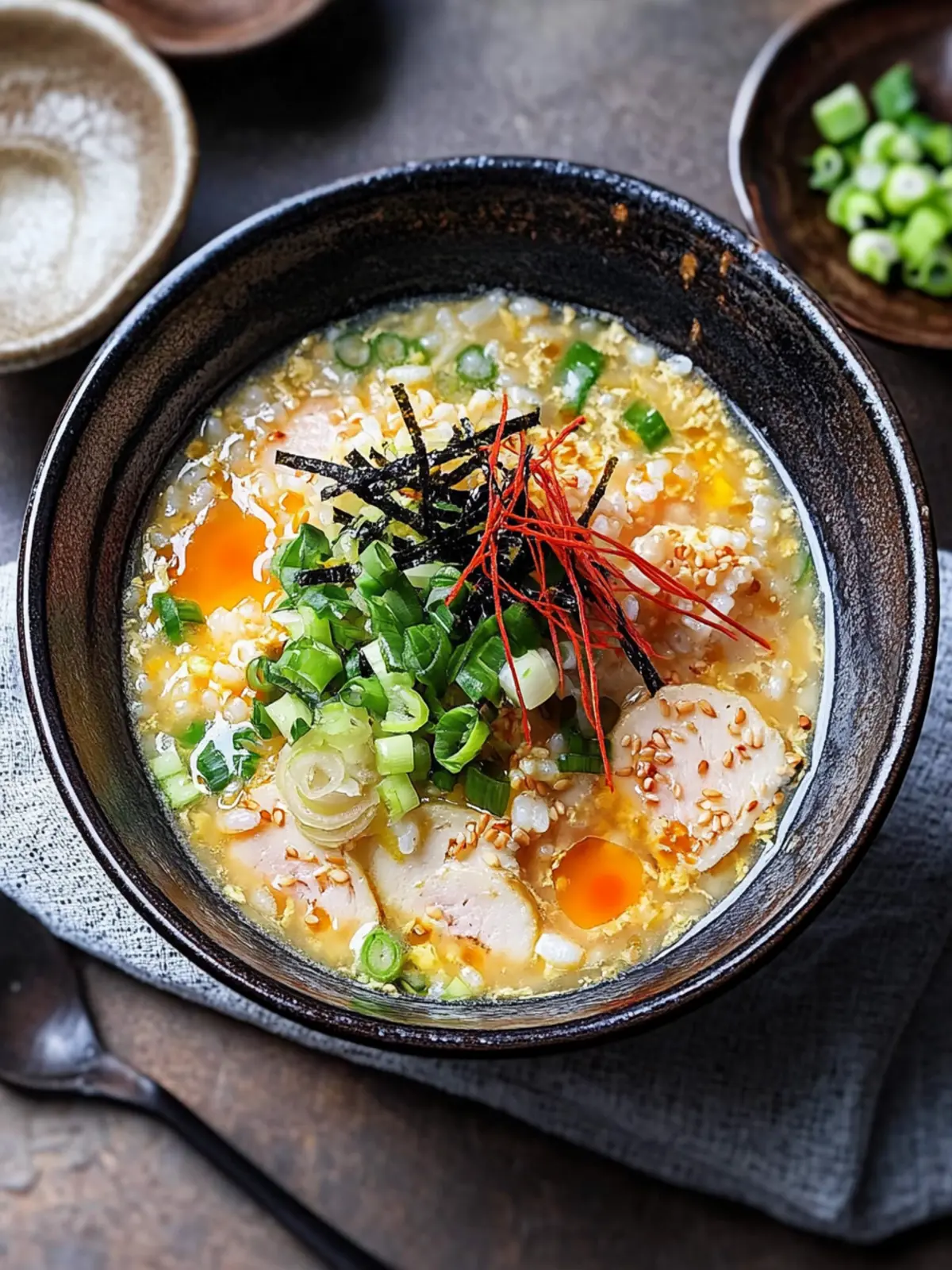
What to Serve with Japanese Rice Soup?
Create the perfect cozy meal around a warm bowl of Zosui that wraps you in comfort and joy.
-
Fresh Green Salad: A crisp salad with a light vinaigrette enhances the meal’s freshness, balancing the savory richness of the soup.
-
Steamed Edamame: These protein-packed, lightly salted bites offer a delightful crunch, adding both flavor and texture to your dining experience.
-
Savory Tempura Vegetables: Crispy tempura vegetables complement the soft, silky soup, providing that wonderful contrast in every bite. The combination is both delightful and visually appealing on the plate.
-
Pickled Ginger: A zesty, vibrant side that cleanses the palate, pickled ginger enhances the flavors and adds a refreshing tang to your meal.
-
Rice Crackers: Light and crunchy rice crackers can be a fun addition, offering a satisfying texture to accompany your comforting soup.
-
Miso Soup: For a double soup delight, pair with a small bowl of miso soup; it deepens the umami experience with every slurp.
-
Chilled Sake: This smooth, cold drink elevates the meal, allowing the delicate flavors of the soup to shine while adding a playful touch to your dining experience.
How to Store and Freeze Japanese Rice Soup
Fridge: Store leftover Japanese Rice Soup in an airtight container for up to 3 days. Reheat gently on the stove, adding a splash of broth to restore consistency.
Freezer: Freeze soup in individual portions using freezer-safe bags for up to 2 months. Thaw overnight in the fridge before reheating.
Reheating: When reheating, warm on the stove over low heat, stirring continuously. Add a little broth to help revive the soup’s original creamy texture.
Avoid Overcooking: If reheating a large batch, be cautious not to boil it again to maintain the silky egg ribbons.
Japanese Rice Soup Variations
Feel free to explore these delightful twists, making your very own comforting bowl of Zosui!
-
Vegetable Boost: Add a mix of your favorite vegetables, like carrots or bell peppers, for extra nutrition and color. They’ll add a lovely crunch and zest!
-
Spicy Kick: Stir in a dash of Sriracha or a sprinkle of red pepper flakes for a warm kick. This twist transforms the soup into a flavor-packed bowl of comfort.
-
Mushroom Medley: Swap in your choice of mushrooms, like shiitake or enoki, for an earthy depth. Their unique umami flavor elevates every spoonful to new heights!
-
Creamy Tofu: Substitute silken tofu for the egg to create a creamy texture. This option enhances the dish’s richness while keeping it vegetarian-friendly.
-
Coconut Infusion: Replace half the broth with coconut milk for a tropical flair. It adds a hint of sweetness that pairs beautifully with ginger and makes the soup irresistible.
-
Herb Infusion: Toss in fresh herbs like cilantro or basil for a fresh finishing touch. They’ll brighten the flavor profile and make the soup feel vibrant and alive!
-
Protein Power: Add shredded rotisserie chicken or leftover beef for a heartier meal. These proteins make the dish even more filling and satisfying, perfect for hungry appetites.
-
Rice Variety: Experiment with different types of rice, such as brown rice or jasmine, for a unique twist on texture and flavor. Each option brings its own personality to the classic Zosui!
Make Ahead Options
Zosui, or Japanese Rice Soup, is perfect for those busy weeknights when you want a warm, comforting meal without spending too much time in the kitchen. You can prep the broth and the ginger together up to 3 days in advance. Simply store them in an airtight container in the refrigerator. Additionally, if you’re using optional add-ins like spinach or mushrooms, you can chop and refrigerate them ahead of time as well, ensuring they stay fresh. When you’re ready to enjoy your soup, heat the broth, stir in the rice and egg, and add in the prepped ingredients for a cozy bowl that’s just as delicious as if you made it that day!
Expert Tips for Japanese Rice Soup
- Use Fresh Rice: Avoid using overly soggy or old rice, as it can make the soup mushy. Freshly cooked or leftover rice works best.
- Don’t Rush the Egg: Drizzle the whisked egg slowly while stirring. This creates those beautiful silky ribbons—rushing can lead to scrambled eggs in the soup.
- Customize Wisely: Explore adding different vegetables, but remember not to overcrowd the soup. A few key add-ins elevate the flavor without overwhelming it.
- Season Last: Add salt and pepper to taste at the end to ensure you don’t over-season the broth while cooking. Adjusting at the end keeps flavors bright.
- Serve Warm: Enjoy your Japanese Rice Soup immediately for the best experience, as it’s meant to be savored warm and comforting!
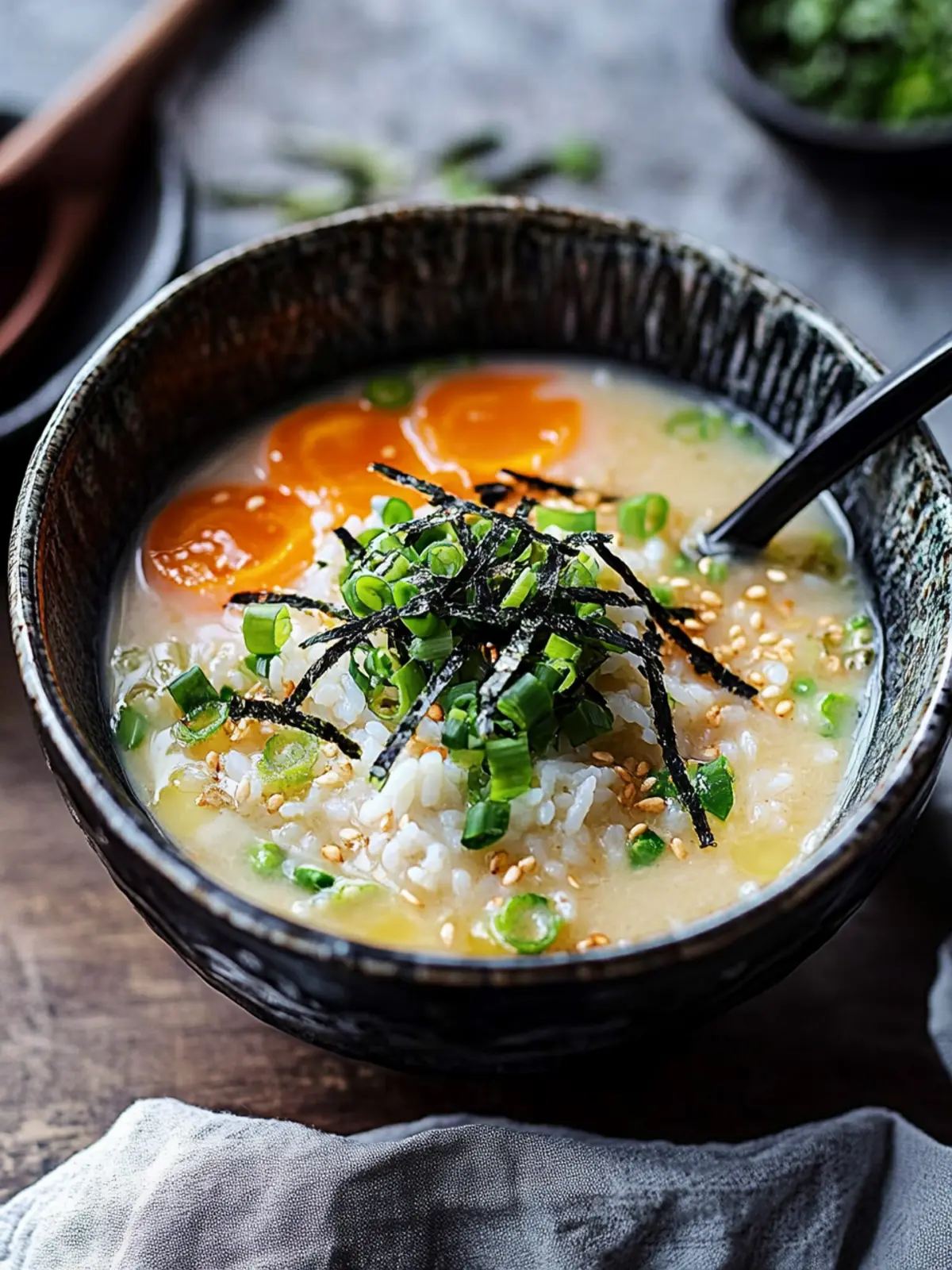
Japanese Rice Soup Recipe FAQs
How do I select the best rice for Japanese Rice Soup?
Absolutely! Using freshly cooked, short-grain rice is ideal for this recipe. Look for rice that is slightly sticky when cooked, as it helps absorb the broth beautifully. If using leftover rice, ensure it’s not overly mushy or dried out, as either can affect the overall texture of your soup.
What is the best way to store leftover Japanese Rice Soup?
For optimal freshness, store any uneaten soup in an airtight container in the fridge for up to 3 days. Make sure it’s completely cooled before sealing. When you’re ready to enjoy another bowl, simply reheat gently on the stove, adding a splash of broth to maintain its creamy texture.
Can I freeze Japanese Rice Soup?
Yes, you can freeze it! Divide the soup into individual portions and place them in freezer-safe bags or containers. It will keep well for up to 2 months. When you’re ready to eat, just thaw it overnight in the fridge, then reheat gently on the stove while stirring, adding a bit of broth for the best consistency.
What if my soup turns out too salty?
If your soup tastes too salty, don’t worry! You can balance it by adding a few more cups of low-sodium broth or water. This will dilute the saltiness without sacrificing the flavors. Just make sure to bring it to a gentle simmer after adding the extra liquid.
Are there any dietary considerations for Japanese Rice Soup?
Very much so! This recipe can easily be adapted for various dietary needs. For vegans, substitute chicken broth with vegetable broth and omit the egg. If you’re avoiding gluten, ensure to use gluten-free soy sauce or tamari. Always check labels if you’re concerned about allergies to certain ingredients like tofu or mushrooms.
Can I use other vegetables in my Japanese Rice Soup?
Absolutely! The more the merrier! You can add a variety of vegetables such as carrots, bok choy, or bell peppers. Just make sure to chop them into small pieces so they cook quickly and blend well with the soup. Aim to add any tougher veggies earlier in the cooking process so they soften nicely.
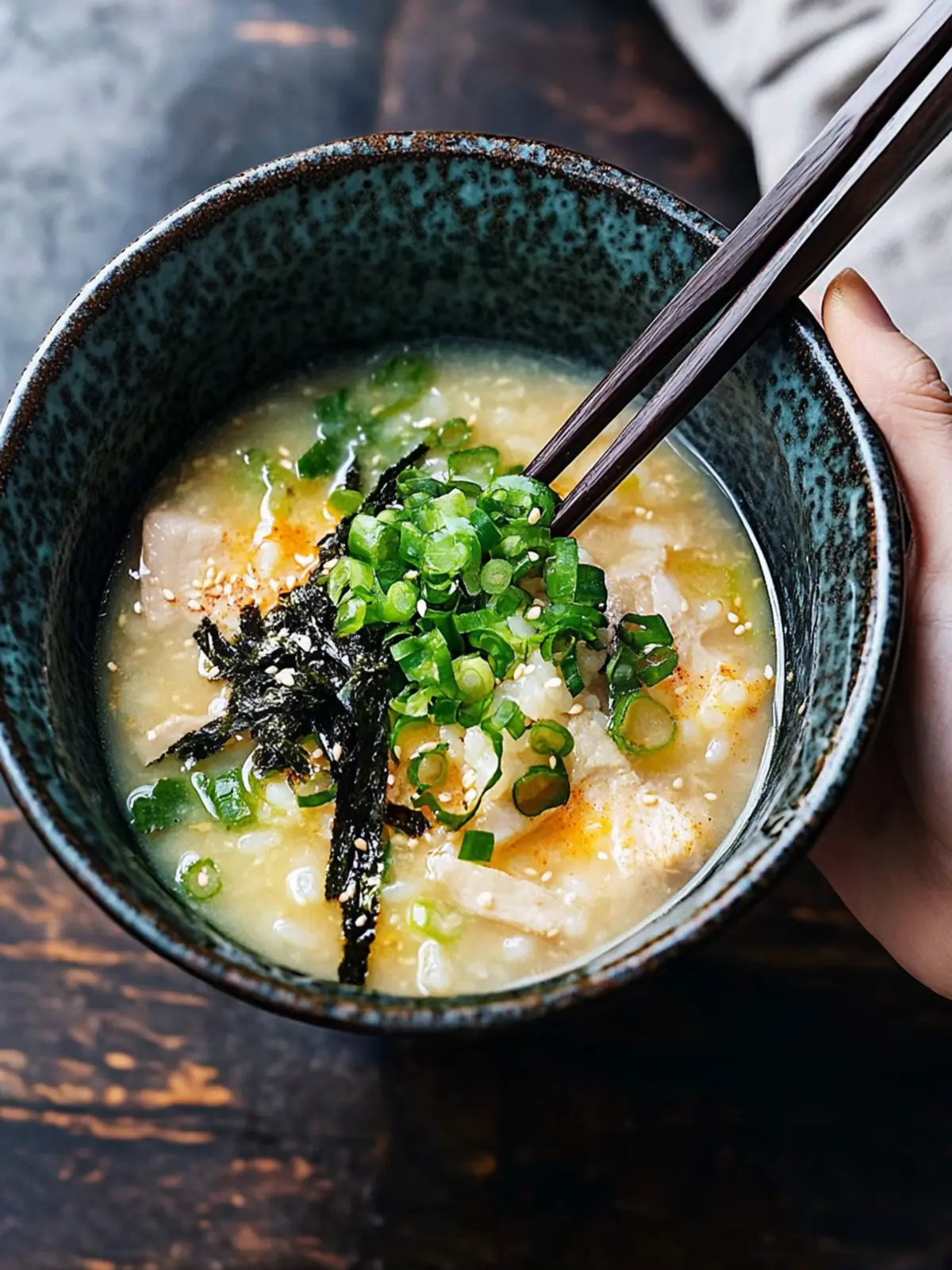
Warm Up with Cozy Japanese Rice Soup in Just 17 Minutes
Ingredients
Equipment
Method
- Heat the broth in a pot over medium heat until you see gentle simmering bubbles forming.
- Add grated ginger and soy sauce into the simmering broth. Stir in the cooked rice, letting it soak up those scrumptious flavors for 2–3 minutes.
- Simmer the mixture until the rice softens, becoming fluffy and infused with the savory essence of the broth.
- Reduce the heat to low, then drizzle in the whisked egg slowly while stirring continuously to form those delightful silky ribbons.
- Toss in the sliced green onions along with any optional add-ins like spinach or mushrooms you desire.
- Season with salt and pepper to taste, allowing the soup to rest for 2 minutes before serving.