
The first time the heat of gochujang mingled with my savory marinade, it was as if a new world of flavors opened right in my kitchen. This Korean Spicy Pork, or Jeyuk Bokkeum, is not just a dish; it’s an explosion of taste, a delightful contrast of sweet and spicy that keeps my family coming back for more. I discovered this recipe on a particularly cold evening when the craving for something warm and hearty struck, and I wanted to break free from the predictable takeout routine.
In just 25 minutes, you can whip up this satisfying meal with minimal fuss, perfect for busy weeknights or a spontaneous gathering. From the tender, marinated pork to the vibrant crunch of fresh vegetables, every bite is a testament to the joy of home cooking. Whether you’re an experienced chef or just starting, this recipe will elevate your dinner game and introduce a little excitement to your plate. So, let’s delve into making this Korean classic that promises not just nourishment but a flavorful experience to savor!
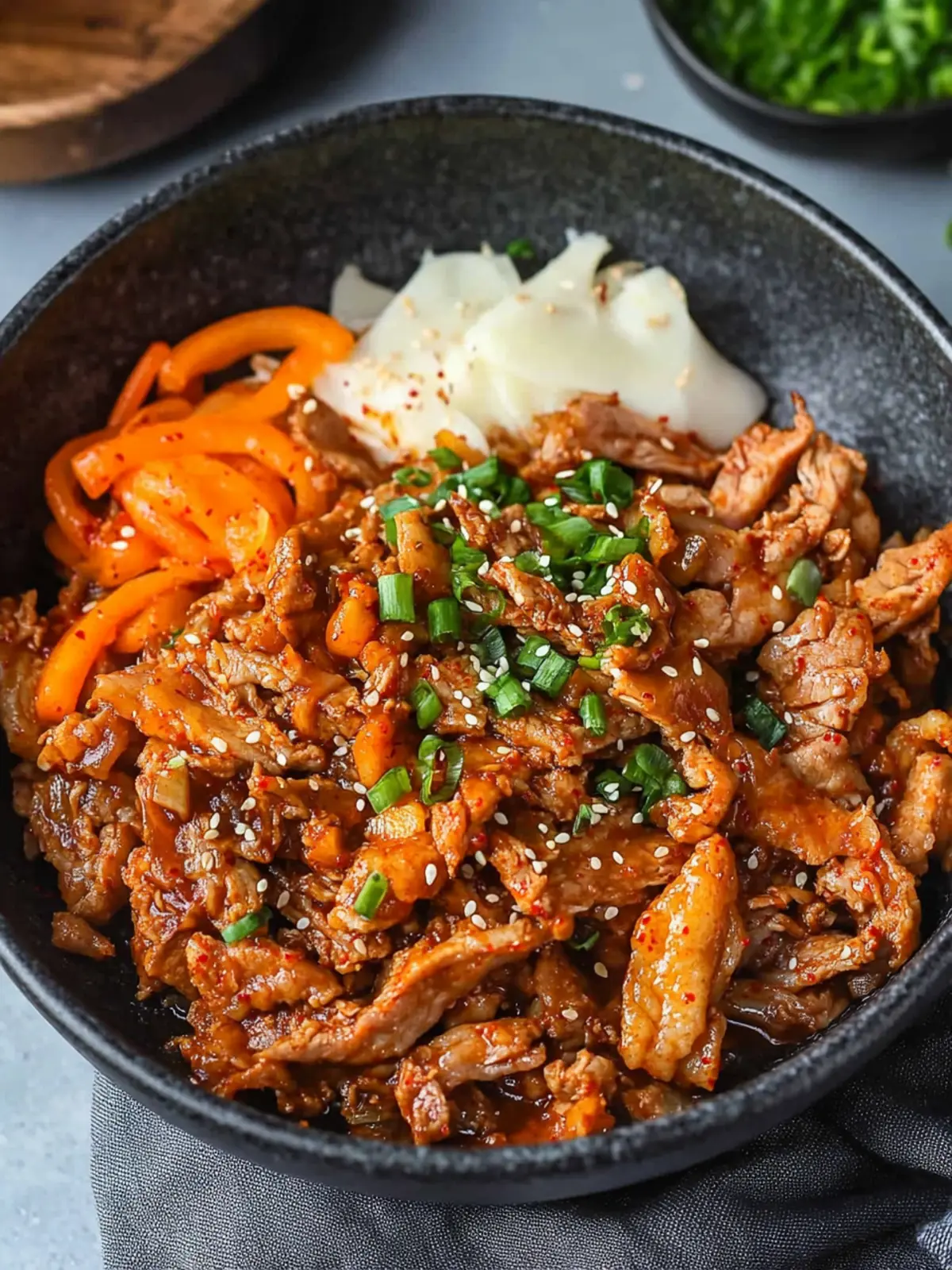
Why is Korean Spicy Pork a Must-Try?
Bold flavors bring life to your dinner table with this recipe. You’ll savor the sweet and spicy harmony created by gochujang and sesame oil. Quick and easy, it takes just 25 minutes from start to finish, making it a go-to for busy weeknights. Versatile ingredients allow for personal tweaks—throw in your favorite veggies! Crowd-pleaser—this dish is guaranteed to impress family and friends alike. Embrace the joy of home cooking and elevate your meals with this flavorful delight that everyone will love!
Korean Spicy Pork Ingredients
Elevate your cooking with these vibrant flavors!
For the Pork
• Pork shoulder – pre-sliced for quick cooking and tender results.
For the Veggies
• Onion – julienned to add a subtle sweetness to the dish.
• Green onion – finely chopped for a fresh, crisp finish.
• Carrot – peeled and thinly sliced for a sweet crunch.
• Green cabbage – chopped (optional) to add extra texture and color.
For the Sauce
• Soy sauce – regular for a savory base that enhances the overall flavor.
• Garlic – minced to infuse the dish with aromatic goodness.
• Brown sugar – balances the heat of gochujang and rounds out the flavors.
• Mirin – adds a touch of sweetness and depth to the sauce.
• Sesame oil – toasted for a rich, nutty aroma that ties everything together.
• Gochujang – brings the spicy kick; adjust to your heat preference!
• Gochugaru – offers a smoky heat that complements the dish.
• Black pepper – a dash adds warmth and enhances the flavor profile.
For the Garnish
• Sesame seeds – toasted (optional) for a delightful crunch and visual appeal.
How to Make Korean Spicy Pork
-
Mix the Sauce: In a bowl, combine the soy sauce, minced garlic, brown sugar, mirin, toasted sesame oil, gochujang, gochugaru, and black pepper. Stir well until the sugar dissolves and set aside.
-
Heat the Oil: Over medium-low heat in a large pan, add the vegetable oil. Allow it to heat, then fry the sliced pork until it is about 50% cooked and starts to brown, which should take roughly 3-4 minutes.
-
Add the Veggies: Toss in the julienned onions and thinly sliced carrots (and cabbage if you’re using it) into the pan. Stir everything together and cook for about 1 minute until the vegetables are slightly softened.
-
Combine with Sauce: Pour in the prepared sauce and mix thoroughly to coat the pork and veggies. Cook uncovered for about 3-5 minutes, stirring occasionally, until the sauce thickens slightly and the pork is fully cooked.
-
Garnish and Serve: Remove from heat and garnish with finely chopped green onions and toasted sesame seeds for added texture and flavor. Serve hot and enjoy the delightful flavors!
Optional: Serve with steamed rice for a complete meal.
Exact quantities are listed in the recipe card below.
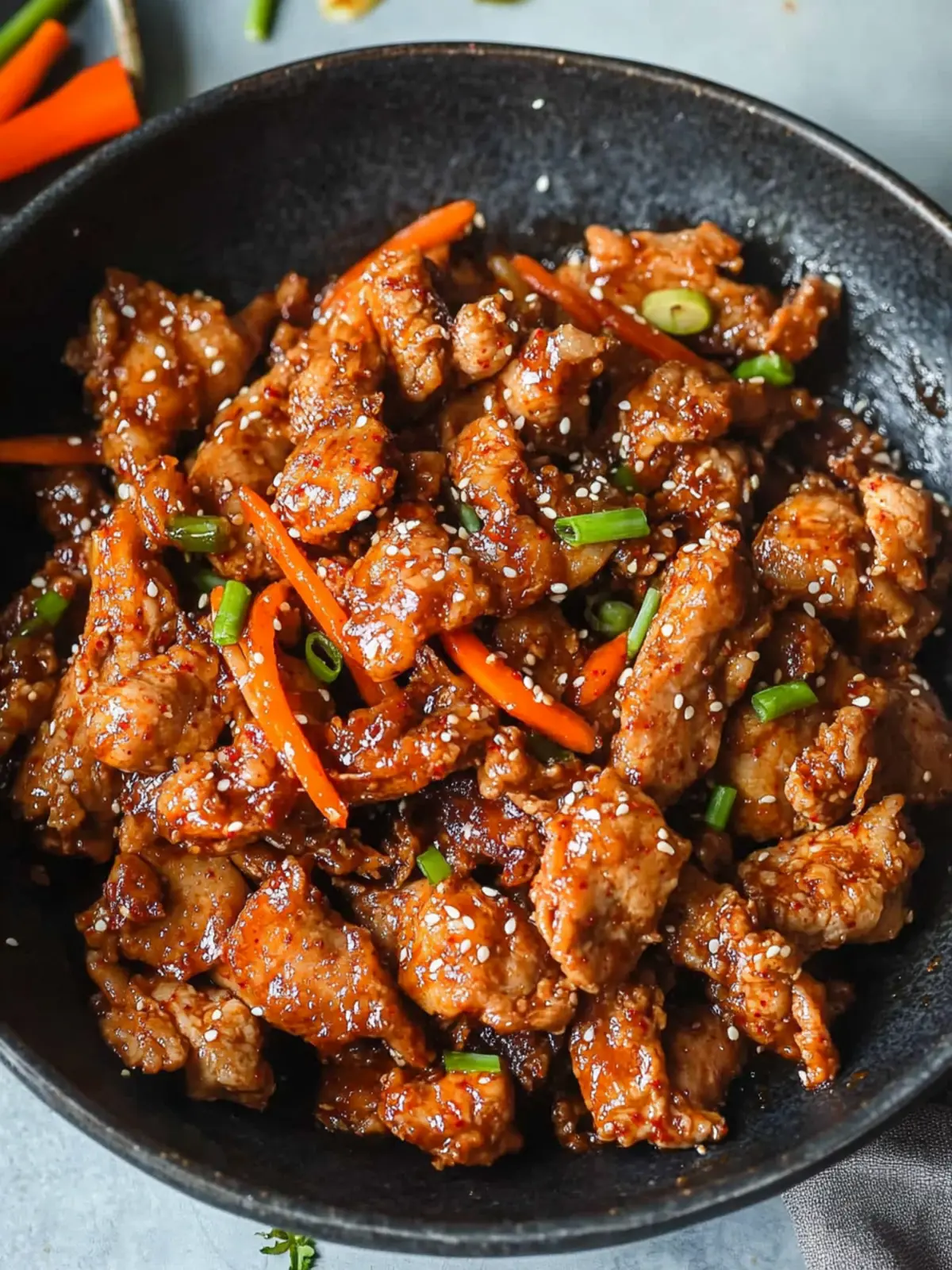
Expert Tips for Korean Spicy Pork
• Choose Quality Pork: Select a good-quality pork shoulder for tenderness and flavor. Avoid overcooking to prevent dryness and ensure juiciness.
• Customize Spice Level: Adjust the gochujang and gochugaru based on your heat preference. Start with less for milder flavors before adding more for that perfect kick!
• Veggie Variations: Feel free to substitute or add more vegetables like bell peppers or zucchini. This keeps the dish fresh and exciting, while still retaining the essence of Korean spicy pork.
• Master the Sauce: Ensure the sauce ingredients are well-mixed and fully dissolved to avoid an uneven flavor distribution. A well-blended sauce is key to a delicious outcome.
• Don’t Rush the Cooking: Allow the sauce to thicken slightly, which enhances the flavors. If you cook too quickly, the pork might be undercooked and the sauce will lack depth.
How to Store and Freeze Korean Spicy Pork
Fridge: Store any leftover Korean Spicy Pork in an airtight container for up to 3 days. Allow it to cool completely before sealing to maintain freshness.
Freezer: For longer storage, freeze the dish in freezer-safe containers for up to 3 months. Make sure to leave some space in the container, as the food will expand when frozen.
Reheating: When ready to enjoy again, thaw in the fridge overnight and reheat on the stovetop over medium heat until heated through, adding a splash of water if necessary to avoid dryness.
Serving: Serve over fresh rice or with your choice of side dishes to bring back those vibrant flavors!
Korean Spicy Pork Variations
Feel free to let your creativity shine as you put your unique spin on this delightful dish!
-
Lean Pork: Swap pork shoulder for chicken breast for a leaner option that still packs flavor.
-
Vegetable Medley: Add bell peppers, snap peas, or zucchini for a colorful mix of veggies, enhancing both taste and nutrition.
-
Gluten-Free: Use tamari instead of soy sauce to make the dish gluten-free while retaining that savory umami.
-
Sweet Alternative: Substitute honey or maple syrup for brown sugar for a natural sweetener with a distinct flavor.
-
Veggie-Loaded: Toss in a handful of baby spinach or kale towards the end for an extra boost of greens without overpowering the dish.
-
Spicy Kick: For serious spice lovers, add a finely chopped jalapeño or switch to extra gochugaru, waking up your taste buds!
-
Smoky Flavor: Incorporate smoked paprika alongside gochugaru for an intriguing depth of flavor, perfect for barbecue enthusiasts.
-
Coconut Flavor: For a tropical twist, replace sesame oil with coconut oil, imparting a subtly sweet aroma to elevate the entire dish.
Each of these variations offers a chance to personalize your Korean Spicy Pork, so don’t hesitate to mix and match!
What to Serve with Korean Spicy Pork?
Bring your dining experience to life with vibrant sides that complement the boldness of Jeyuk Bokkeum.
-
Steamed Rice: A classic partner, fluffy rice balances the spicy kick and absorbs all that savory sauce for a comforting texture.
-
Kimchi: This tangy and spicy fermented cabbage adds a crunch and depth that beautifully contrasts the tender pork, enhancing each bite.
-
Cucumber Salad: A refreshing, crisp salad drizzled with sesame oil cools the palate and provides a delightful balance to the dish’s heat.
-
Pan-Fried Dumplings: Their crispy exterior and savory filling make for an irresistible pairing, adding another layer of flavor to your meal.
-
Asian Noodle Salad: Serve chilled noodles tossed in soy sauce, sesame oil, and fresh veggies for a delightful cold dish that complements the warm pork.
-
House-Made Pickles: Bright, tangy pickles cut through the richness of the pork, making every bite feel lighter and more refreshing.
-
Cold Soju: Enjoy a glass of this smooth Korean spirit, which enhances the flavors of the dish and adds a celebratory touch to your meal.
-
Mango Sticky Rice: For dessert, this sweet and slightly tangy option offers a lovely way to end the meal with a burst of tropical flavors.
Make Ahead Options
These Korean Spicy Pork preparations are perfect for meal prep enthusiasts! You can marinate the pork in the sauce up to 24 hours in advance, allowing the flavors to deeply infuse the meat. Simply combine all the sauce ingredients in a bowl and toss the pork shoulder slices in the marinade before refrigerating. For vegetables, you can chop the onions, carrots, and cabbage up to 3 days ahead; store them in airtight containers in the fridge to maintain their freshness and crunch. When you’re ready to cook, heat the oil and fry the pork until 50% cooked, then add the prepped vegetables and follow the remaining steps. This way, you’ll enjoy delicious, restaurant-quality Korean Spicy Pork with minimal effort and time on busy weeknights!
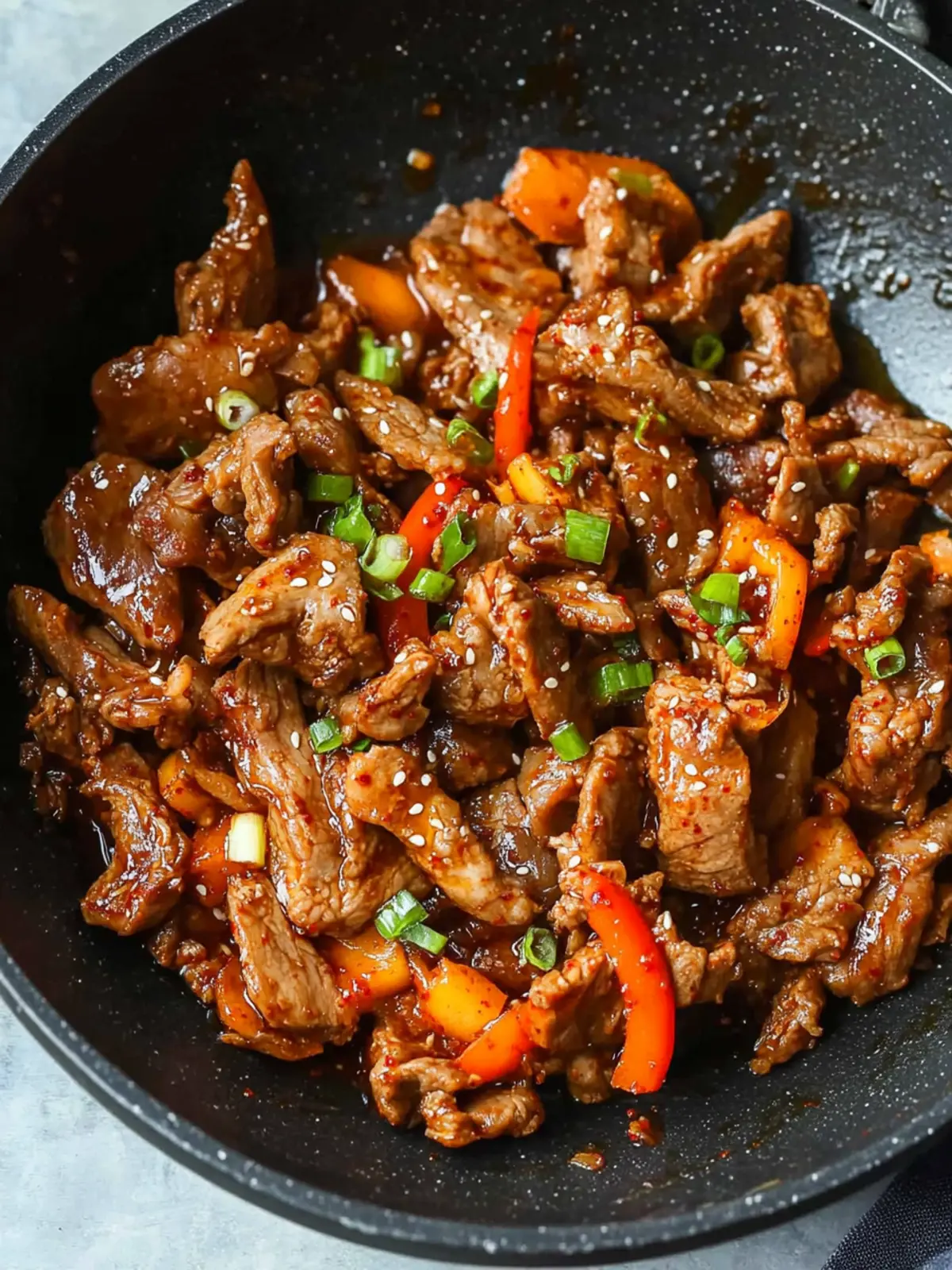
Jeyuk Bokkeum Recipe FAQs
How do I choose the perfect pork shoulder for Korean Spicy Pork?
Absolutely! Look for pork shoulder with a nice marbling of fat, as this will ensure juiciness and tenderness when cooked. Avoid cuts that are overly lean, as they can become tough during cooking. Freshness is key, so check for a bright pink color without any dark spots or discoloration.
What’s the best way to store leftovers?
Very! Store any leftover Korean Spicy Pork in an airtight container in the fridge for up to 3 days. Allow it to cool completely before sealing to keep it fresh. If you like, you can place a paper towel in the container to absorb excess moisture, maintaining the perfect texture upon reheating.
Can I freeze Korean Spicy Pork?
Definitely! To freeze, let the dish cool completely, then transfer it to freezer-safe containers, leaving about an inch of space at the top as the pork will expand when frozen. It will keep well for up to 3 months. When you’re ready to enjoy it again, thaw it in the refrigerator overnight and gently reheat on the stovetop over medium heat, adding a splash of water if needed to keep it moist.
What should I do if my sauce doesn’t thicken?
If your sauce isn’t thickening, don’t worry! Let the dish simmer uncovered for a few more minutes to allow excess moisture to evaporate. You can also mix a teaspoon of cornstarch with a bit of cold water to create a slurry, then stir it in and cook for an additional minute. This should help achieve that sought-after richness!
Are there any dietary considerations I need to be aware of?
Yes, indeed! If you have any food allergies, be cautious with the soy sauce, which contains gluten. You can use tamari or a gluten-free soy sauce as alternatives. Additionally, the gochujang may contain sugar, so make sure to check the label for any dietary restrictions. And while this dish might tantalize your taste buds, it’s best to avoid giving it to pets due to its spiciness and seasoning.
Can I add more vegetables to the dish?
The more the merrier! Yes, feel free to get creative with your veggie choices! Adding bell peppers, zucchini, or snap peas can introduce additional flavors and textures. Just keep in mind that you’ll want to adjust cooking times slightly to ensure all the vegetables are perfectly tender yet maintain a nice crunch. Enjoy customizing it to your liking!
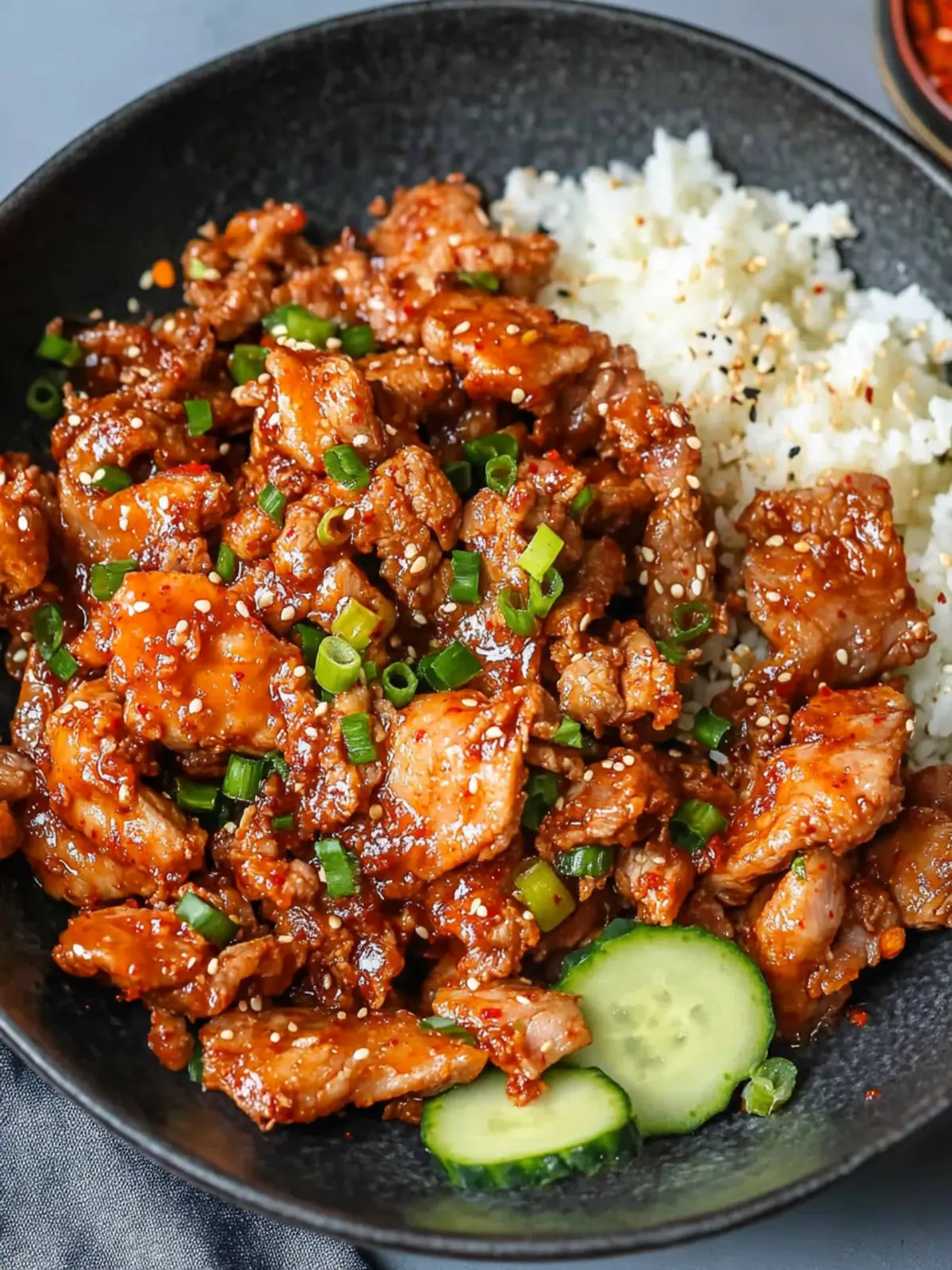
Sizzle Up Korean Spicy Pork for a Flavor Explosion!
Ingredients
Equipment
Method
- In a bowl, combine the soy sauce, minced garlic, brown sugar, mirin, toasted sesame oil, gochujang, gochugaru, and black pepper. Stir well until the sugar dissolves and set aside.
- Over medium-low heat in a large pan, add the vegetable oil. Allow it to heat, then fry the sliced pork until it is about 50% cooked and starts to brown, which should take roughly 3-4 minutes.
- Toss in the julienned onions and thinly sliced carrots (and cabbage if you’re using it) into the pan. Stir everything together and cook for about 1 minute until the vegetables are slightly softened.
- Pour in the prepared sauce and mix thoroughly to coat the pork and veggies. Cook uncovered for about 3-5 minutes, stirring occasionally, until the sauce thickens slightly and the pork is fully cooked.
- Remove from heat and garnish with finely chopped green onions and toasted sesame seeds for added texture and flavor. Serve hot and enjoy the delightful flavors!