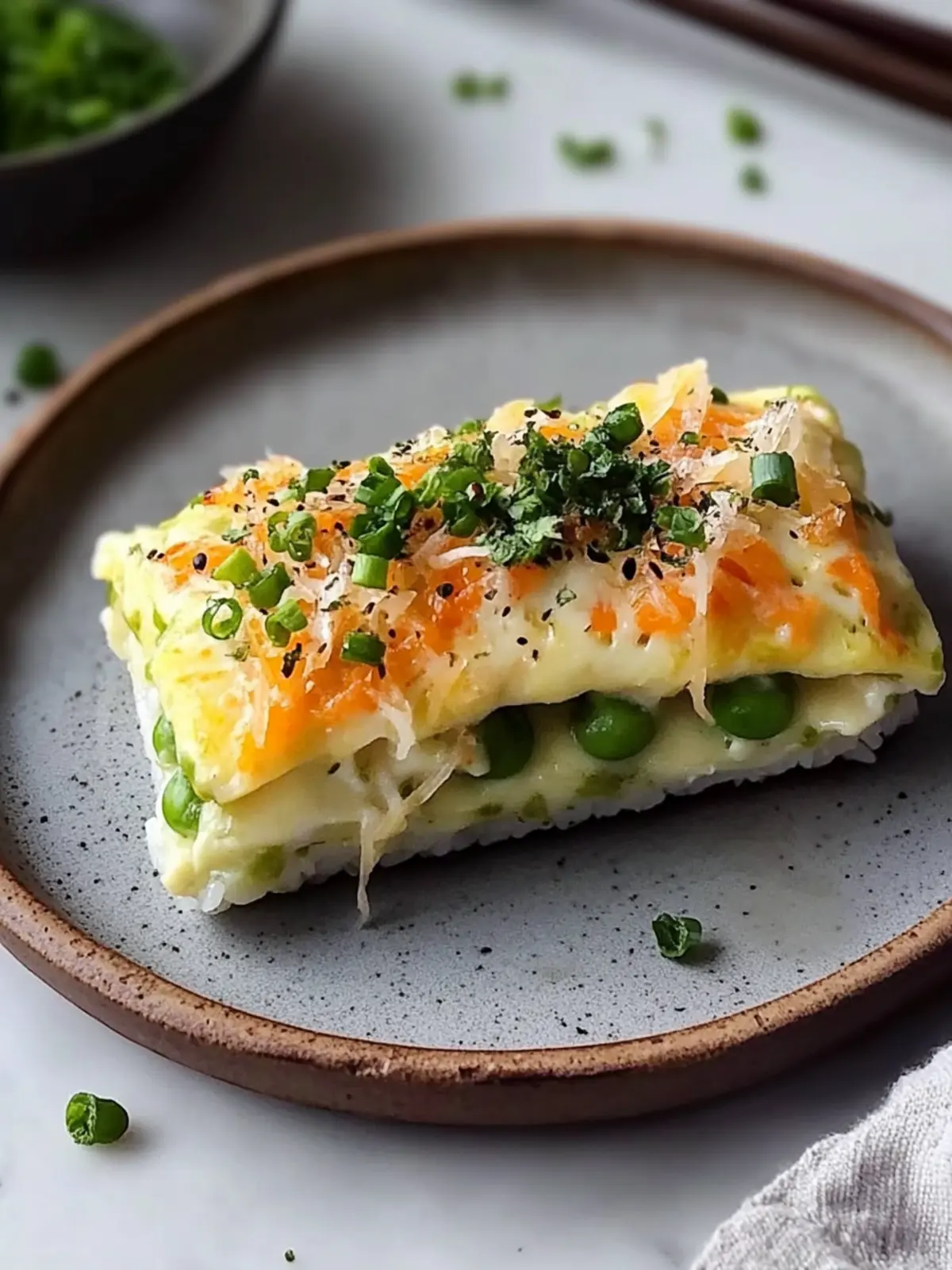
On a rainy evening not long ago, I found myself craving something warm, comforting, and completely different from the usual dinner fare. Just as I was rummaging through my pantry for inspiration, I stumbled upon an enticing possibility: Japanese Monjayaki. This delightful dish, often overshadowed by its more popular counterpart, okonomiyaki, surprised me with its unique texture and flavor profile. Picture a savory batter infused with dashi broth, overflowing with tender cabbage and a medley of seafood or pork, perfectly balanced with the crunch of tempura bits.
What I love most about Monjayaki is how it brings a sense of joy and hands-on fun to the dinner table. As you gather around the griddle, the aromas wafting in the air, it’s impossible not to cherish the communal experience of cooking and sharing. This dish isn’t just a meal; it’s an adventure that invites everyone to participate in the deliciousness of crisp edges and a gooey center that begs to be devoured straight from the pan. So if you’re tired of fast food and in search of a cozy, homemade wonder to stir up your weeknight routine, allow me to guide you through the art of making Japanese Monjayaki.

Why is Japanese Monjayaki so special?
Unique Experience: Cooking Japanese Monjayaki turns dinner into a delightful gathering, with everyone participating around the griddle.
Flavor Fusion: The rich dashi broth and your choice of seafood or pork create a flavor explosion.
Customizable: Make it your own! Add in favorite ingredients like mochi or veggies for a personal touch.
Quick & Easy: Ready in just 35 minutes, this dish is perfect for busy weeknights.
Satisfying Comfort: Enjoy the perfect contrast of gooey and crispy textures, making every bite a joy.
This savory delight is a fantastic way to break free from the fast food routine and enjoy something truly special at home!
Japanese Monjayaki Ingredients
Unleash the savory goodness of Monjayaki with these essential ingredients!
For the Batter
- All-purpose flour – 120 g (1 cup) helps create the perfect texture for the batter.
- Dashi broth – 360 ml (1.5 cups) adds that rich, umami flavor that defines this dish.
- Cold water – 120 ml (0.5 cup) ensures the batter is smooth and easy to work with.
For the Filling
- Finely chopped cabbage – 150 g (2 cups) provides a delightful crunch and flavor.
- Chopped green onions – 4 tbsp bring a fresh, aromatic touch to the mix.
- Thinly sliced shrimp, squid, or pork – 120 g (0.5 cup) makes this dish hearty and satisfying.
- Tenkasu (tempura bits) – 60 ml (0.25 cup), optional, adds a delightful crunch.
- Mochi, cubed – 60 ml (0.25 cup), optional, for an extra chewy texture in each bite.
For Flavoring
- Soy sauce – 30 ml (2 tbsp), preferably low-sodium, enhances the savory profile.
- Pickled ginger (beni shoga) – 30 ml (2 tbsp), optional, offers a zesty contrast to the dish.
Dive into the world of Japanese Monjayaki and let your kitchen become the heart of a joyful meal!
How to Make Japanese Monjayaki
-
Whisk – In a mixing bowl, combine the all-purpose flour, dashi broth, and cold water. Whisk until smooth, remembering that the batter should be thinner than pancake batter to achieve that perfect consistency.
-
Mix – Stir in the finely chopped cabbage, green onions, and your choice of seafood or pork. If you’re feeling adventurous, add in the optional tenkasu or cubed mochi for extra texture and flavor.
-
Heat – Warm a non-stick griddle or skillet over medium heat. Lightly oil the surface to ensure your Monjayaki doesn’t stick and cooks evenly.
-
Pour – Pour a portion of the batter onto the griddle, spreading it into a rustic circle. Let it bubble and crisp around the edges while keeping a gooey center. Stir occasionally for the perfect texture combination.
-
Drizzle – Add a drizzle of soy sauce over the cooking batter for an extra layer of flavor and a wonderful aroma that will draw everyone to the table!
-
Serve – Enjoy your Japanese Monjayaki straight from the griddle using a small spatula or spoon. It’s all part of the fun of this communal dish!
Optional: Add some pickled ginger on top for a zesty kick.
Exact quantities are listed in the recipe card below.
Expert Tips for Japanese Monjayaki
-
Batter Consistency: Aim for a batter consistency thinner than pancake batter. This ensures a perfect gooey center while still allowing for crispy edges.
-
Ingredient Variations: Don’t be afraid to customize! Experiment with different seafood or even go vegetarian by adding mushrooms or other vegetables to suit your family’s tastes.
-
Cooking Temperature: Keep your griddle at a steady medium heat. Too high, and the outsides will burn before the inside cooks through.
-
Avoid Sticky Mess: Lightly oil the griddle before pouring on the batter to prevent the Monjayaki from sticking. A non-stick surface is key to easy flipping and serving.
-
Sauce Timing: Drizzle the soy sauce when the batter begins to bubble, allowing it to soak into the dish and enhance the flavors of your Japanese Monjayaki.
-
Serving Style: Serve directly from the griddle using a small spatula or spoon for an interactive dining experience everyone will love.
Japanese Monjayaki Variations
Feel free to put your own spin on this delightful dish and explore new flavors!
-
Seafood Twist: Use scallops or fish instead of shrimp or squid to bring a fresh taste to the dish. The ocean flavor will enhance the umami notes beautifully.
-
Extra Veggies: Add finely chopped mushrooms, bell peppers, or carrots for added crunch and nutrition. These colorful veggies not only enhance the dish visually but also offer a delightful contrast to the soft batter.
-
Spicy Kick: Incorporate some chopped chili peppers or a dash of sriracha into the batter for a zesty heat. This variation will awaken your taste buds and make your Monjayaki truly memorable!
-
Plant-Based: For a vegetarian version, swap out the seafood or pork for tofu or extra vegetables like zucchini and eggplant. This variation captures the Monjayaki spirit while catering to plant-based diets.
-
Cheesy Goodness: Mix in some shredded cheese such as mozzarella or cheddar before cooking for a gooey twist. The cheese will melt beautifully, adding a rich, creamy layer to each bite.
-
Sweet Surprise: Try adding a hint of sugar or a drizzle of honey to the batter for a subtle sweetness. This is an unexpected twist that can make your dish uniquely delicious!
-
Gluten-Free: Substitute all-purpose flour with a 1:1 gluten-free flour blend for a gluten-free option. This keeps the texture intact while accommodating dietary needs.
-
Herb Infusion: Incorporate finely chopped herbs such as cilantro or basil for a fragrant touch. Fresh herbs will elevate the dish and offer bursts of flavor.
Embrace creativity in the kitchen and enjoy the wonderful process of customizing your Japanese Monjayaki!
Make Ahead Options
These Japanese Monjayaki are perfect for meal prep enthusiasts! To save time on busy weeknights, you can prepare the batter up to 24 hours in advance—just mix the flour, dashi broth, and cold water, and refrigerate it in an airtight container. The filling components, like chopped cabbage and green onions, can also be prepped and stored in the refrigerator for up to 3 days; store them in a separate container to prevent moisture from making them soggy. When you’re ready to serve, simply combine the batter and filling, cook on your griddle as directed, and enjoy the same deliciousness with minimal effort!
What to Serve with Japanese Monjayaki?
Create a feast that complements the savory, gooey joy of Monjayaki and elevates your dining experience.
-
Crispy Tempura Vegetables: The light and airy crunch of freshly fried tempura veggies add a delightful contrast to the gooey texture of Monjayaki.
-
Japanese Pickles (Tsukemono): Bright and tangy, these pickles provide a refreshing palate cleanser that enhances the savory flavors of your main dish.
-
Steamed Rice: Fluffy, plain steamed rice serves as a comforting base, allowing the rich flavors of Monjayaki to shine even brighter.
-
Miso Soup: Warm and umami-rich miso soup provides a cozy pairing, balancing the hearty flavors of Monjayaki and adding warmth to your meal.
-
Sake: A chilled glass of sake complements the umami notes of your dish beautifully, enhancing the overall Japanese dining experience.
-
Fresh Green Salad: A light side salad of cucumbers and sesame dressing brings a crisp, fresh element that brightens every bite of Monjayaki.
For a well-rounded dinner, consider these pairings that harmonize textures and flavors, creating a wholesome and enjoyable meal.
How to Store and Freeze Japanese Monjayaki
Room Temperature: Best enjoyed fresh off the griddle, but if you must, you can store it at room temperature for up to 2 hours.
Fridge: Allow any leftovers to cool completely, then place in an airtight container for up to 3 days. Reheat on a skillet over medium heat until warmed through.
Freezer: For longer storage, freeze individual portions wrapped in plastic wrap and then in a freezer bag for up to 2 months. Thaw in the fridge before reheating.
Reheating: To enjoy your frozen Japanese Monjayaki, reheat it in a skillet on medium heat, adding a splash of water to maintain moisture and prevent it from drying out.
Japanese Monjayaki Recipe FAQs
What type of cabbage is best for Japanese Monjayaki?
Absolutely! I recommend using Napa cabbage for its tender leaves and sweet flavor, which meld beautifully with the dish. However, if you can’t find Napa, regular green cabbage works just fine—just chop it finely for the best texture.
How long can I store leftovers of Japanese Monjayaki?
You can store any leftovers in an airtight container in the fridge for up to 3 days. Make sure to let it cool completely before refrigerating! When you’re ready to enjoy it again, simply reheat in a skillet over medium heat until warmed through.
Can I freeze Japanese Monjayaki? What’s the proper way?
Yes! Freezing is a great option. To freeze, cut the cooked Monjayaki into individual portions. Wrap each piece tightly in plastic wrap, then place them in a labeled freezer bag. It can last up to 2 months in the freezer! When ready to eat, thaw them in the fridge overnight before reheating in a skillet. Adding a splash of water can help keep it from drying out.
What should I do if my Monjayaki batter is too thick?
If you find your batter is too thick, don’t worry! Just add a little more dashi broth or cold water, one tablespoon at a time, until you reach that desired thinner consistency—think thinner than pancake batter. This is crucial for achieving that lovely gooey center while still having crisp edges.
Are there any dietary considerations I should be aware of when making Japanese Monjayaki?
Definitely! If you have gluten sensitivities or allergies, you can substitute the all-purpose flour with a gluten-free flour blend. As for proteins, feel free to swap in tofu or other plant-based options if you’re keeping it vegetarian or vegan. Always ensure that any seafood is fresh and sourced from a safe supplier, especially if you’re preparing this for someone with allergies.
What’s the best way to serve Japanese Monjayaki for maximum enjoyment?
Very! For the best serving experience, use a small spatula or spoon to serve the Monjayaki directly from the hot griddle to the plates, allowing everyone to dig in as it cooks. Add a drizzle of soy sauce and some pickled ginger right before serving for an explosion of flavor everyone will love!
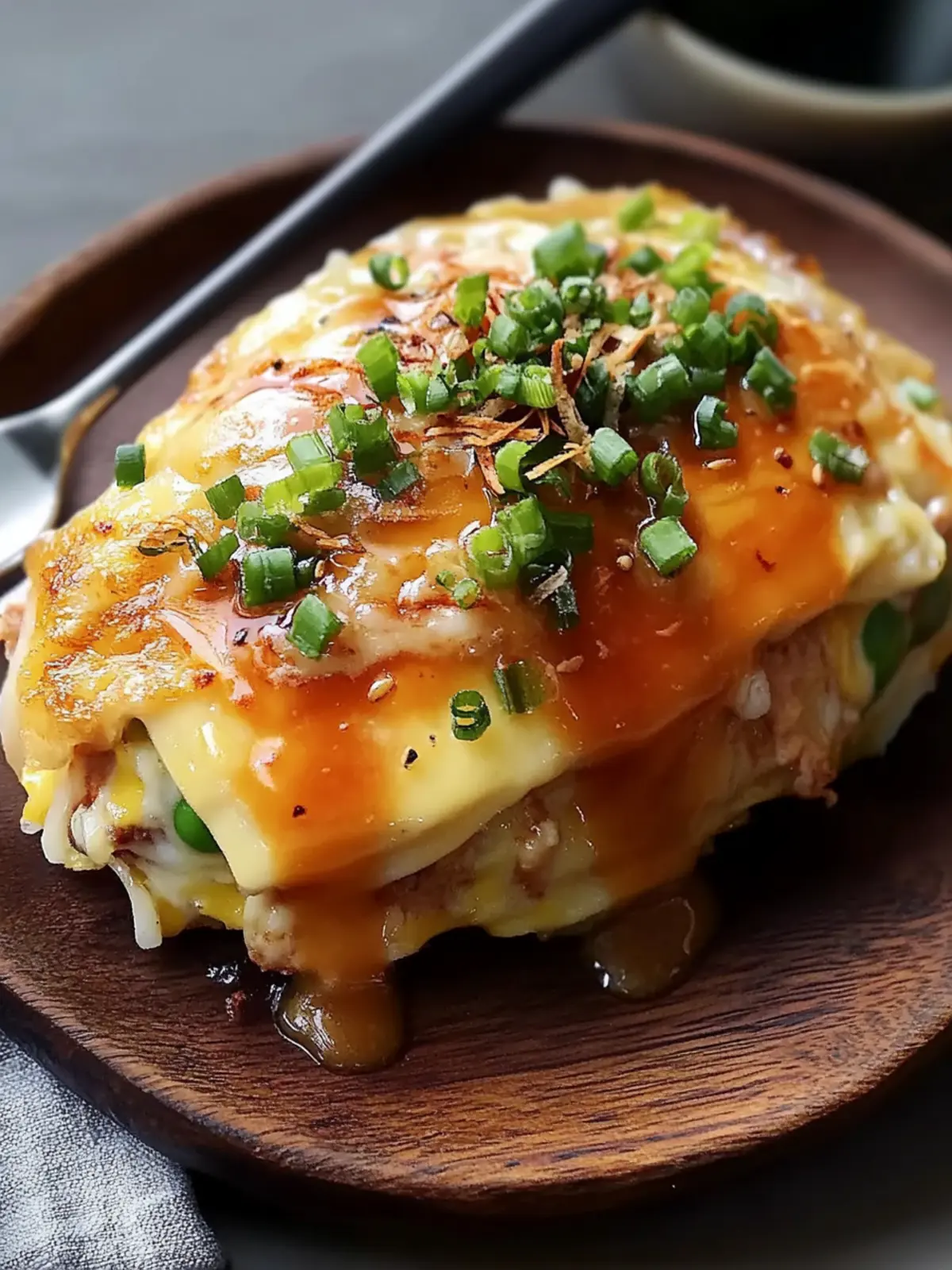
Savory Japanese Monjayaki: A Fun, Flavorful Griddle Delight
Ingredients
Equipment
Method
- In a mixing bowl, combine the all-purpose flour, dashi broth, and cold water. Whisk until smooth.
- Stir in the finely chopped cabbage, green onions, and your choice of seafood or pork. Optionally, add tenkasu or cubed mochi.
- Warm a non-stick griddle over medium heat. Lightly oil the surface.
- Pour a portion of the batter onto the griddle, spreading it into a rustic circle. Let it bubble and crisp.
- Drizzle soy sauce over the cooking batter for added flavor.
- Serve directly from the griddle using a spatula or spoon.