
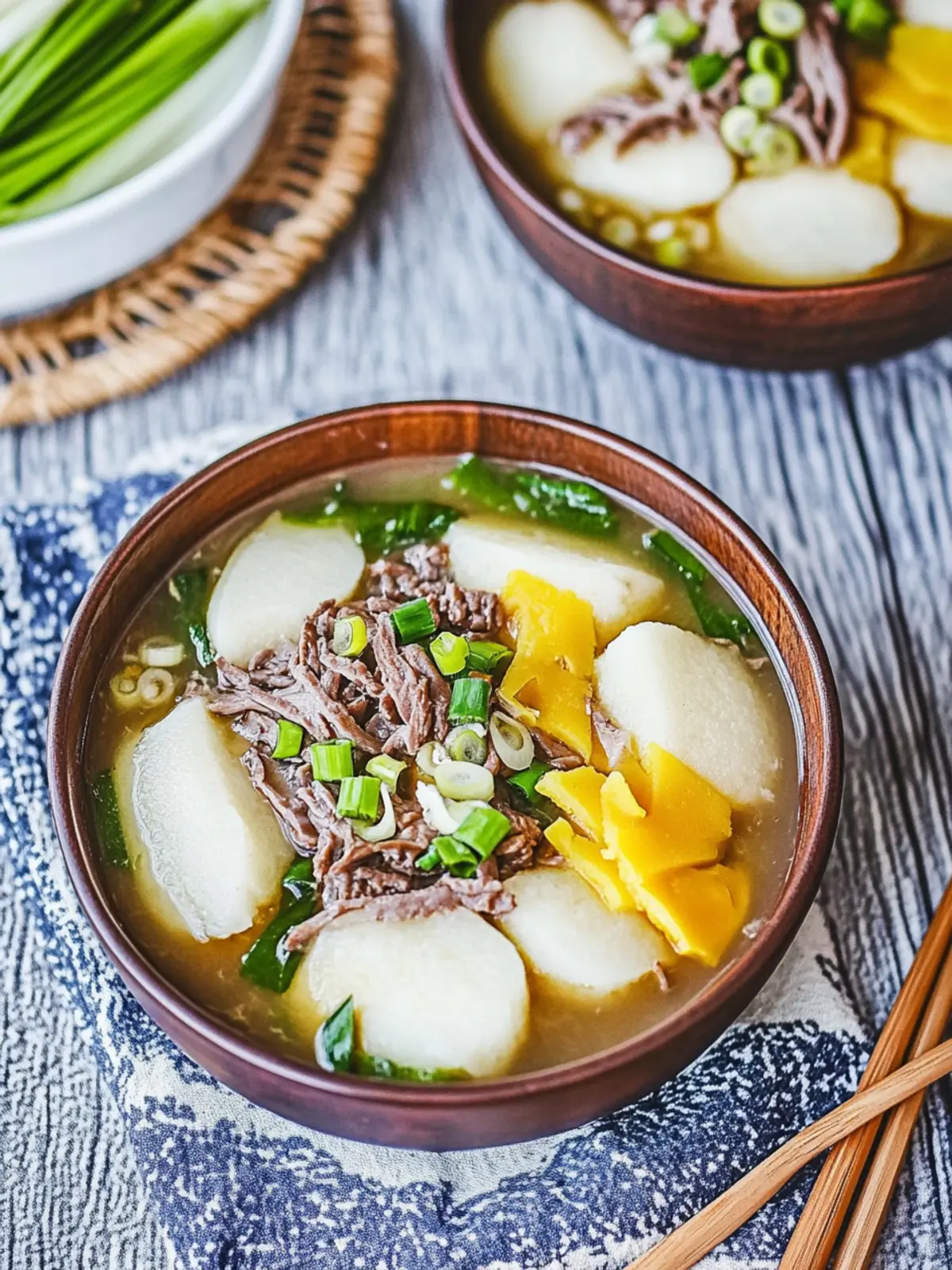
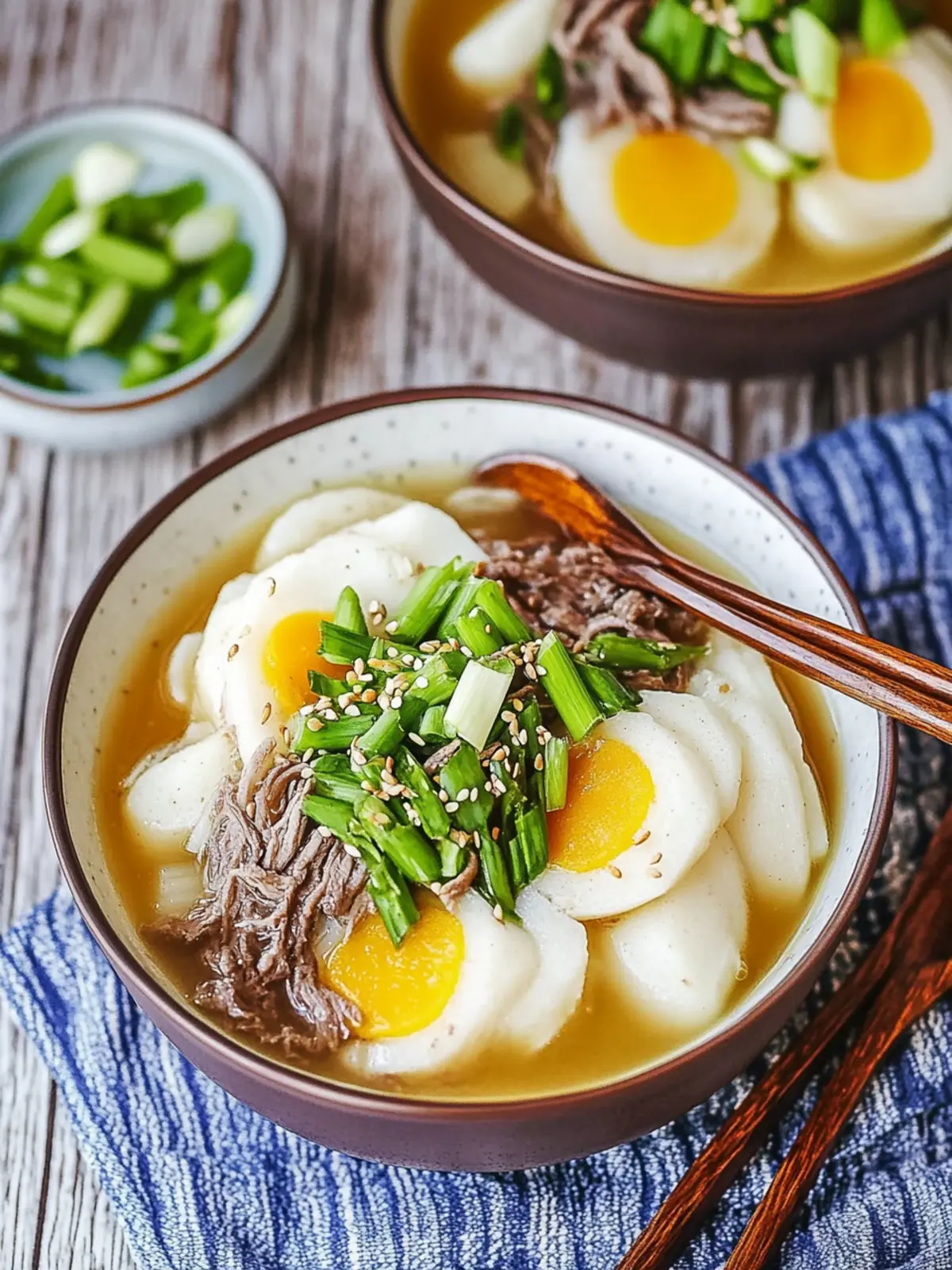
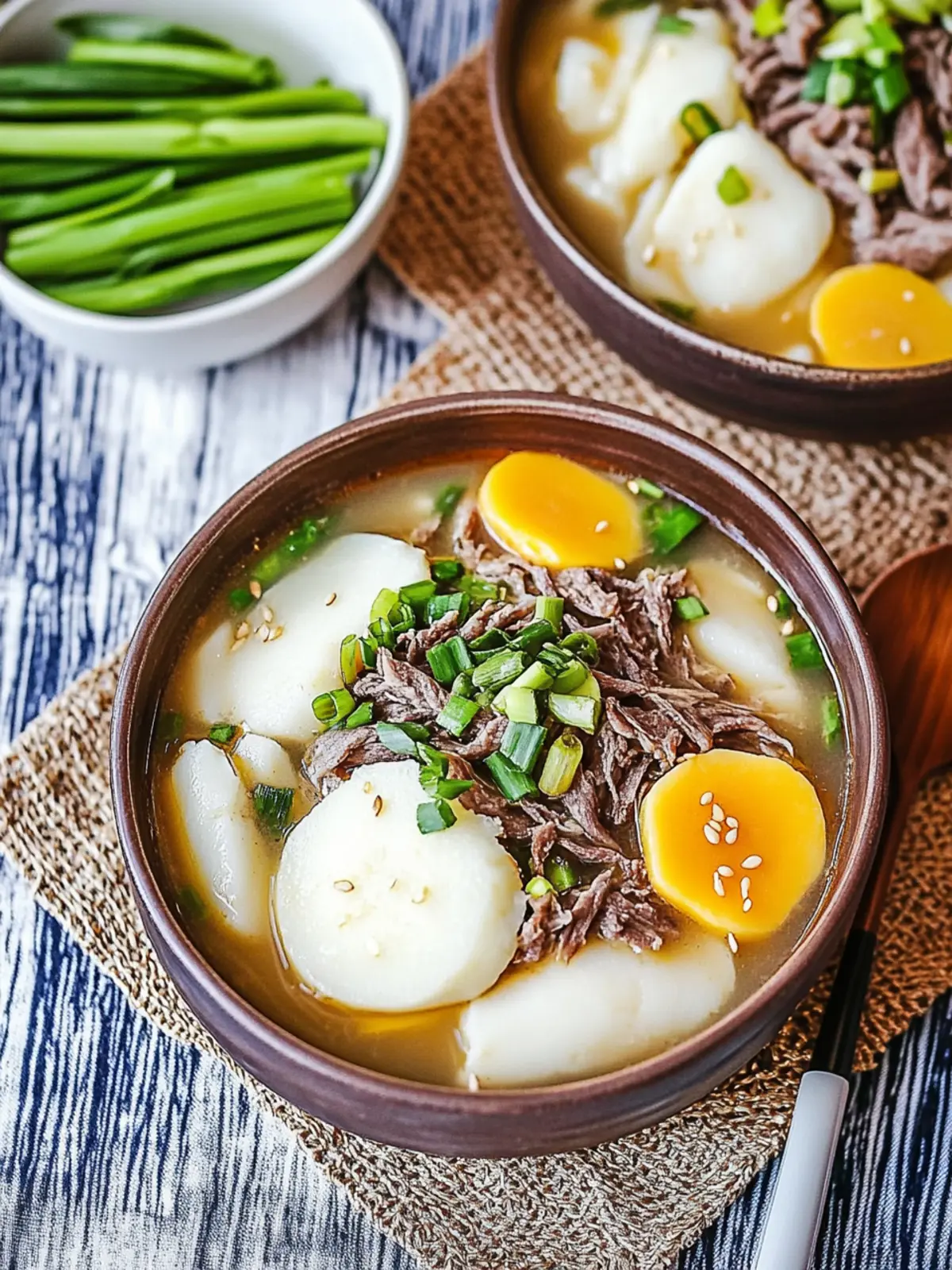
As the sun dips below the horizon and a chill settles in the air, I often find myself longing for the comforting embrace of a warm bowl of Korean rice cake soup, or Tteokguk. It’s not just a meal; it’s a celebration of rich flavors and cherished memories that make my kitchen feel like home. The moment I pour the fragrant broth, a medley of tender beef and garlic, I’m transported back to family gatherings where laughter and stories sparkled like the bubbles in my soup.
This dish brims with versatility, effortlessly combining the chewy texture of the rice cakes with the delicate layers of egg above, each spoonful reminding me of the time I first tried this treasure. What I love most? It’s surprisingly uncomplicated to prepare—perfect for easing the weeknight cooking crunch. Whether you’re looking to impress guests with a flavorful centerpiece or simply seeking a nurturing bowl for yourself, this dish promises to satisfy. So grab your apron and join me in creating a culinary experience that warms both heart and soul.

Why is Korean Rice Cake Soup so beloved?
Comforting Warmth: Each bowl of this delicious soup envelops you in a soothing embrace, perfect for cozy nights in.
Rich and Flavorful: The savory broth, combined with tender beef and aromatic garlic, creates a depth of flavor that will have your taste buds singing.
Uncomplicated Process: With simple steps and only a handful of ingredients, this dish is a breeze to whip up, even on busy weeknights.
Perfect for Sharing: Whether it’s a family dinner or a gathering with friends, Tteokguk is sure to impress and leave everyone asking for seconds.
Versatile Delight: Enjoy it as a light meal or pair it with sides for an unforgettable feast; the choice is yours!
Join me in diving into the world of Korean cuisine with this delightful recipe that brings a taste of home to your table.
Korean Rice Cake Soup Ingredients
• Discover the wholesome ingredients that bring Korean rice cake soup to life!
For the Broth
- Water – 10 cups (2.4 liters) gives the soup a base for rich flavors.
- Beef brisket – 8 ounces (227 grams), cut into cubes for a tender, meaty taste.
- Garlic cloves – 4 peeled and kept whole to impart aromatic depth.
- Green onions – 3, using both white and light green parts for a hint of freshness.
- Korean soup soy sauce (Guk-Ganjang) – 1 1/2 tablespoons (22 milliliters) enhances the broth’s umami richness.
- Sesame oil – 1 tablespoon (15 milliliters) adds nutty flavor and aroma.
- Salt and freshly ground black pepper – to taste, for the perfect seasoning.
For the Soup
- Sliced rice cakes (tteok) – 21 ounces (600 grams, ~4 cups), the star of the show providing delightful chewiness.
- Gim (roasted seaweed) – 2 sheets, toasted for an added crunch and flavor boost.
- Eggs – 3 large, separated into whites and yolks to create beautiful strips for garnish.
For the Garnish
- Reserved beef (shredded) – seasoned and added for extra protein and flavor.
- Minced garlic – 1 clove to amplify the broth’s aromatic qualities.
- Sesame oil – 1 teaspoon to drizzle over the beef for a nutty finish.
- Freshly ground black pepper – 1/4 teaspoon to elevate the garnished beef.
- Reserved dark green onions – thinly sliced to sprinkle on top for color and freshness.
Each ingredient plays a special role in creating a delicious Korean rice cake soup that you’ll want to savor with family and friends!
How to Make Korean Rice Cake Soup
-
Rinse the Beef: Begin by rinsing the beef cubes in cold water, ensuring they’re clean and ready for a flavorful broth. Drain and set aside.
-
Simmer the Broth: In a large pot, combine the water, beef, garlic cloves, and green onions over high heat. Once boiling, reduce to a simmer, cover, and cook until the meat is tender, about 1 to 1.5 hours. Skim off any foam that develops on the surface.
-
Soak the Rice Cakes: While your broth simmers, place the sliced rice cakes in a large bowl and cover with cold water. Allow to soak for 30 minutes, then drain to remove excess moisture.
-
Toast the Gim: Place a skillet over medium heat. Lightly toast a sheet of gim on each side until crisp. Repeat with the second sheet, then slice into strips or crumble, and set aside for that perfect crunch.
-
Prepare Egg Yolks: Separate the egg yolks into a bowl. Lightly grease the skillet, heating it over medium-low heat. Beat the egg yolks until smooth, then pour them into the heated skillet, tilting to create a thin layer. Cook until just set on the bottom, about one minute, then flip to finish and slice into strips. Set aside.
-
Cook Egg Whites: Repeat the previous step with the egg whites, lightly beating before pouring into the skillet. Cook just until set, flipping to brown slightly, then remove, slice, and set aside.
-
Strain the Broth: Once the beef is tender, strain the broth back into the pot over medium heat. Shred the beef pieces and discard the vegetables. Season the beef with minced garlic, sesame oil, and black pepper, then set aside.
-
Season the Broth: Add the soup soy sauce and sesame oil to the simmering broth. Season with salt and freshly ground black pepper to taste. When boiling, add the soaked rice cakes, cooking until softened (5-8 minutes).
-
Serve: Divide the hot soup among individual bowls. Top each bowl with the seasoned shredded beef, crumbled seaweed, egg strips, and reserved green onions. Serve immediately and enjoy!
Optional: Garnish with a few extra sesame seeds for that delightful finishing touch.
Exact quantities are listed in the recipe card below.
Tips for the Best Korean Rice Cake Soup
Quality Ingredients: Use fresh beef and high-quality Korean soup soy sauce for a robust flavor that elevates your dish.
Soak the Rice Cakes: Don’t skip soaking the rice cakes! This helps achieve that perfect chewy texture when you cook them in the broth.
Skim the Foam: During simmering, take a moment to skim off any foam that rises to the top. This keeps your broth clear and beautiful.
Don’t Overcook Eggs: For the egg strips, ensure they’re cooked just enough to be set, avoiding a rubbery texture.
Adjust Seasoning: Taste as you go! Adjust salt and pepper gradually to reach that perfect balance in your Korean rice cake soup.
Serve Hot: Enjoy this delicious soup immediately while it’s warm, as the flavors are best when fresh from the pot!
Make Ahead Options
These delicious Korean rice cake soup ingredients are perfect for meal prep! You can prepare the broth and the shredded beef a day in advance (up to 24 hours), refrigerating them in airtight containers. Simply simmer the broth as usual, then cool it down and store. The rice cakes can also be soaked ahead of time; just keep them in water in the fridge up to 3 days before cooking. When you’re ready to enjoy the soup, heat the broth, add the rice cakes for about 5-8 minutes, and top with the seasoned beef and garnishes. Enjoy a comforting bowl of Tteokguk without the hassle on a busy weeknight!
How to Store and Freeze Korean Rice Cake Soup
Fridge: Store any leftovers in an airtight container for up to 3 days. Reheat gently on the stove, adding a splash of water to maintain the soup’s texture.
Freezer: Korean rice cake soup can be frozen for up to 2 months. Ensure it’s cooled completely, then portion it into freezer-safe containers, leaving some space for expansion.
Reheating: Thaw overnight in the fridge before reheating on the stove. Stir occasionally to ensure even heating and add extra broth or water if needed.
Rice Cakes: If possible, freeze the broth and the shredded beef separately from the rice cakes. This way, you can avoid mushiness upon reheating.
What to Serve with Korean Rice Cake Soup?
The delightful warmth of this soup invites a variety of accompaniments that will enhance your dining experience.
- Kimchi: The spicy, tangy flavors of kimchi add a zesty kick that balances the richness of the soup, enhancing every bite.
- Steamed Rice: A bed of fluffy white rice offers a neutral base, allowing the bold flavors of the soup to shine even brighter.
- Savory Pancakes: Korean pancakes, or Jeon, provide a crispy contrast to the chewy rice cakes, offering delightful crunch with each mouthful.
- Pickled Vegetables: A side of pickled radish or cucumber adds a refreshing, tangy element that perfectly complements the savory notes of the soup.
- Garlic Soy Dipping Sauce: This sauce brings a punch of flavor that pairs well with any side dish, enhancing the overall meal with each dip.
- Herbed Salad: A light, herby salad made with fresh greens and a citrusy dressing adds brightness and freshness, balancing the hearty soup.
- Soba Noodles: Adding a side of chilled soba noodles can provide a textured counterpoint to the warm soup, keeping you refreshed.
- Sesame Oil Drizzled Cucumbers: Crisp cucumbers lightly dressed in sesame oil create a cool, refreshing side that contrasts beautifully with the hot soup.
- Korean Rice Cake Bites: Why not incorporate the main theme? Sweet or savory rice cake bites make for a fun finger food that ties the meal together.
- Green Tea: Pair with a warm cup of green tea to cleanse the palate and enhance the overall dining experience with a soothing finish.
Korean Rice Cake Soup Variations
There’s always room to personalize this heartwarming soup and make it your own.
- Vegetarian: Replace the beef with mushrooms or tofu for a plant-based delight that still delivers delicious umami flavor.
- Spicy Kick: Add sliced chili peppers or a dash of gochujang to the broth for a pleasantly fiery twist that warms you from the inside out.
- Coconut Milk: For a creamy twist, stir in a can of coconut milk towards the end of cooking, adding a tropical flavor that complements the savory broth.
- Extra Greens: Load up on nutrition by tossing in fresh spinach or bok choy in the last few minutes of cooking, brightening the dish with color and flavor.
- Noodle Variation: Substitute half the rice cakes with thin rice noodles for a different texture and a fun twist, keeping it interesting with every slurp.
- Savory Broth: Instead of water, use beef or vegetable broth for an enhanced flavor experience that enriches every bowl of soup.
- Nutty Touch: Sprinkle with crushed peanuts or sesame seeds before serving to add a delightful crunch and nuttiness that contrasts beautifully with the softness of the rice cakes.
- Herbal Infusion: Incorporate fresh herbs like cilantro or perilla leaves for a fragrant uplift that brings a new dimension to this classic dish.
Feel free to mix and match these ideas, and create a version of Korean rice cake soup that speaks to your culinary soul!
Korean Rice Cake Soup Recipe FAQs
What kind of beef should I use for Tteokguk?
I recommend using beef brisket for this soup. It has great flavor and becomes tender during the simmering process. Look for cuts with a good amount of marbling, as this adds richness to the broth.
How should I store leftover Korean rice cake soup?
Absolutely! Store any leftovers in an airtight container in the refrigerator for up to 3 days. When you’re ready to enjoy it again, gently reheat on the stove, adding a splash of water to maintain its texture and flavor.
Can I freeze Korean rice cake soup?
Yes, you can! Pour cooled soup into freezer-safe containers and freeze for up to 2 months. To reheat, thaw in the fridge overnight, then gently warm on the stove. If the soup thickens, add extra broth or water as needed to achieve your desired consistency.
How can I tell if the rice cakes are fresh and ready to use?
Fresh rice cakes should feel soft and slightly chewy without dark spots or a sour smell. If they appear hard, soak them in cold water for at least 30 minutes before cooking to ensure they soften properly.
Can I make Tteokguk vegetarian?
Very! To make a vegetarian version of Korean rice cake soup, substitute the beef with a flavorful vegetable broth and use tofu or mushrooms for protein. You can also add more vegetables, like carrots or bok choy, to enhance the dish’s heartiness.
What do I do if my broth tastes too salty?
If you find your broth has become too salty, don’t worry! You can balance it out by adding a bit of water to dilute the flavors. Additionally, simmering it with a peeled potato for about 10 minutes can help absorb some of the saltiness, just remember to remove the potato before serving.
Delicious Korean Rice Cake Soup for Cozy Nights In
Ingredients
Equipment
Method
- Rinse the beef cubes in cold water, ensuring they're clean and ready for a flavorful broth. Drain and set aside.
- In a large pot, combine the water, beef, garlic cloves, and green onions over high heat. Once boiling, reduce to a simmer, cover, and cook until the meat is tender, about 1 to 1.5 hours. Skim off any foam that develops on the surface.
- While your broth simmers, place the sliced rice cakes in a large bowl and cover with cold water. Allow to soak for 30 minutes, then drain.
- Place a skillet over medium heat. Lightly toast a sheet of gim on each side until crisp. Repeat with the second sheet, then slice into strips or crumble.
- Separate the egg yolks into a bowl. Lightly grease the skillet, heat over medium-low heat, and cook the yolks until just set. Slice into strips.
- Repeat with the egg whites, cooking until just set, then remove, slice, and set aside.
- Once the beef is tender, strain the broth back into the pot over medium heat. Shred the beef pieces and discard the vegetables.
- Add the soup soy sauce and sesame oil to the simmering broth. Season with salt and freshly ground black pepper to taste. When boiling, add the soaked rice cakes, cooking until softened (5-8 minutes).
- Divide the hot soup among individual bowls. Top with the seasoned shredded beef, crumbled seaweed, egg strips, and reserved green onions. Serve immediately.