
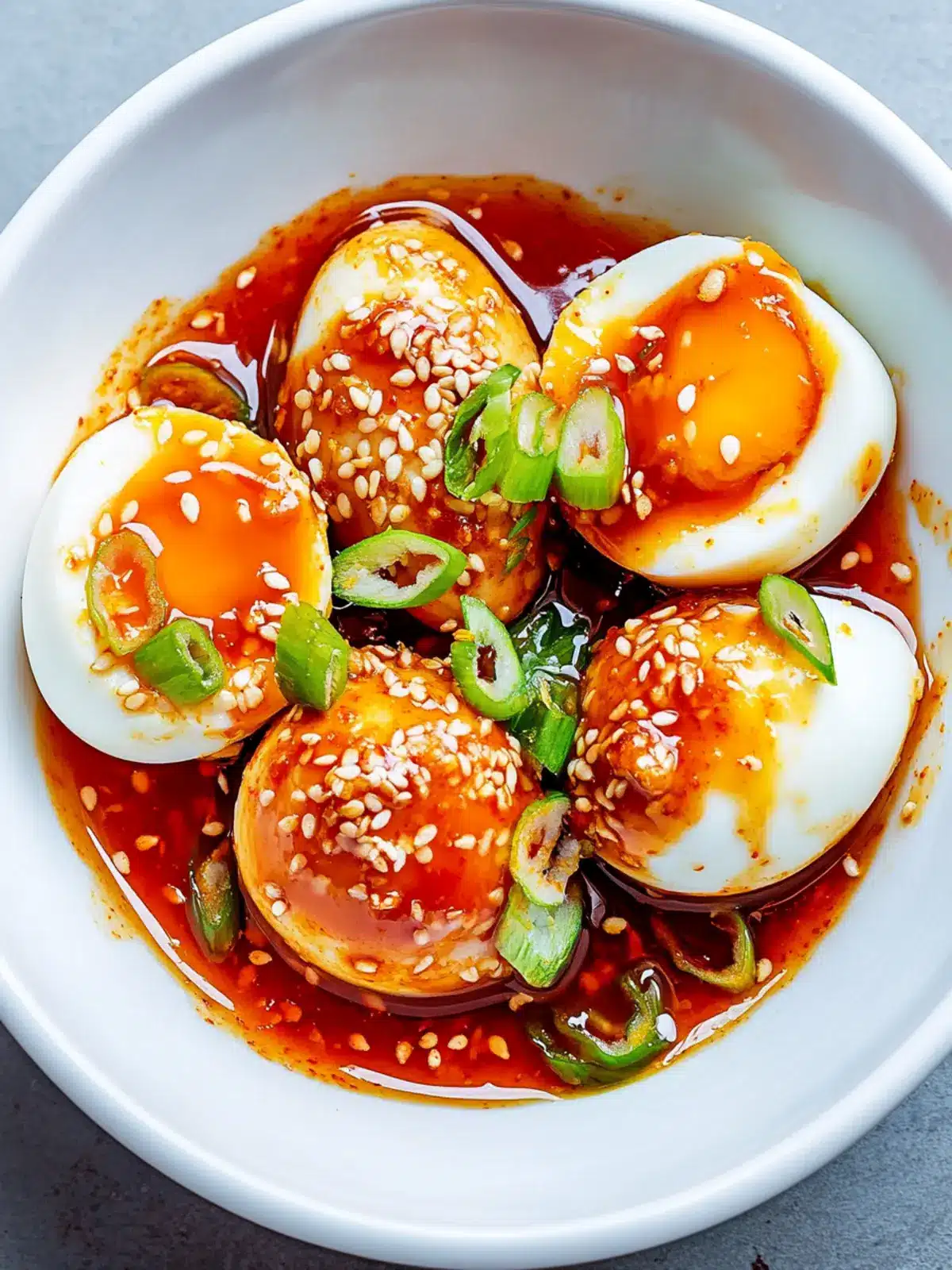
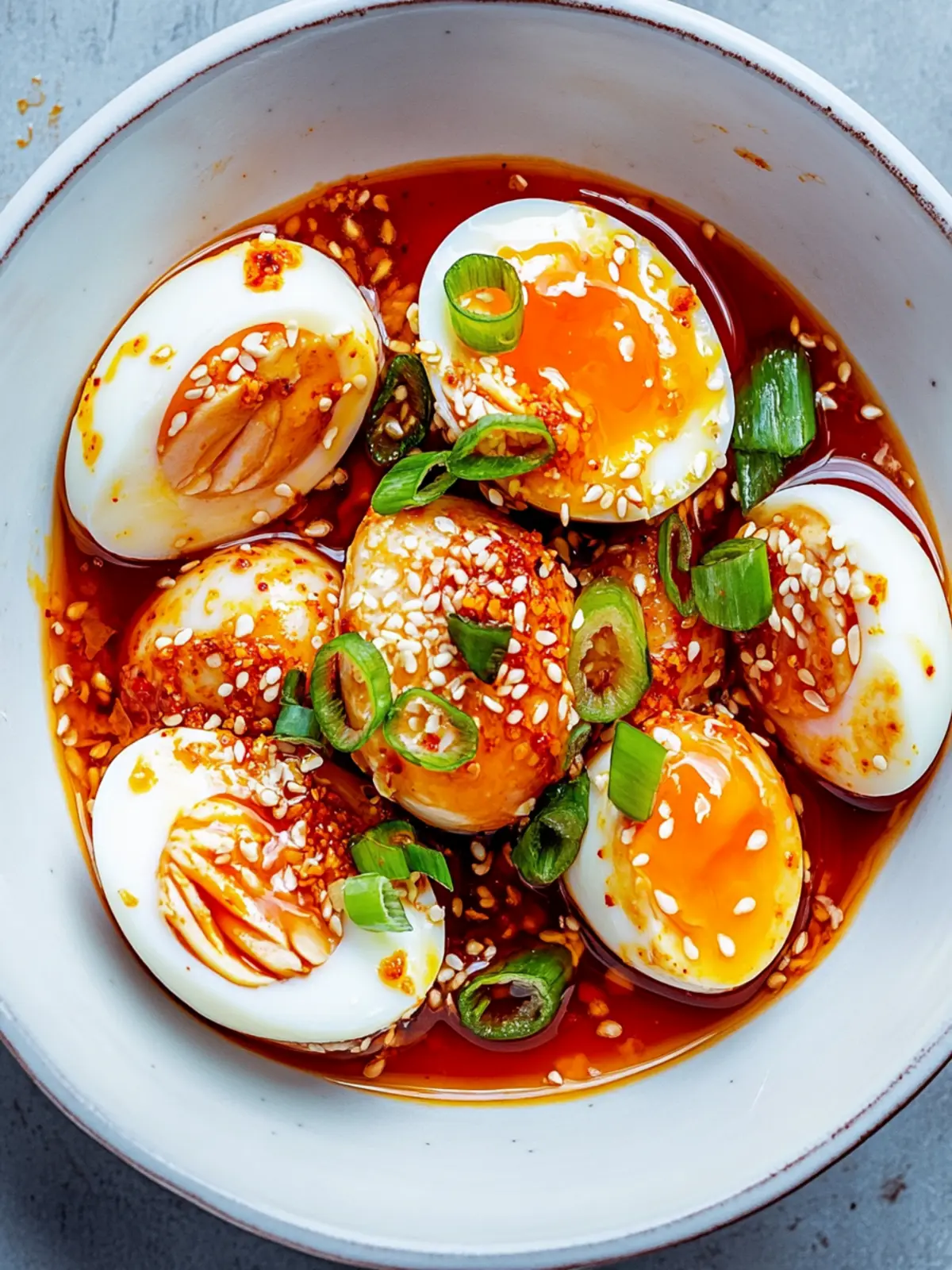
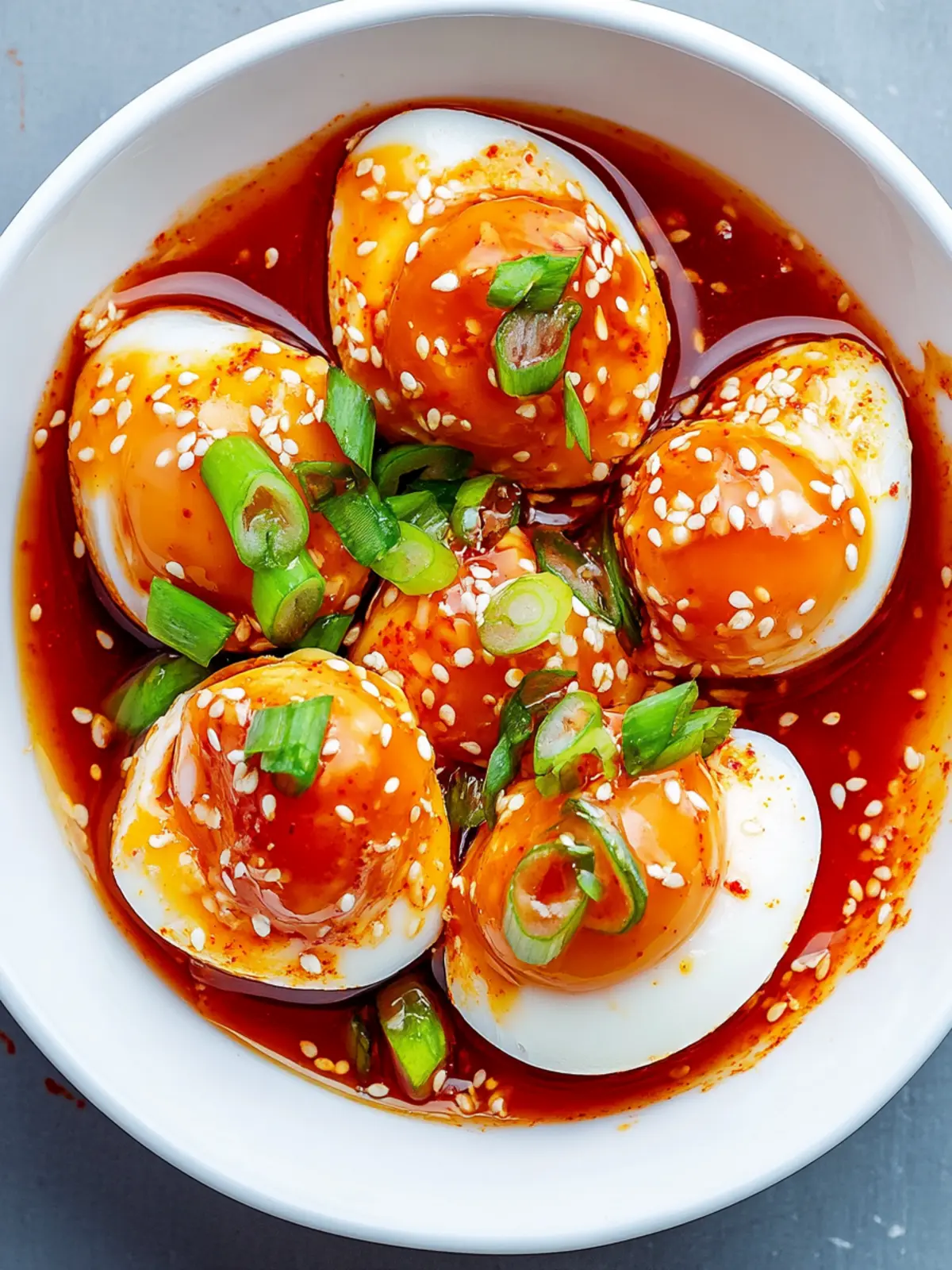
When I first introduced Korean flavors to my kitchen, I didn’t expect the bold, Southern-inspired Spicy Gochujang Eggs to become my go-to breakfast. The moment those eggs hit the plate, adorned in their vibrant, glossy sauce, I knew I had discovered something special. Perfectly boiled, with yolks that offer both a creamy richness and a slightly runny center, these eggs transform even the most mundane morning into a culinary adventure.
Imagine the sizzle of garlic as you sauté it to create a base for a sauce that strikes the perfect balance between spicy and sweet. The unique kick from gochujang—Korea’s beloved red chili paste—elevates this dish beyond a typical breakfast, making it an impressive appetizer or a comforting side for dinner gatherings. Quick to prepare and bursting with flavor, these Spicy Gochujang Eggs are a delightful escape from fast food routines. Join me in whipping this up for those busy mornings or lazy weekends; it’s a crowd-pleaser you won’t want to miss!

Why are Spicy Gochujang Eggs perfect for breakfast?
Bold flavors: These eggs are anything but ordinary, featuring a dynamic blend of spices that electrify your morning routine.
Customization: The flexibility to adjust egg doneness means you can cater to your and your family’s preferences.
Quick preparation: Ready in under 30 minutes, these eggs are ideal for busy mornings or last-minute brunch plans.
Crowd-pleaser: Whether served on their own or as part of a larger spread with kimchi and rice, they’re sure to impress guests and family alike.
Nutrient-rich: Packed with protein, these eggs are a wholesome way to start the day, elevating your breakfast game without the guilt.
Why not pair them with some of your favorite sides to create a complete meal? Trust me, these spicy eggs will be a staple in your kitchen!
Spicy Gochujang Eggs Ingredients
For the Eggs
• Large Eggs – A nutrient-rich base; boil for 6 minutes for a runny yolk or 9 minutes for a firmer texture.
For the Sauce
• Gochujang – The heart of the recipe, providing essential spicy depth; consider another red chili paste if needed.
• Soy Sauce – Adds umami; swap for tamari to keep it gluten-free.
• Sugar – Balances the sauce’s spice and salt; brown sugar lends a deeper flavor if desired.
• Rice Vinegar – Adds a touch of acidity for balance; apple cider vinegar is a good substitute when necessary.
• Chicken Stock (or Water) – Infuses the sauce with flavor; switch to vegetable stock for a vegetarian option.
• Neutral Oil – Ideal for sautéing; try sesame oil for an extra layer of flavor.
• Garlic (minced) – Offers an aromatic touch; adjust the amount based on your taste.
For Garnish
• Scallion (sliced) – Freshens the dish; consider chives or green onions as alternatives.
• Toasted Sesame Seeds – Adds a delightful crunch; feel free to omit if nut-free.
Embrace the bold, spicy twist of Spicy Gochujang Eggs to transform your breakfast game!
How to Make Spicy Gochujang Eggs
-
Boil the Eggs: Bring a pot of water to a rolling boil, then gently add the large eggs. Cover and let them cook for 6 minutes for a runny yolk or 9 minutes for hard-boiled perfection.
-
Ice Bath: Transfer the cooked eggs immediately into an ice bath to stop the cooking process. Allow them to cool for a few minutes, then peel them for a perfect texture.
-
Prepare Sauce: In a mixing bowl, whisk together gochujang, soy sauce, sugar, rice vinegar, and chicken stock until thoroughly combined. This will be the delicious coat for your eggs!
-
Cook Sauce: Heat neutral oil in a skillet over medium heat. Sauté the minced garlic for about 15 seconds until fragrant, then pour in the sauce mixture and let it simmer gently.
-
Combine Eggs and Sauce: Gently add the peeled eggs to the skillet, cooking for an additional 3 minutes. Make sure to turn them occasionally, ensuring they are evenly coated in that vibrant sauce.
-
Serve: Plate the eggs atop a bed of steamed rice, and finish by garnishing with sliced scallions and toasted sesame seeds for a delightful crunch.
Optional: Serve with kimchi or pickled vegetables for an extra kick!
Exact quantities are listed in the recipe card below.
Expert Tips for Spicy Gochujang Eggs
-
Monitor Boiling Time: Keep an eye on the clock while boiling your eggs. Too long can lead to rubbery whites and chalky yolks.
-
Ice Bath Necessity: After boiling, plunge your eggs into an ice bath immediately. This step not only cools them quickly but also makes peeling easier.
-
Sauce Consistency: If your sauce turns out too thin, let it simmer a bit longer to thicken. Conversely, if it’s too thick, stir in a little water to achieve the desired consistency.
-
Flavor Enhancements: Feel free to adjust the level of gochujang to match your spice preference. You can add more or consider a milder chili paste for a gentler flavor.
-
Storage Tips: Leftover Spicy Gochujang Eggs can be stored in an airtight container for up to 5 days, making them a convenient meal prep option!
-
Leftover Sauce Bonus: Don’t toss any leftover sauce! Use it to drizzle over grilled veggies or even as a zesty dressing for salads.
How to Store and Freeze Spicy Gochujang Eggs
-
Fridge: Store leftover Spicy Gochujang Eggs in an airtight container for up to 5 days to keep them fresh and flavorful.
-
Freezer: For longer storage, wrap individual eggs in plastic wrap and freeze for up to 3 months. Thaw them overnight in the fridge before reheating.
-
Reheating: Gently reheat the eggs in a pan over low heat or in the microwave until warmed through. Avoid overheating to preserve the egg’s texture.
-
Leftover Sauce: Store any leftover sauce in an airtight container in the fridge for up to a week—great for drizzling over other dishes!
Make Ahead Options
These Spicy Gochujang Eggs are perfect for meal prep, allowing you to enjoy a delicious breakfast without the morning rush! You can boil the eggs and store them in the refrigerator for up to 3 days; this not only saves time but also maintains their delicious flavor. Simply place the peeled eggs in an airtight container to prevent them from drying out. Additionally, you can prepare the sauce a day in advance—just refrigerate it in a jar. When you’re ready to serve, gently reheat the sauce in a skillet, add the eggs, and cook for a few minutes until heated through. You’ll have a satisfying meal ready in no time, just as flavorful as when freshly made!
What to Serve with Spicy Gochujang Eggs?
Elevate your mealtime experience by pairing these vibrant and flavorful eggs with delightful sides that complement their spicy sweetness.
-
Steamed Jasmine Rice: The fluffy texture of jasmine rice absorbs the bold sauce beautifully, making each bite a harmonious experience. A classic pairing that balances the heat.
-
Crunchy Kimchi: This fermented side not only offers a tangy crunch but also adds probiotic benefits, enriching your dish with a dimensional flavor.
-
Refreshing Cucumber Salad: Crisp, cool cucumbers dressed in a light vinegar sauce help to mellow the heat of the gochujang, creating a delightful contrast.
-
Pickled Vegetables: The tangy, slightly sweet notes of pickled radishes or carrots enhance the meal with vibrant flavors and a satisfying crunch.
-
Savory Toasted Naan: Enjoy dipping pieces of naan into the gochujang sauce, offering a comforting, hearty accompaniment that brings a touch of warmth.
-
Soft Boiled Ramen Noodles: For those lazy weekend brunches, serve over soft ramen noodles to create a comforting bowl that brings joy with every slurp.
Whether you go simple or explore culinary creativity, these sides will enhance your Spicy Gochujang Eggs experience!
Spicy Gochujang Eggs Variations
Feel free to experiment with these Spicy Gochujang Eggs to suit your tastes and dietary preferences!
- Gluten-Free: Swap soy sauce for tamari to maintain that delicious umami flavor without gluten.
- Vegetarian: Replace chicken stock with vegetable stock or simply use water for a lighter sauce option.
- Creamy Twist: Add a tablespoon of mayonnaise or Greek yogurt to the sauce for a creamier finish. This adds a delightful richness that wonderfully complements the spice!
- Extra Veggies: Toss in some spinach or bok choy with the sauce for a nutritious boost. The greens add a fresh crunch and enhance the dish’s vibrant colors.
- Spicy Kick: Increase the gochujang if you crave more heat, or add sliced fresh chili for an extra kick. Adjusting the spice level is a tasty way to customize to your liking!
- Zesty Flavor: Incorporate a splash of lime juice into the sauce for a zesty brightness that balances the heat. It’s a refreshing twist that’ll wake up your taste buds.
- Cheesy Delight: Sprinkle some shredded cheese on top before serving for a melty, savory layer. A sprinkle of feta or mozzarella can add a delightful creaminess.
- Nuts for Crunch: Add chopped peanuts or cashews before serving for added crunch and nutty flavor. Just remember to omit if you’re serving nut-free!
Let your culinary creativity bloom as you make these Spicy Gochujang Eggs your own!
Spicy Gochujang Eggs Recipe FAQs
What type of eggs should I use for Spicy Gochujang Eggs?
Absolutely! Use large, fresh eggs for the best texture and flavor. Fresh eggs will boil better and peel more easily compared to older ones. Look for eggs with no cracks and a clean shell for the best quality.
How long can I store leftover Spicy Gochujang Eggs?
You can store leftover Spicy Gochujang Eggs in an airtight container in the fridge for up to 5 days. Just be sure to let them cool completely before sealing to maintain their freshness.
Can I freeze Spicy Gochujang Eggs?
Very! For freezing, wrap each peeled egg individually in plastic wrap and place them in a freezer-safe bag or container. They can be frozen for up to 3 months. When ready to enjoy, thaw them overnight in the fridge before reheating.
What if my eggs are hard to peel?
If you find that your eggs are hard to peel, consider using the ice bath method. After boiling, immediately transfer them to cold water; this helps relax the shell and membrane. Also, older eggs are usually easier to peel as the membranes separate better from the egg white.
Can my pets eat Spicy Gochujang Eggs?
No, it’s best to avoid giving Spicy Gochujang Eggs to your pets. Gochujang contains ingredients that can be spicy and might upset their stomachs. Stick to plain cooked eggs without any sauce for an occasional treat.
How can I adjust the spice level in the sauce?
For customizing the spice level, start by using a smaller amount of gochujang and taste-testing as you go. You can always add more for a bolder flavor, but it’s harder to reduce spiciness once it’s there. If it gets too hot, consider adding a little more sugar or vinegar to balance it out!
Spicy Gochujang Eggs: Elevate Your Breakfast Game Today
Ingredients
Equipment
Method
- Boil the Eggs: Bring a pot of water to a rolling boil, then gently add the large eggs. Cover and cook for 6 minutes for a runny yolk or 9 minutes for hard-boiled perfection.
- Ice Bath: Transfer the cooked eggs immediately into an ice bath to stop the cooking process. Allow them to cool for a few minutes, then peel them for a perfect texture.
- Prepare Sauce: In a mixing bowl, whisk together gochujang, soy sauce, sugar, rice vinegar, and chicken stock until thoroughly combined.
- Cook Sauce: Heat neutral oil in a skillet over medium heat. Sauté the minced garlic for about 15 seconds until fragrant, then pour in the sauce mixture and let it simmer gently.
- Combine Eggs and Sauce: Gently add the peeled eggs to the skillet, cooking for an additional 3 minutes. Turn them occasionally to ensure they are evenly coated.
- Serve: Plate the eggs atop a bed of steamed rice, and garnish with sliced scallions and toasted sesame seeds.