
The first time I tasted Doenjang Jjigae, I was captivated by its rich, earthy aroma wafting through the kitchen. This delightful Korean soybean paste stew is not merely a dish; it’s an embodiment of warmth and comfort that wraps around you on chilly evenings. Imagine gathering around the table with loved ones, steaming bowls of vibrant stew filled with tender tofu, fresh vegetables, and a sprinkle of heat from Gochugaru, all waiting to be devoured.
With just fifteen minutes from start to finish, this stew is a lifesaver for busy weeknights or when you crave something homemade that breaks the monotony of fast food. It’s a versatile recipe, too; feel free to toss in whatever veggies you have on hand! Stripped of complexity yet bursting with flavor, Doenjang Jjigae is destined to become your new go-to comfort food. Grab your favorite bowl, and let’s dive into this simple yet satisfying recipe that will infuse your dinner table with warmth and laughter.
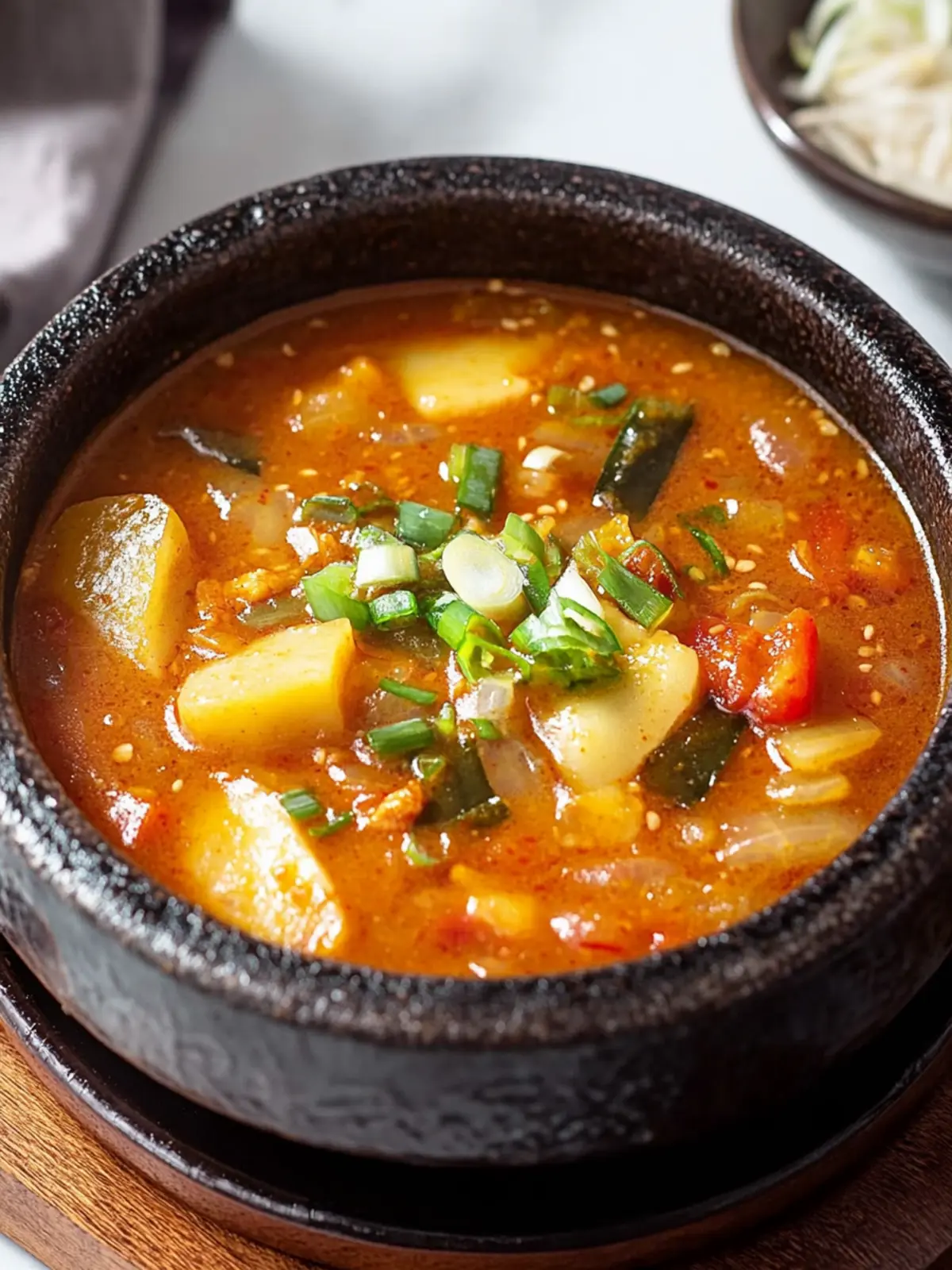
Why is Soybean Paste Stew a must-try?
Quick to prepare: With only 15 minutes from prep to plate, this dish is perfect for those busy evenings when time is tight.
Bold flavor: The rich umami from Doenjang paired with the spice of Gochugaru creates a warm and inviting taste that will impress your dinner guests.
Versatile ingredients: Use whatever vegetables or proteins you have on hand, making it a flexible option for any pantry!
Nourishing comfort: This stew offers both heartiness and warmth, perfect for cozy nights in. Pair it with rice and kimchi for a well-rounded meal that satisfies.
Crowd-pleaser: Serve it at your next gathering, and watch as it becomes the star of the show! Enjoy this classic dish, and for more comforting recipes, check out our collection of homemade soup recipes.
Soybean Paste Stew Ingredients
For the Broth
• Anchovy stock dashi – adds a deep, savory flavor base; you can also use unsalted chicken or vegetable broth for a lighter option.
For the Stew
• Doenjang (Korean soybean paste) – the star ingredient that provides the rich umami flavor central to this soybean paste stew.
• Gochugaru (Korean chili flakes) – adds a delightful warmth and smokiness; adjust the amount to your taste preference.
• Garlic – minced for a fragrant kick; fresh garlic enhances the overall depth of flavor.
• Onion – diced to lend sweetness and texture to the stew.
• Zucchini – diced for a subtle crunch and added nutrition; feel free to swap it with other vegetables you prefer.
• Mushrooms – bring earthy flavor and a meaty texture; shiitake or button mushrooms work beautifully.
• Tofu – cut into cubes for creaminess; both soft and medium-firm varieties hold up well in the stew.
For Garnish
• Green onion – sliced to brighten the dish with fresh flavor; adds a lovely visual appeal.
• Chili pepper – optional for an extra dash of heat; sprinkle it on top for a beautiful presentation.
How to Make Soybean Paste Stew
-
Combine stock and Doenjang: In a pot over medium heat, add the anchovy stock dashi and Doenjang. Stir gently until the soybean paste is fully dissolved, infusing the broth with its rich flavor.
-
Add spices and garlic: Sprinkle in the Gochugaru and minced garlic. Bring the mixture to a boil while stirring occasionally, allowing those wonderful aromas to fill your kitchen.
-
Cook the veggies: Toss in the diced onion and zucchini, cooking for about 5 minutes. They should soften slightly while still retaining a bit of crunch for that ideal texture.
-
Incorporate tofu and mushrooms: Gently add the tofu cubes and mushrooms to the pot. Cover and simmer for another 3-4 minutes, letting the stew meld together until you reach your desired consistency.
-
Garnish and serve: Once cooked, ladle the stew into bowls. Garnish with green onions and chili peppers if desired, and serve warm with fluffy steamed rice and a side of kimchi for a complete meal.
Optional: Add a sprinkle of sesame seeds for an extra layer of flavor and crunch.
Exact quantities are listed in the recipe card below.
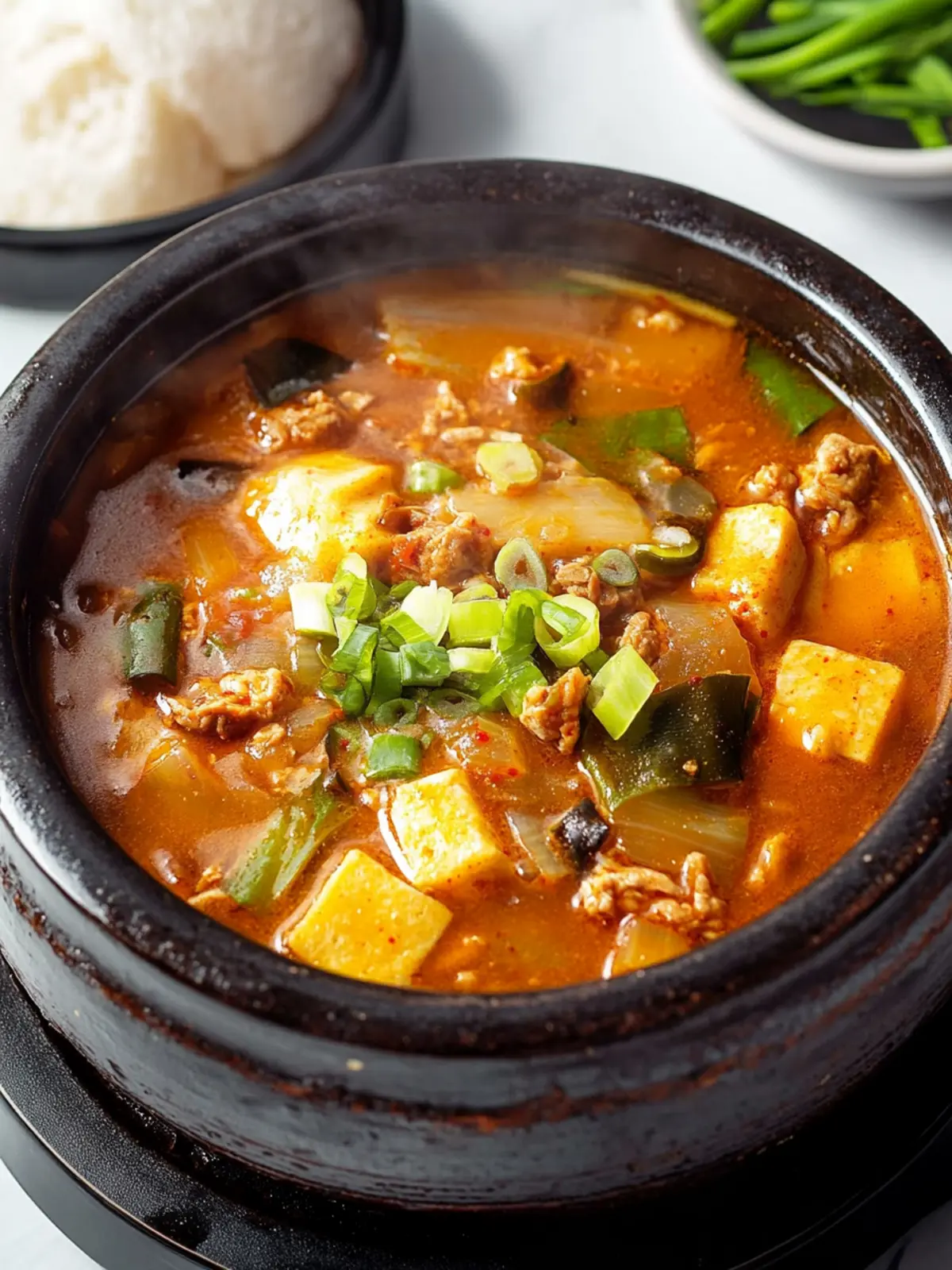
Storage Tips for Soybean Paste Stew
Fridge: Store leftover soybean paste stew in an airtight container for up to 3 days. Allow it to cool completely before refrigerating to maintain its flavor and texture.
Freezer: For longer storage, freeze the stew in a freezer-safe container for up to 2 months. Ensure it’s completely cooled before sealing to prevent freezer burn.
Reheating: To enjoy your delicious stew again, thaw overnight in the fridge and reheat gently on the stovetop or in the microwave until warmed through. You may want to add a splash of broth to restore its original consistency.
Expert Tips for Soybean Paste Stew
• Quality Doenjang: Use high-quality Doenjang for a deeper flavor; cheaper brands may taste overly salty or lack richness.
• Adjust the Heat: Start with a small amount of Gochugaru—it’s easier to add spice than to tone it down if the stew becomes too hot.
• Fresh Veggies: Always opt for fresh vegetables; wilted or stale produce can compromise the wholesome taste of your soybean paste stew.
• Texture Matters: To prevent mushy tofu, add it near the end of the cooking time; this keeps it tender yet firm.
• Broth Choice: Experiment with different broths. While anchovy stock dashi gives an authentic taste, vegetable broth is a great vegan alternative that still delivers flavor.
Soybean Paste Stew Variations
Feel free to let your creativity shine and customize this delightful stew to your heart’s content!
-
Veggie-Packed: Add diced carrots or spinach for extra nutrients and vibrant color, making every bowl even more nourishing.
-
Spicy Kick: To elevate the heat, toss in sliced jalapeños or a spoonful of gochujang for an extra fiery surprise that warms the soul.
-
Protein Boost: Substitute tofu for cooked chicken or beef for a heartier stew, perfect for meat lovers who crave that satisfying bite.
-
Mushroom Medley: Use a mix of shiitake, oyster, or portobello mushrooms for a deeper, more complex umami flavor that enhances the richness.
-
Coconut Twist: Swap out half the broth with coconut milk for a creamy, tropical flair that adds a sweet undertone to the savory stew.
-
Sourdough Base: Serve the stew in warm, hollowed-out sourdough bread bowls to soak up the broth’s goodness while adding delightful crusty texture.
-
Fermented Flavor: Stir in some kimchi while cooking to infuse a tangy, probiotic punch, creating an exciting fusion of flavors that spark your taste buds.
-
Herb Infusion: Garnish with fresh cilantro or basil for a refreshing herbal note that complements the warmth of the stew beautifully.
What to Serve with Soybean Paste Stew?
Creating the perfect meal means finding delightful companions for your comforting stew that enhance both flavor and texture.
-
Steamed Rice: A classic companion, fluffy rice soaks up the rich broth, making each bite more satisfying and complete.
-
Kimchi: This fermented side dish adds a tangy spice, offering a refreshing contrast to the stew’s warmth while enhancing its umami flavors.
-
Sautéed Greens: Light and healthy, sautéed bok choy or spinach brings a vibrant color and adds nutritious benefits that balance the hearty stew.
-
Grilled Miso Eggplant: The smokiness of grilled eggplant topped with a miso glaze complements the savory notes of the soy-based stew beautifully, creating a delicious fusion.
-
Crispy Tofu Bites: These crunchy morsels offer a delightful texture that pairs perfectly with the soft tofu in the stew, adding an extra layer of flavor.
-
Savory Pancakes: Korean scallion pancakes provide a hearty crunch with each bite, bringing a golden, fried element that elevates the whole meal.
-
Cold Noodle Salad: A refreshing dish like soba noodles dressed in a light soy sauce or sesame dressing adds a contrasting coolness that balances the warm stew.
-
Sweet Rice Cakes: End on a sweet note with chewy, lightly sweetened rice cakes, providing a post-meal treat that ties the meal together.
Choose any of these pairings for a well-rounded dining experience that celebrates the cozy nature of Soybean Paste Stew!
Make Ahead Options
Doenjang Jjigae is an ideal candidate for meal prep, allowing you to enjoy this comforting soybean paste stew with greater ease during busy nights! You can prep the vegetables (onion, zucchini, and mushrooms) up to 3 days in advance, storing them in an airtight container in the refrigerator to retain freshness. For even better quality, consider pre-mixing the broth ingredients (anchovy stock, Doenjang, garlic, and Gochugaru) and refrigerate them in a separate container for up to 24 hours. When you’re ready to serve, simply heat the broth mixture in a pot, add the prepped vegetables and tofu, and cook until everything is warmed through. This method ensures your stew tastes just as delicious as when freshly made while saving you valuable time!
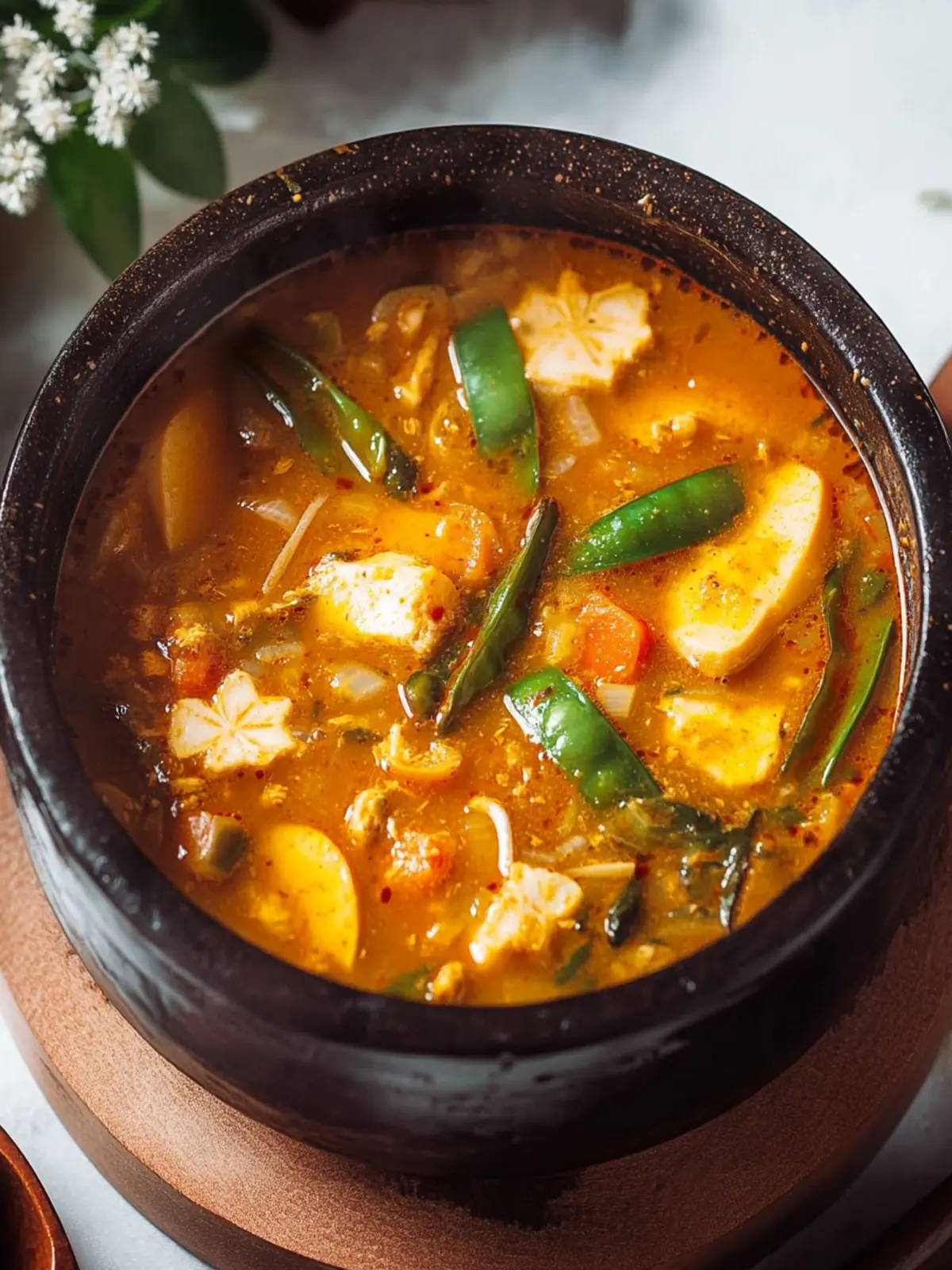
Soybean Paste Stew Recipe FAQs
What type of broth is best for Soybean Paste Stew?
I recommend using anchovy stock dashi for a rich, savory flavor, but you can also substitute unsalted chicken or vegetable broth if you prefer a lighter option. Just be sure to taste and adjust seasoning as necessary!
How do I store leftover Soybean Paste Stew?
Absolutely! You can store leftover stew in an airtight container in the fridge for up to 3 days. Just allow it to cool fully before sealing to keep that delightful flavor intact. When you reheat, a splash of broth can help revive the original texture.
Can I freeze Soybean Paste Stew?
Yes, indeed! To freeze, wait until the stew is completely cooled. Pour it into a freezer-safe container, leaving some space at the top for expansion, and freeze for up to 2 months. When ready to enjoy, thaw it in the refrigerator overnight, then reheat gently on the stovetop or in the microwave.
How can I prevent the tofu from becoming mushy in the stew?
Very good question! To prevent mushy tofu, add it to the pot near the end of the cooking time. This way, it retains its tender but firm texture, allowing you to enjoy those delightful creamy bites without losing shape.
Are there any dietary considerations for Soybean Paste Stew?
Yes! This recipe is naturally vegetarian as long as you use vegetable broth. However, if you have soy allergies, you’ll want to avoid the tofu and Doenjang. You can try alternatives like chickpeas for protein. Always check ingredient labels to ensure they meet your dietary needs!
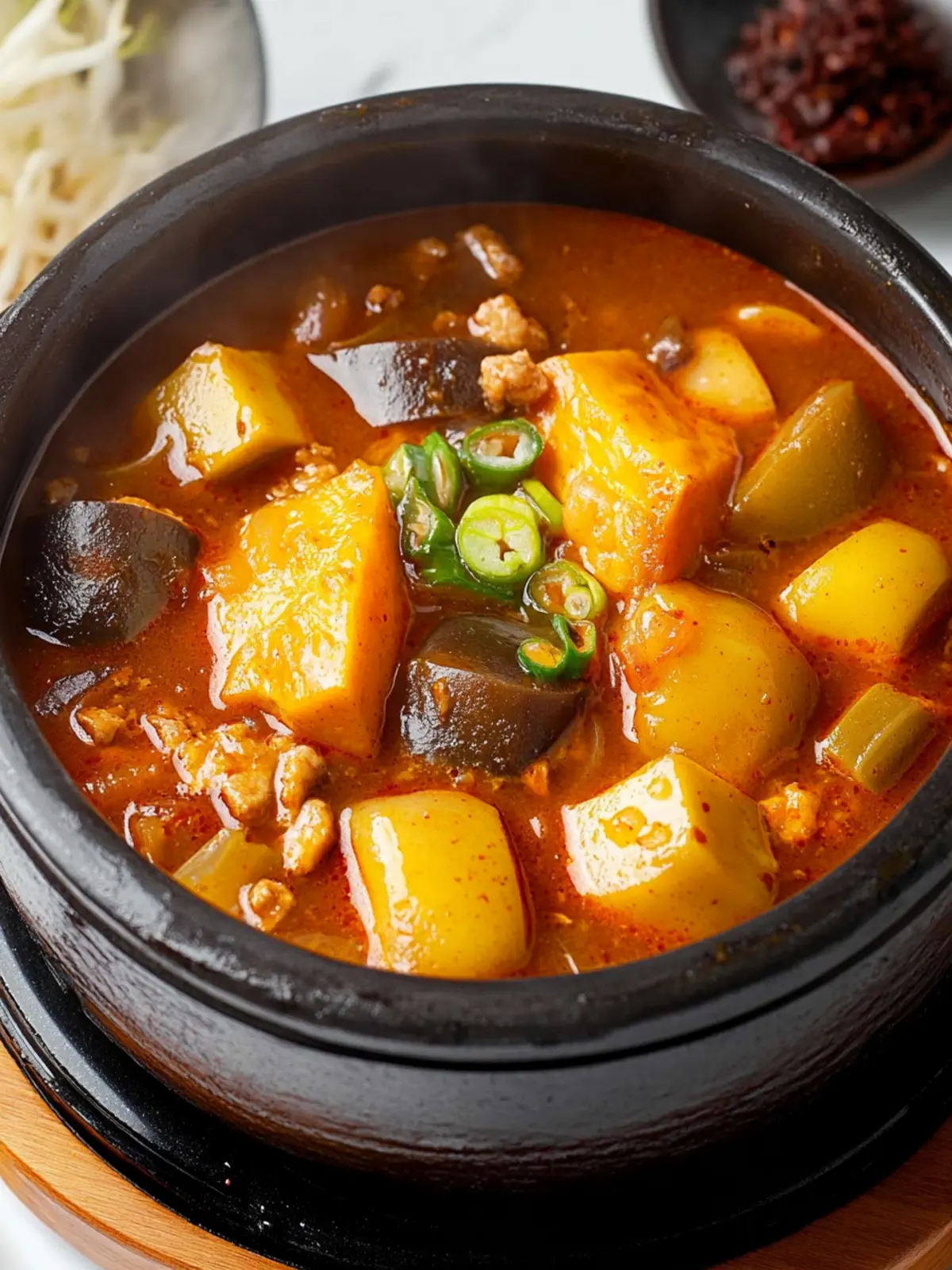
Delicious Soybean Paste Stew: A Cozy Korean Comfort Food
Ingredients
Equipment
Method
- Combine stock and Doenjang: In a pot over medium heat, add the anchovy stock dashi and Doenjang. Stir gently until fully dissolved.
- Add spices and garlic: Sprinkle in Gochugaru and minced garlic. Bring the mixture to a boil while stirring occasionally.
- Cook the veggies: Toss in diced onion and zucchini, cooking for about 5 minutes.
- Incorporate tofu and mushrooms: Add tofu cubes and mushrooms. Cover and simmer for another 3-4 minutes.
- Garnish and serve: Ladle the stew into bowls. Garnish with green onions and chili peppers if desired, and serve warm.