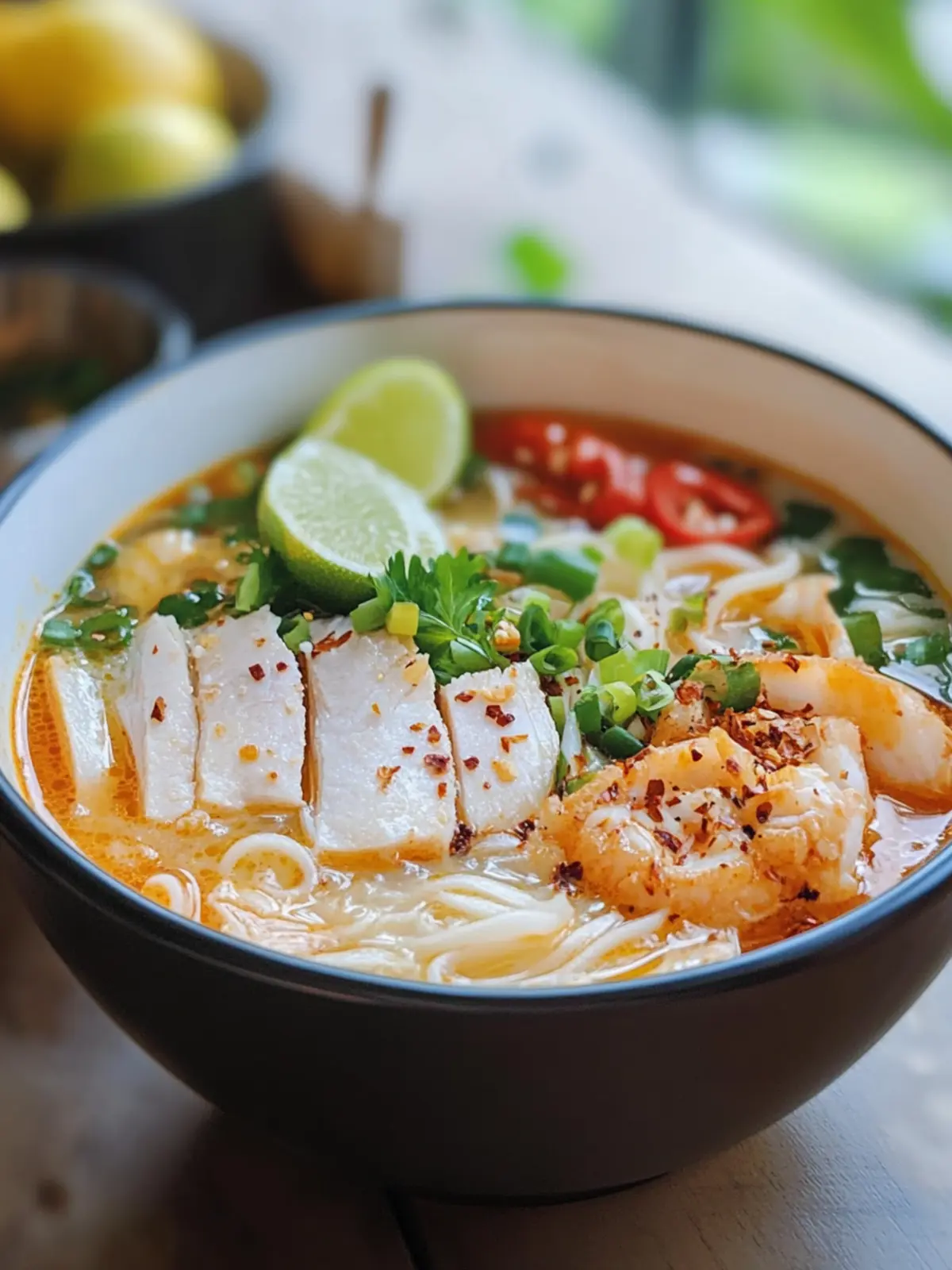
There’s something magical about the warmth that envelopes you when you make a steaming bowl of Bún Riêu, the traditional Vietnamese crab noodle soup. As the aroma of fresh crab mingles with tangy tomatoes and fragrant herbs, it transports me straight to vibrant street markets in Vietnam, where this dish is celebrated as a culinary treasure.
After a long week of bland takeout options, I found myself craving something vibrant and full of life—a dish that danced on my taste buds while filling my kitchen with delightful scents. This Bún Riêu is not just a recipe; it’s an invitation to bring a piece of Vietnamese culture and comfort into your home. Whether you’re a seasoned chef or a novice in the kitchen, this soup’s enchanting combination of fresh seafood and aromatic spices is sure to impress. Plus, its versatility allows for so many variations—add some pork ribs or brighten it up with a squeeze of lime.
Let’s dive into this flavorful journey and create a bowl of comfort that’s as nourishing to the soul as it is to the palate.

Why is Crab Noodle Soup a Must-Try?
Simplicity in preparation: With just a few steps, you can enjoy this traditional dish without stress.
Bold, Tangy Flavor: The harmonious blend of crab, tomatoes, and herbs creates a taste explosion in every spoonful.
Cultural Journey: Experience Vietnam’s culinary charm right in your kitchen, captivating your senses and enriching your meals.
Versatile Options: Customize the recipe with pork ribs or vibrant vegetables, adapting to your taste and dietary needs.
Crowd-Pleaser: Perfect for gatherings, this dish impresses family and friends, ensuring everyone leaves with a satisfied palate.
Easy to Make: Whether you’re a novice or an expert, this recipe is approachable and fun, making weeknight dinners exciting.
Crab Noodle Soup Ingredients
• Here’s what you need to make this delightful Crab Noodle Soup.
For the Broth
- Pork or Chicken Stock – A savory base for the broth; opt for vegetable stock for a lighter touch.
- Pork Ribs (optional) – Enhances the broth’s flavor; omit for a lighter version.
- Onion – Adds depth; quartered for easy removal before serving.
- Dried Shrimp – Infuses umami flavor; remember to rinse and soak them first.
- Tomatoes – Bring acidity and sweetness to the mix; both fresh and canned work beautifully.
- Shrimp Paste (mắm tôm) – Essential for a traditional taste; a little goes a long way.
- Fish Sauce – Adds saltiness and depth; adjust based on your preference.
- Salt and Pepper – The perfect basic seasonings to enhance the flavor.
For the Main Ingredients
- Fresh Crab Meat or Canned Crab Paste – The star of the show; fresh gives the best flavor, but canned is a good alternative.
- Eggs – Help bind the crab mixture; always try to use fresh for a more luscious texture.
- Rice Noodles (bún) – The heart of the dish; these noodles provide a wonderful texture.
For Garnishing
- Fried Tofu – Optional, but it adds protein and a lovely texture.
- Fresh Herbs (perilla, cilantro, green onions) – Brightening components for garnishing; use basil as a substitute if need be.
- Bean Sprouts – A crunchy addition; totally optional, but they add a nice texture.
- Lime Wedges – These will elevate your soup with a burst of acidity pick-me-up on serving.
- Fresh Chili Slices/Chili Paste – Optional heat to spice things up, adjust to your liking.
This flavorful Crab Noodle Soup is a wonderful addition to your culinary repertoire that’ll breathe life into any dinner table.
How to Make Crab Noodle Soup
-
Prepare the Broth: In a large pot, bring your stock to a boil and add the pork ribs (if using), onion, and rinsed dried shrimp. Let it simmer for about 15 minutes, skimming off any foam that rises to the surface.
-
Season the Broth: Stir in the shrimp paste and fish sauce, adjusting with salt to taste. This step is crucial to building that rich, savory depth characteristic of a good Crab Noodle Soup.
-
Make the Crab Mixture: In a bowl, combine fresh crab meat (or canned crab paste), eggs, a splash of fish sauce, and a pinch of pepper. Spoon dollops of this mixture into the simmering broth to create fluffy crab pieces.
-
Add the Tomatoes: Gently incorporate your diced tomatoes into the broth. Let everything simmer together for another 10 minutes, allowing the flavors to meld beautifully.
-
Cook the Noodles: While your broth is simmering, prepare the rice noodles according to package instructions. Drain and set aside, ready to soak up the delightful broth.
-
Combine Tofu: If you’re adding fried tofu, toss it in now, letting it soak up the flavorful broth. You may want to taste the broth for seasoning again—don’t be shy to adjust!
-
Serve: In bowls, layer the cooked noodles first, then ladle over the delicious broth filled with crab and tofu. Top with a generous handful of fresh herbs, bean sprouts, and serve with lime wedges and chili on the side for an extra kick.
Optional: Finish with a sprinkle of extra herbs for a vibrant touch.
Exact quantities are listed in the recipe card below.
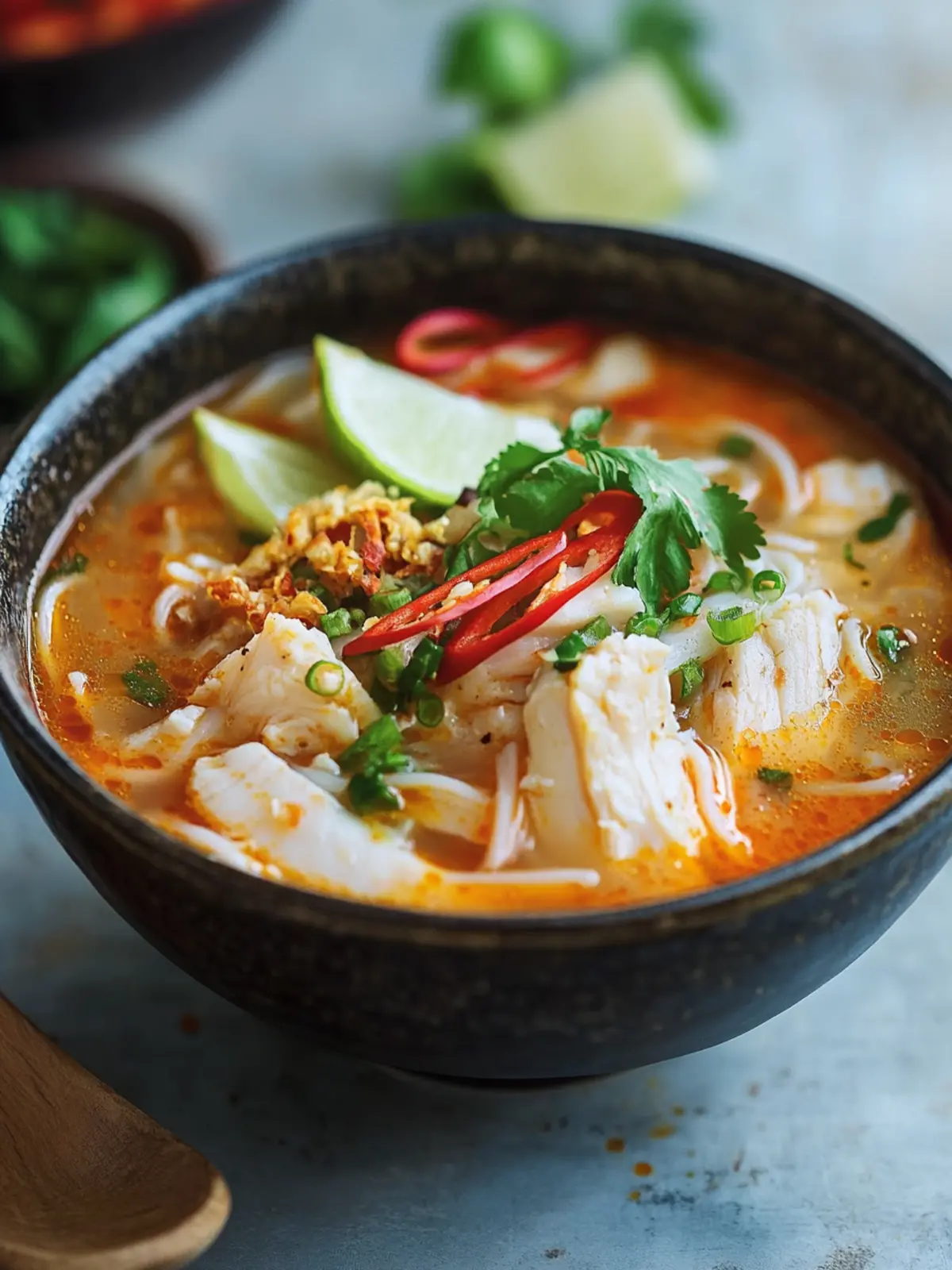
Crab Noodle Soup Variations
Feel free to get creative and make this dish truly yours by exploring these delightful variations!
-
Seafood Swap: Swap out crab for shrimp or fish for a different seafood experience. Each option brings a unique flavor to the broth.
-
Vegetarian Delight: Replace crab with mushrooms and use vegetable broth instead for a hearty vegetarian version. You won’t miss the seafood!
-
Extra Veggies: Add vibrant bell peppers, zucchini, or bok choy to the broth to boost nutrition and color. Each bite bursts with freshness.
-
Spicy Kick: For some added heat, toss in fresh chili slices or a spoonful of chili paste when serving. Spice lovers will relish the extra zing!
-
Curry Twist: Stir in a teaspoon of curry powder to the broth for an aromatic twist that transports your taste buds to new heights.
-
Noodle Variety: Try different types of noodles like soba or egg noodles instead of traditional rice noodles for a fun texture twist.
-
Herb Medley: Introduce herbs like basil or mint for a refreshing change that brightens every spoonful with a burst of flavor.
-
Coconut Cream: For a creamy richness, stir in a splash of coconut milk towards the end of cooking. This offers a decadently smooth finish to your soup.
Storage Tips for Crab Noodle Soup
Fridge: Store any leftover Crab Noodle Soup in an airtight container for up to 2 days. Make sure to separate the noodles from the broth to maintain their texture.
Freezer: For longer storage, freeze the broth without noodles for up to 3 months in a freezer-safe container. Allow it to cool completely before sealing.
Reheating: When ready to enjoy, thaw the broth overnight in the fridge. Gently reheat it in a pot, adding fresh noodles to warm up.
Serving Fresh: For the best taste, aim to consume your Crab Noodle Soup shortly after making it, particularly to preserve the vibrant flavors and textures of the ingredients.
Make Ahead Options
These comforting bowls of Crab Noodle Soup are perfect for meal prep enthusiasts! You can prepare your broth up to 3 days in advance, ensuring all the delicious flavors intensify over time. Simply make the broth by simmering your stock, pork ribs (if using), onion, and dried shrimp, then store it in the refrigerator. The crab mixture can also be prepared a day ahead; mix the crab meat with eggs and fish sauce, keeping it airtight to maintain freshness. When it’s time to serve, reheat the broth and gently spoon in the crab mixture, then add your cooked noodles and garnishes for a meal that’s just as vibrant and delicious as if it were freshly made.
Expert Tips for Crab Noodle Soup
-
Freshness Matters: Always use fresh crab meat for the best flavor; it makes a significant difference in your Crab Noodle Soup.
-
Adjust Seasonings: Don’t hesitate to taste and tweak your broth; it balances flavors, especially with fish sauce and shrimp paste.
-
Perfect Cooking Temperature: Simmer gently instead of boiling the broth vigorously; it helps maintain a clear and flavorful soup.
-
Careful Crab Addition: Use a ladle to drop the crab mixture slowly into the broth to prevent breaking the fluffy pieces.
-
Customize to Taste: Feel free to experiment with toppings like additional vegetables or spices to personalize your Crab Noodle Soup experience.
What to Serve with Crab Noodle Soup?
Enhance the experience of your delicious Crab Noodle Soup with these complementary dishes that perfectly balance flavors and textures.
- Vietnamese Spring Rolls: Light and fresh, these rolls filled with shrimp and herbs create a delightful contrast to the warm soup.
- Jasmine Rice: Fluffy and fragrant, jasmine rice is perfect for soaking up the savory broth, making every bite even more satisfying.
- Pickled Vegetables: Their sweet and tangy crunch adds a refreshing bite that brightens the richness of the noodle soup.
- Mango Salad: Tossed with lime juice and mint, this salad adds a vibrant, sweet balance, offering a refreshing lift to your meal.
- Grilled Lemongrass Chicken: The smoky, aromatic flavors of this dish harmonize beautifully with the seafood in the soup, creating a hearty feast.
- Coconut Water: A light, refreshing drink to cool off between spoonfuls, its subtle sweetness complements the flavors of the dish.
- Chili Dipping Sauce: For those who love a spicy kick, this sauce paired with the spring rolls will bring that extra zing to your table.
- Coconut Sticky Rice with Mangos: This dessert adds a sweet finish, balancing the savory and tangy notes of the noodle soup in a delightful way.
- Fresh Fruit Platter: A simple arrangement of tropical fruits like pineapple, watermelon, and dragon fruit offers a juicy contrast to the warm flavors.
- Iced Vietnamese Coffee: A rich, bold drink that provides a perfect caffeine boost while enhancing your overall dining experience.
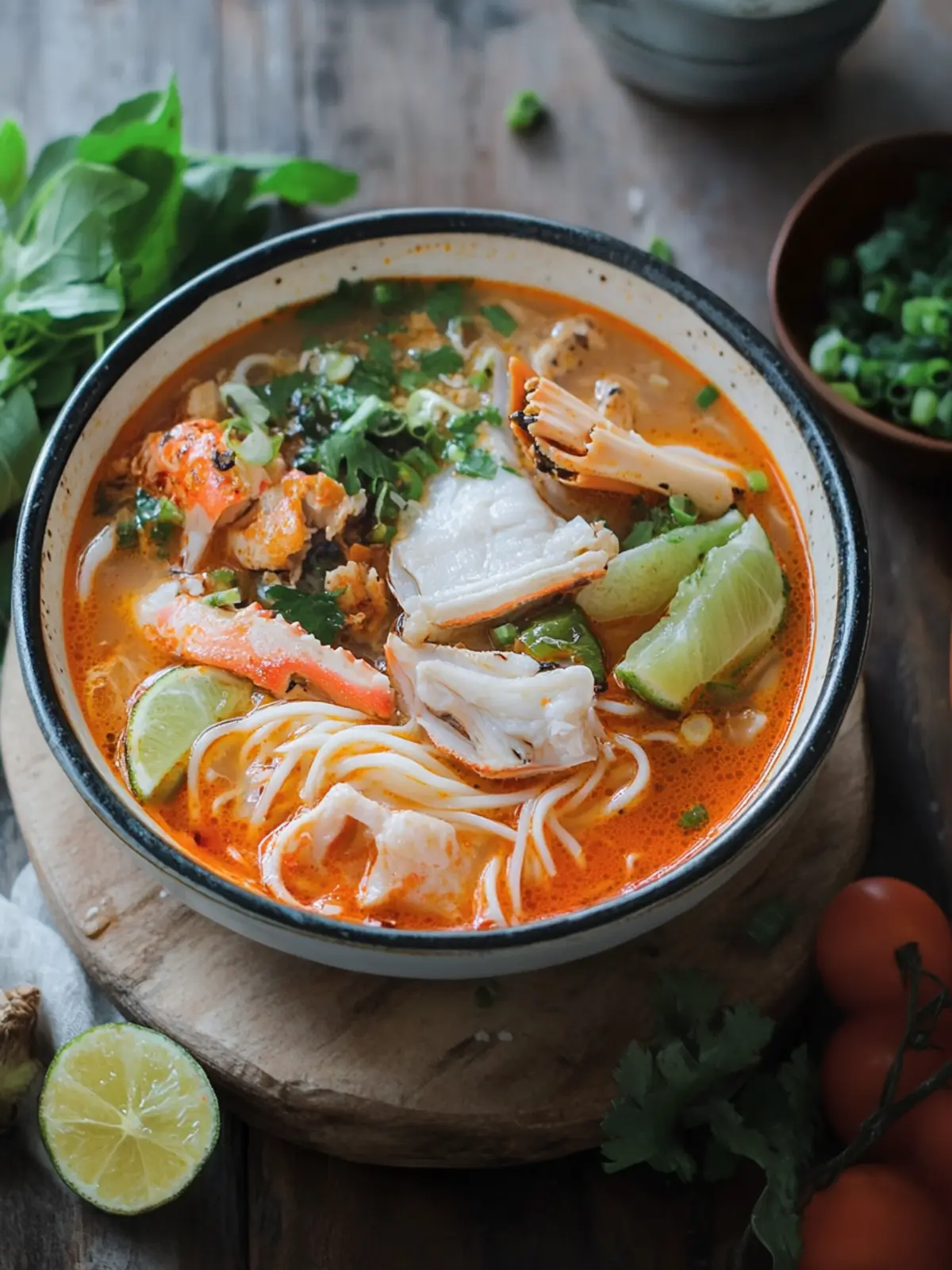
Crab Noodle Soup Recipe FAQs
What type of crab is best for making Crab Noodle Soup?
Absolutely! Fresh lump crab meat is ideal for making the richest and most flavorful Crab Noodle Soup. If fresh crab is not available, high-quality canned crab meat can work as a convenient substitute, but be sure to adjust the seasoning accordingly.
How long can I store leftovers of Crab Noodle Soup?
For the freshest taste, refrigerate leftover Crab Noodle Soup in an airtight container for up to 2 days. However, to maintain the noodles’ texture, I recommend storing the noodles separately from the broth.
Can I freeze Crab Noodle Soup?
Very! To freeze, place the broth (without noodles) in a freezer-safe container and allow it to cool completely before sealing. It can last up to 3 months in the freezer. Just remember, fresh noodles should be cooked and added just before serving for the best texture!
What should I do if my soup is too salty?
No worries! If your soup turns out too salty, add additional diced tomatoes or a small amount of water to dilute the saltiness. Let it simmer for a few more minutes, and taste again to check if the balance is just right.
Are there dietary alternatives for Crab Noodle Soup?
Absolutely! For a vegetarian option, you can replace the crab with firm tofu or shiitake mushrooms. Additionally, make sure to use vegetable stock and omit the shrimp paste for a fully plant-based dish without losing the essence of the soup.
How do I select ripe tomatoes for the broth?
When choosing tomatoes, look for ones that are vibrant red and slightly firm. Avoid any that have dark spots all over or feel overly soft, as these may indicate overripeness or spoilage. Fresh, ripe tomatoes will add the perfect acidity and sweetness to your Crab Noodle Soup.
Irresistible Crab Noodle Soup: A Taste of Vietnam at Home
Ingredients
Equipment
Method
- In a large pot, bring your stock to a boil and add the pork ribs (if using), onion, and rinsed dried shrimp. Let it simmer for about 15 minutes, skimming off any foam that rises to the surface.
- Stir in the shrimp paste and fish sauce, adjusting with salt to taste.
- In a bowl, combine fresh crab meat, eggs, a splash of fish sauce, and a pinch of pepper. Spoon dollops of this mixture into the simmering broth.
- Gently incorporate your diced tomatoes into the broth and let everything simmer together for another 10 minutes.
- While your broth is simmering, prepare the rice noodles according to package instructions. Drain and set aside.
- If adding fried tofu, toss it in now.
- In bowls, layer the cooked noodles first, then ladle over the broth filled with crab and tofu. Top with fresh herbs, bean sprouts, and serve with lime wedges and chili on the side.