
When the chilly winds of winter start to blow, I find myself reaching for warm, hearty comfort food. That’s when I like to whip up a pot of Korean Radish Soup, a dish that envelops me in cozy nostalgia with every spoonful. The simplicity of tender, subtly sweet Korean radish combined with the earthy flavors of shiitake mushrooms and a hint of sesame oil creates an experience that awakens my senses and warms my soul.
Curiously easy to make, this soup has become one of my go-to recipes for evenings when I want something nourishing yet quick. In just 30 minutes, I can transform a handful of ingredients into a bowl of goodness that feels both healthy and indulgent. With its impressive flavors and versatile nature, this soup is perfect for impressing friends or enjoying in solitude. Let’s dive into the magic of Korean Radish Soup and see just how effortless and delicious homemade comfort food can be!
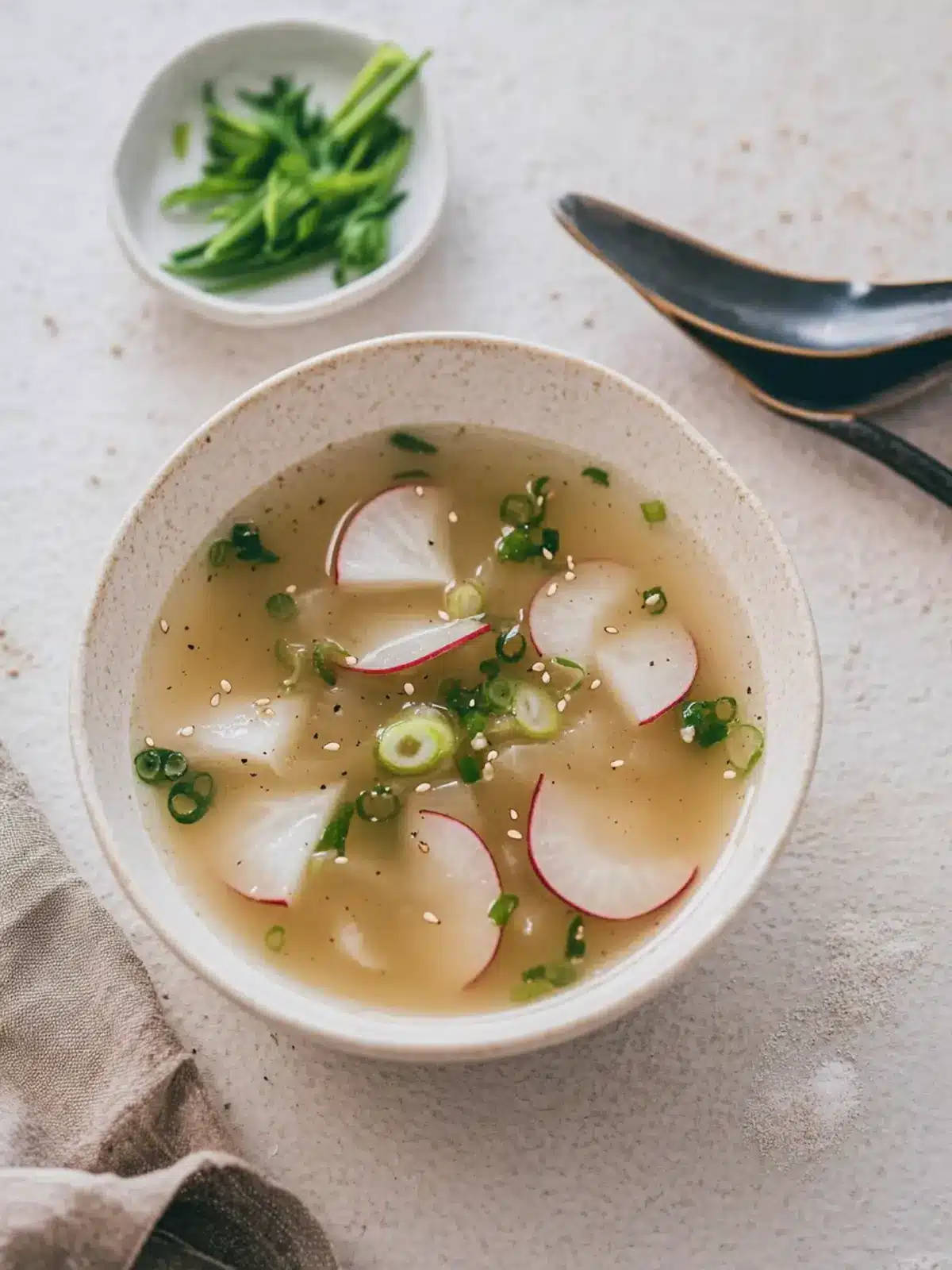
Why is Korean Radish Soup a Must-Try?
Comforting warmth: This soup is perfect for chilly evenings, providing a cozy, satisfying experience that wraps you in warmth.
Unique flavors: The blend of tender radish, earthy shiitake mushrooms, and rich sesame oil creates a delightful medley you won’t forget.
Quick and easy: Ready in just 30 minutes, you can savor wholesome homemade goodness without spending hours in the kitchen.
Versatile options: Feel free to add a vegan “beef” alternative for extra heartiness, making it adaptable to your dietary preferences.
Impressive crowd-pleaser: Serve it to family or friends, and watch them rave about this delightful dish that brings everyone together.
Make sure to explore other comforting recipes like my Spicy Korean Noodle Soup, perfect for warming up on winter nights!
Korean Radish Soup Ingredients
For the Soup Base
• Korean radish daikon – 4 cups; this star ingredient gives the soup its signature flavor and texture.
• Sesame oil – 2 tsp; adds a nutty richness that’s essential for an authentic taste.
• Water or vegetable broth – 6 cups; use broth for a more fragrant soup, enhancing each spoonful.
• Kelp/dashi kombu – 1 post-it note sized piece; infuses deep umami flavor without overpowering the radish.
• Dried shiitake mushroom – 1; rehydrates into tender bites, bringing earthy notes to the dish.
For the Aromatics
• Green onions – 3, sliced diagonally; they add a burst of freshness that brightens up the soup.
• Garlic – 3 cloves, minced; for that fragrant base that elevates the overall flavor.
For Seasoning
• Gluten-free soy sauce or coconut aminos – 1-2 tbsp; both enhance seasoning while keeping it gluten-free, perfect for Korean Radish Soup.
• Salt – 1 tsp, or more to taste; adjust according to your palate for a perfectly seasoned broth.
• White pepper – 1/4 tsp; its subtle heat adds depth without overpowering the soup.
Optional Additions
• Vegan “beef” alternative – for a heartier dish, feel free to include this to satisfy those meat cravings.
• Sesame seeds – for garnish; sprinkle these on top for a little extra crunch and nutty flavor.
• Fresh green onion – sliced, for garnish; use these as a pop of color and fresh taste on your finished soup.
Embrace the essence of comforting, homemade Korean Radish Soup with these key ingredients that promise to warm your heart and soul!
How to Make Korean Radish Soup
-
Prepare the Radish: Peel the Korean radish daikon and slice it into triangle shapes. This step unveils the beautiful natural sweetness that makes this soup shine.
-
Sauté in Sesame Oil: Bring a pot to medium-high heat, add sesame oil, and sauté the radish for 2-3 minutes until it becomes more translucent. This quick step enhances the radish’s flavor beautifully.
-
Add Aromatics: Toss in the sliced green onions and sauté for an additional few minutes until they release a fragrant aroma. Their fresh essence will elevate your soup significantly.
-
Combine Ingredients: Add the kombu piece, dried shiitake mushroom, minced garlic, and then pour in the water or vegetable broth. Bring the mixture to a boil and let it simmer for 12-15 minutes until the radish is tender and inviting.
-
Season the Soup: Add gluten-free soy sauce and salt to taste, letting it simmer for another 3 minutes before serving. This step brings the whole dish together, so taste as you go!
-
Garnish and Serve: Ladle the soup into bowls and garnish with sesame seeds, additional white or black pepper, and fresh green onion. This final touch adds a delightful crunch and visual appeal to your warm bowl of comfort.
Optional: For a bit of extra flavor, add a sprinkle of chili flakes.
Exact quantities are listed in the recipe card below.
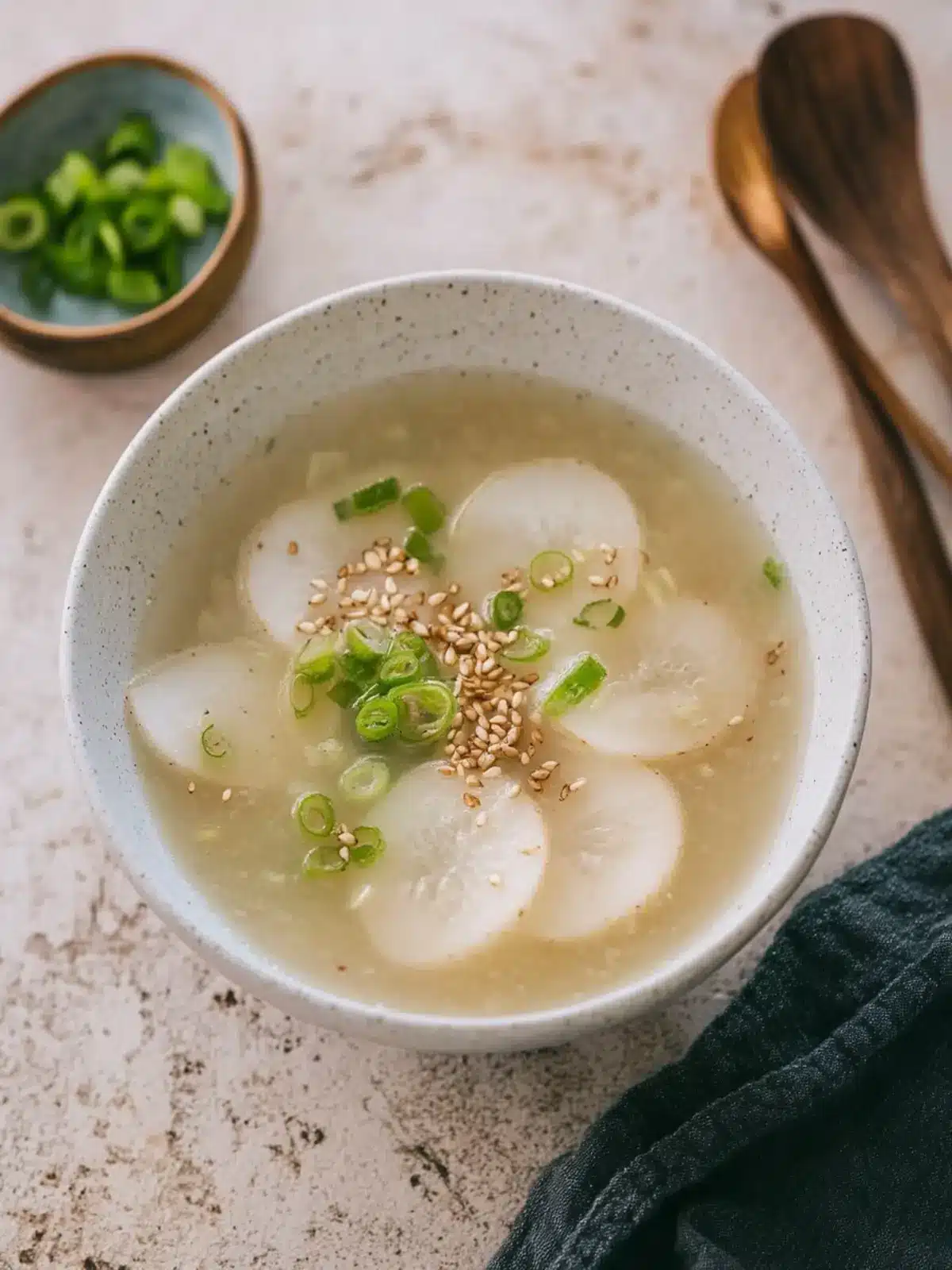
How to Store and Freeze Korean Radish Soup
Fridge: Store leftover Korean Radish Soup in an airtight container for up to 3 days. Reheat on the stove over low heat, adding a splash of broth if needed.
Freezer: Freeze the soup in freezer-safe containers for up to 3 months. Allow it to cool completely before sealing to prevent freezer burn.
Thawing: For best results, thaw overnight in the refrigerator before reheating. This will help maintain the soup’s texture and flavor.
Reheating: Reheat gently on the stove, adding a bit of water or vegetable broth to revive the soup’s consistency. Enjoy a warm, comforting bowl like it’s freshly made!
Expert Tips for Korean Radish Soup
-
Slice Uniformly: Ensure the radish is cut into equal triangle shapes for even cooking and consistent texture in your Korean Radish Soup.
-
Use Quality Broth: Opt for homemade or high-quality vegetable broth to amplify the soup’s flavor profile; avoid bland store-bought options.
-
Taste as You Go: Adjust seasoning gradually; starting with a small amount of salt and soy sauce allows you to achieve the perfect balance.
-
Don’t Skip the Kelp: Adding kelp or dashi kombu enhances umami flavor; without it, your soup might lack depth.
-
Experiment with Garnishes: Feel free to add a kick with chili flakes or a squeeze of lime for an exciting twist that complements the core flavors.
What to Serve with Korean Radish Soup?
When cozying up with a savory bowl of soup, consider these delightful pairings to elevate your meal experience.
-
Steamed Rice: A classic side that beautifully absorbs the soup’s broth, adding a satisfying texture to each bite.
-
Kimchi: The bold tang and crunch of homemade or store-bought kimchi provides a delightful contrast, injecting lively flavor into the meal.
-
Vegetable Spring Rolls: Fresh and crisp, these rolls offer a light, crunchy companion that balances the soup’s warmth wonderfully.
-
Savory Pancakes: Try Korean-style scallion pancakes for a chewy, flavorful element that makes your meal feel like a feast.
-
Sesame Spinach Salad: This fresh salad adds a vibrant pop of color and earthy flavor, enhancing the overall dining experience.
-
Miso Soup: For a double soup delight, miso adds umami and depth, perfectly complementing the Korean Radish Soup.
-
Chilled Tofu Salad: A refreshing option that brings coolness and subtle flavor, contrasting the warmth of the soup.
-
Plum Wine: Enjoy a glass of sweet plum wine, which harmonizes beautifully with the soup’s earthy notes, making every sip a celebration.
-
Chocolate Mousse: For dessert, this light and airy treat offers a rich finish, delighting your palate after the meal.
Each of these accompaniments brings something special to the table, ensuring your Korean Radish Soup shines even brighter!
Make Ahead Options
These Korean Radish Soup preparations are perfect for busy home cooks looking to save time in the kitchen! You can slice and chop the Korean radish and green onions up to 24 hours in advance, storing them in an airtight container in the refrigerator to maintain freshness. Additionally, you can sauté the radish and aromatics, allowing them to cool completely before refrigerating for up to 3 days. When you’re ready to serve, simply add your sautéed base to boiling water or broth, along with the kombu and shiitake mushroom, and let it simmer until tender. This method not only saves time but ensures your soup is just as delicious when it’s time for a cozy meal!
Korean Radish Soup Variations
Explore delightful twists on your Korean Radish Soup to make it truly your own. Each variation adds a unique layer of flavor and comfort!
-
Spicy Kick: Add 1-2 tsp of Korean chili flakes for a warm, spicy depth that elevates the entire dish.
-
Creamy Texture: Blend in a splash of coconut milk for a creamier mouthfeel while keeping it dairy-free. This luscious addition brings a lovely richness to your soup.
-
Herb Infusion: Toss in a handful of fresh spinach or kale toward the end for added nutrition and vibrant color. It’s a wonderful way to sneak in more greens!
-
Savory Miso: Stir in 1-2 tbsp of miso paste instead of soy sauce for a deeper umami flavor with a hint of tang. This elevates the soup to a new level!
-
Protein Boost: For extra heartiness, add chickpeas or tofu. Both options offer a delightful contrast in texture and make the soup feel even more satisfying.
-
Citrus Zing: Squeeze in fresh lime or lemon juice just before serving for a zesty pop of flavor that brightens up the comforting depths of the broth.
-
Umami Explosion: Incorporate a splash of liquid aminos or tamari for a different twist on your umami flavor while keeping it gluten-free.
-
Root Veggie Medley: Add diced carrots or sweet potatoes for extra sweetness and color, creating a beautiful, hearty bowl that showcases seasonal produce.
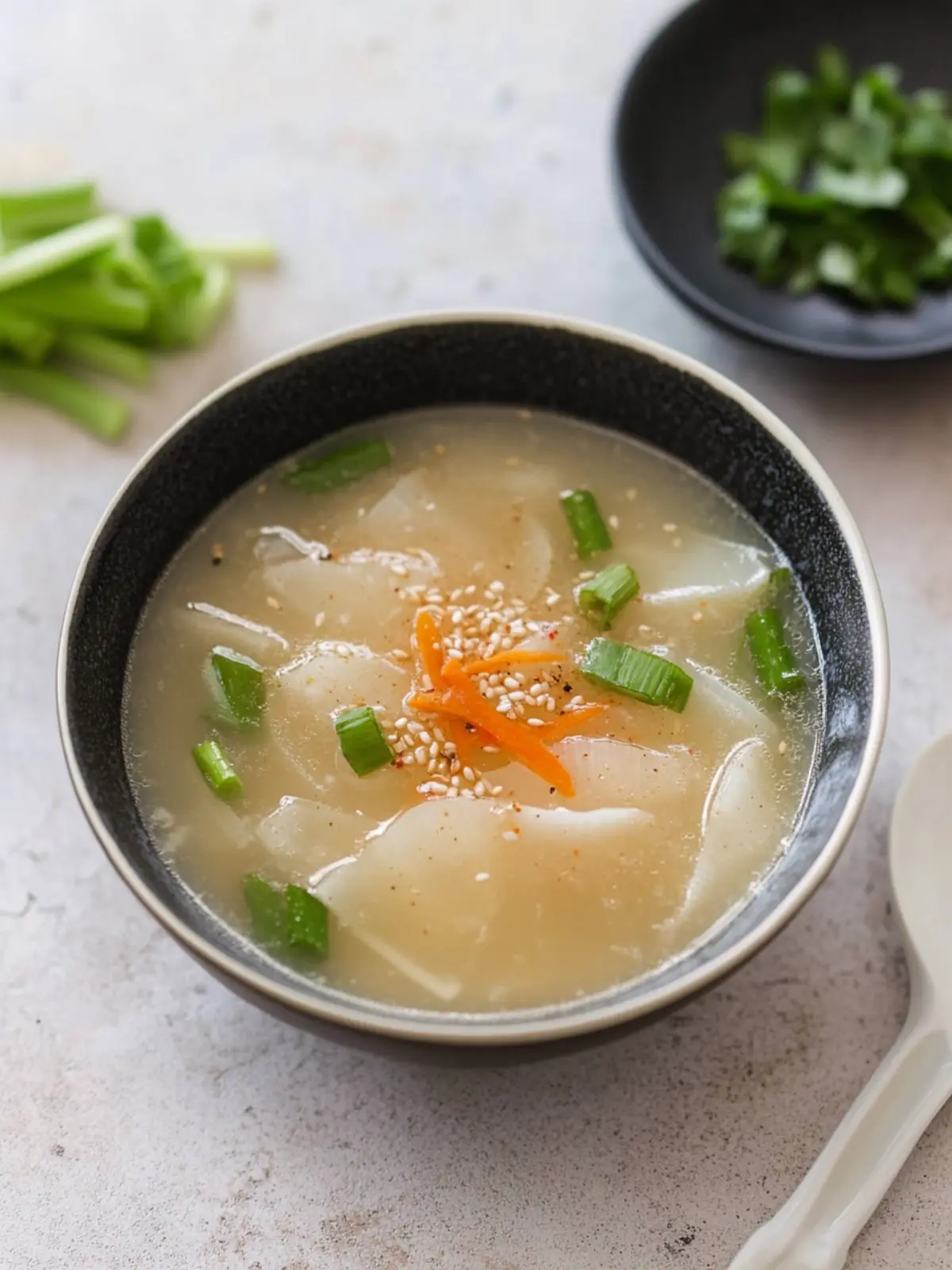
Korean Radish Soup Recipe FAQs
How do I select a ripe Korean radish?
Absolutely! When choosing a Korean radish, look for those that are firm, heavy, and free of dark spots or blemishes. A well-shaped radish should feel dense and have smooth skin. The fresher the radish, the sweeter and more flavorful your Korean Radish Soup will be!
How long does Korean Radish Soup last in the refrigerator?
Very! You can store leftover Korean Radish Soup in an airtight container in the fridge for up to 3 days. When you’re ready to enjoy it again, simply reheat it on the stove over low heat, adding a splash of broth if needed to bring back its consistency.
Can I freeze Korean Radish Soup?
Absolutely! To freeze your soup, let it cool completely before transferring to freezer-safe containers. It can be stored in the freezer for up to 3 months. Be sure to label the containers with the date for easy reference later.
What should I do if the soup is too salty?
No worries! If your Korean Radish Soup ends up being too salty, you can balance it out by adding more water or low-sodium vegetable broth. If you want to retain the flavor, toss in a few extra pieces of radish and let it simmer for a bit. This will help absorb some of the saltiness, enhancing the overall taste.
Are there any dietary restrictions I should consider?
Definitely! If you’re cooking for someone with allergies, make sure to substitute ingredients as necessary. For gluten-free eaters, opt for gluten-free soy sauce or coconut aminos, which work beautifully in Korean Radish Soup. If you’re concerned about pets, remember to keep any onions and garlic out of reach, as they can be harmful to them.
How do I properly thaw frozen Korean Radish Soup?
Very! For the best results, transfer the frozen soup to the fridge and let it thaw overnight. Once thawed, gently reheat it on the stove over low heat, adding a bit of water or vegetable broth to restore its delightful texture. Enjoy a comforting bowl like it’s freshly made!
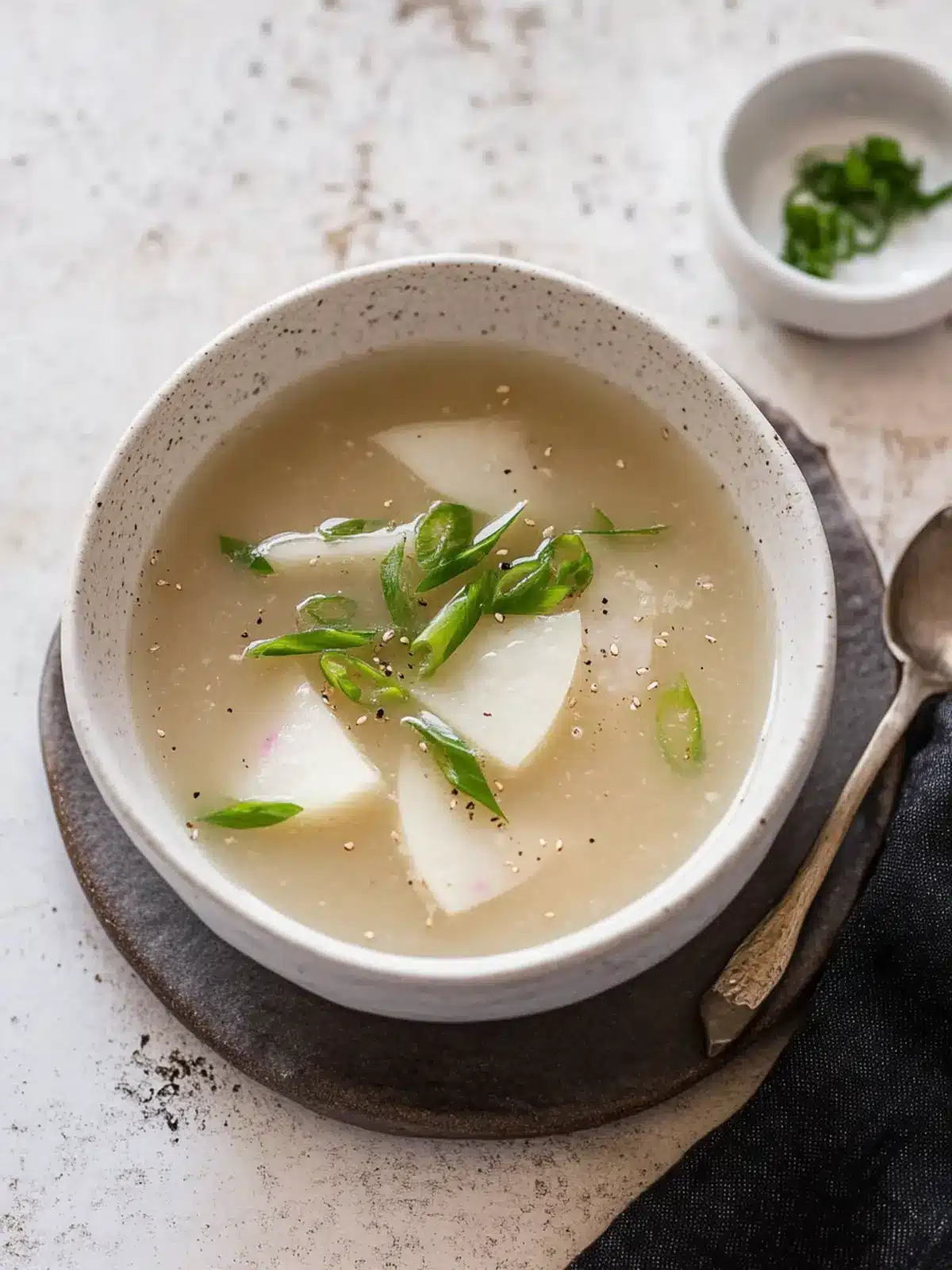
Warm Up with Heartfelt Korean Radish Soup Delight
Ingredients
Equipment
Method
- Prepare the Radish: Peel the Korean radish daikon and slice it into triangle shapes.
- Sauté in Sesame Oil: Bring a pot to medium-high heat, add sesame oil, and sauté the radish for 2-3 minutes.
- Add Aromatics: Toss in the sliced green onions and sauté for an additional few minutes until fragrant.
- Combine Ingredients: Add the kombu piece, dried shiitake mushroom, minced garlic, and pour in the water or broth.
- Season the Soup: Add gluten-free soy sauce and salt to taste, letting it simmer for another 3 minutes.
- Garnish and Serve: Ladle the soup into bowls and garnish with sesame seeds and fresh green onion.