
There’s an undeniable comfort in a bowl of Bibimbap, where vibrant vegetables, savory beef, and warm rice come together in a beautiful, palate-pleasing medley. The first time I savored this Korean rice bowl, I was enchanted by the explosion of flavors and textures—each ingredient contributing its own unique story. As I watched the sizzling beef caramelize in the pan, the aroma of garlic and sesame wafted through my kitchen, transporting me to a bustling street market in Seoul.
After a long day of work, I craved something wholesome yet exciting, and this recipe delivered on both fronts. It’s not just a meal; it’s an experience—one that brings joy to your dinner table while being refreshingly simple to prepare. The best part? You can tailor it to fit your tastes, swapping out vegetables or protein as you like, which makes it endlessly versatile and a true crowd-pleaser. So, roll up your sleeves and let’s dive into creating a vibrant bowl of Bibimbap that promises to excite your senses and satisfy your hunger!
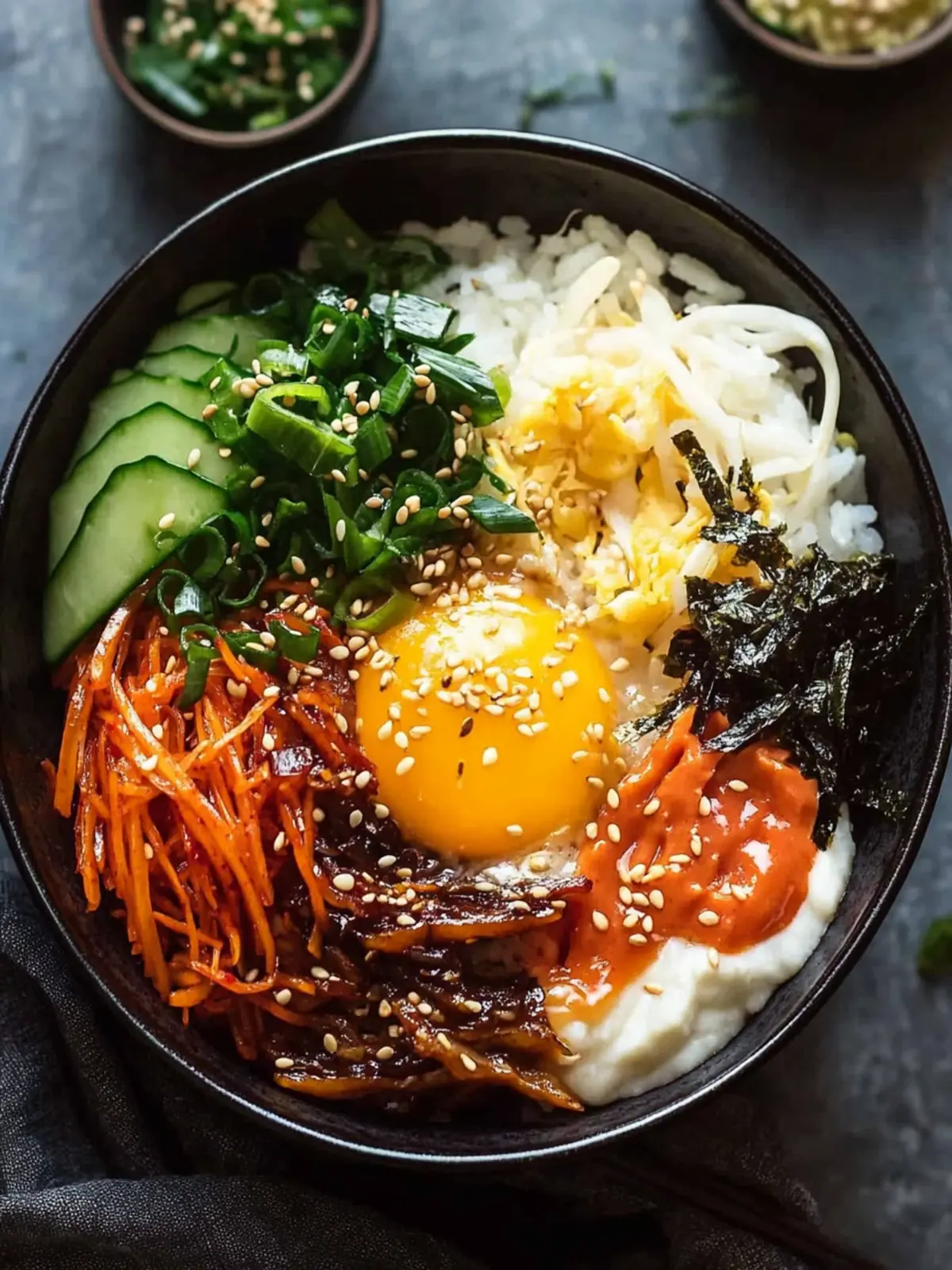
Why is Korean Rice Bowl a must-try?
Vibrant flavors come to life in this dish, with a delightful mix of fresh veggies and savory beef. Customizable options allow you to swap ingredients based on your preferences, making it perfect for any occasion. Nutrient-rich and hearty, this meal keeps you feeling satisfied without the guilt. Quick prep time ensures you can whip it up after a long day, and its eye-catching presentation will impress guests at any dinner party. Elevate your home cooking with this unique culinary experience that brings a taste of Korea right to your kitchen!
Korean Rice Bowl Ingredients
For the Rice
• Cooked white rice – use warm rice for the best texture in your Korean rice bowl.
For the Beef
• Beef tenderloin or thick steak – finely sliced to absorb all the delicious marinades.
• Soy sauce – adds a savory depth to your beef marinade.
• Honey or brown sugar – balances the saltiness with a touch of sweetness.
• Garlic cloves – minced to infuse flavor into the beef.
• Minced ginger – adds warmth and complexity to the dish.
For the Vegetables
• Carrots and zucchini – cut into batons for a lovely texture and vibrant color.
• Spinach – loaded with nutrients, gives a fresh taste when sautéed.
• Bean sprouts – crunchy and light, they add freshness to your Korean rice bowl.
• Dried shiitake mushrooms – soak and slice for an earthy flavor.
For the Bibimbap Sauce
• Gochujang paste – the star of the show, it brings spice and richness to the bowl.
• Mirin and rice vinegar – for a hint of acidity that balances the dish.
• Sesame oil – toasted for an aromatic finish that ties all the flavors.
• Sesame seeds – sprinkle on top for added crunch and nuttiness.
Feel free to adjust any ingredients based on your personal taste—each bowl is a unique journey in flavor and satisfaction!
How to Make Korean Rice Bowl
-
Mix the Sauce: In a bowl, combine the Bibimbap Sauce ingredients, stirring until the sugar dissolves completely. This layer of flavor will elevate your dish!
-
Marinate the Beef: In another bowl, mix the beef marinade ingredients and add the sliced beef. Let it marinate for at least 30 minutes, or if you have time, overnight for deeper flavor.
-
Cook the Beef: Heat 2 teaspoons of oil in a large skillet over high heat. Remove excess marinade from the beef and add it to the skillet. Cook for about 3 to 4 minutes, until browned, then keep it warm.
-
Prepare the Mushrooms: Soak the shiitake mushrooms in boiling water for 30 minutes. Once done, drain, squeeze out extra water, and slice them for later use.
-
Optional Vegetable Prep: (If desired) Place the carrot and zucchini in separate bowls, sprinkle with 1/4 teaspoon of salt, and let them sit for 20 minutes. Drain off any excess liquid before cooking.
-
Sauté the Mushrooms: In the same skillet, heat 2 teaspoons of oil over medium-high heat. Cook the shiitake mushrooms for about 2 minutes. Add 1.5 teaspoons of soy sauce, 1/4 teaspoon of sugar, and 1/2 teaspoon of minced garlic. Stir for 1 minute, then remove from heat.
-
Cook the Carrots: Add another 2 teaspoons of oil to the skillet. Cook the carrot batons until they are just tender, usually about 5 to 8 minutes, then remove them from the pan.
-
Sauté the Zucchini: In the same skillet, repeat the process with the zucchini, cooking for about 4 minutes or until softened.
-
Sauté the Spinach: Heat 2 teaspoons of vegetable oil with a splash of sesame oil. Sauté the spinach until it starts to wilt. Add 1/2 teaspoon of garlic and salt to taste, stir, then remove and drain excess liquid when cool.
-
Prepare the Bean Sprouts: Simmer the bean sprouts in water for 5 minutes or steam them in the microwave for 3 minutes. Drain and cool them, then mix with 2 teaspoons of sesame oil, 1 teaspoon of garlic, and 1/4 teaspoon of fish sauce.
-
Fry the Eggs: In a skillet, fry the eggs to your desired doneness. This rich addition brings creaminess to your Korean rice bowl.
-
Assemble the Bowl: Take warm rice and place it in bowls. Top with the sautéed vegetables, marinated beef, and a fried egg. Sprinkle with sesame seeds and drizzle with sesame oil for that finishing touch. Serve with the Bibimbap Sauce on the side.
Optional: Garnish with sliced green onions for an extra burst of freshness.
Exact quantities are listed in the recipe card below.
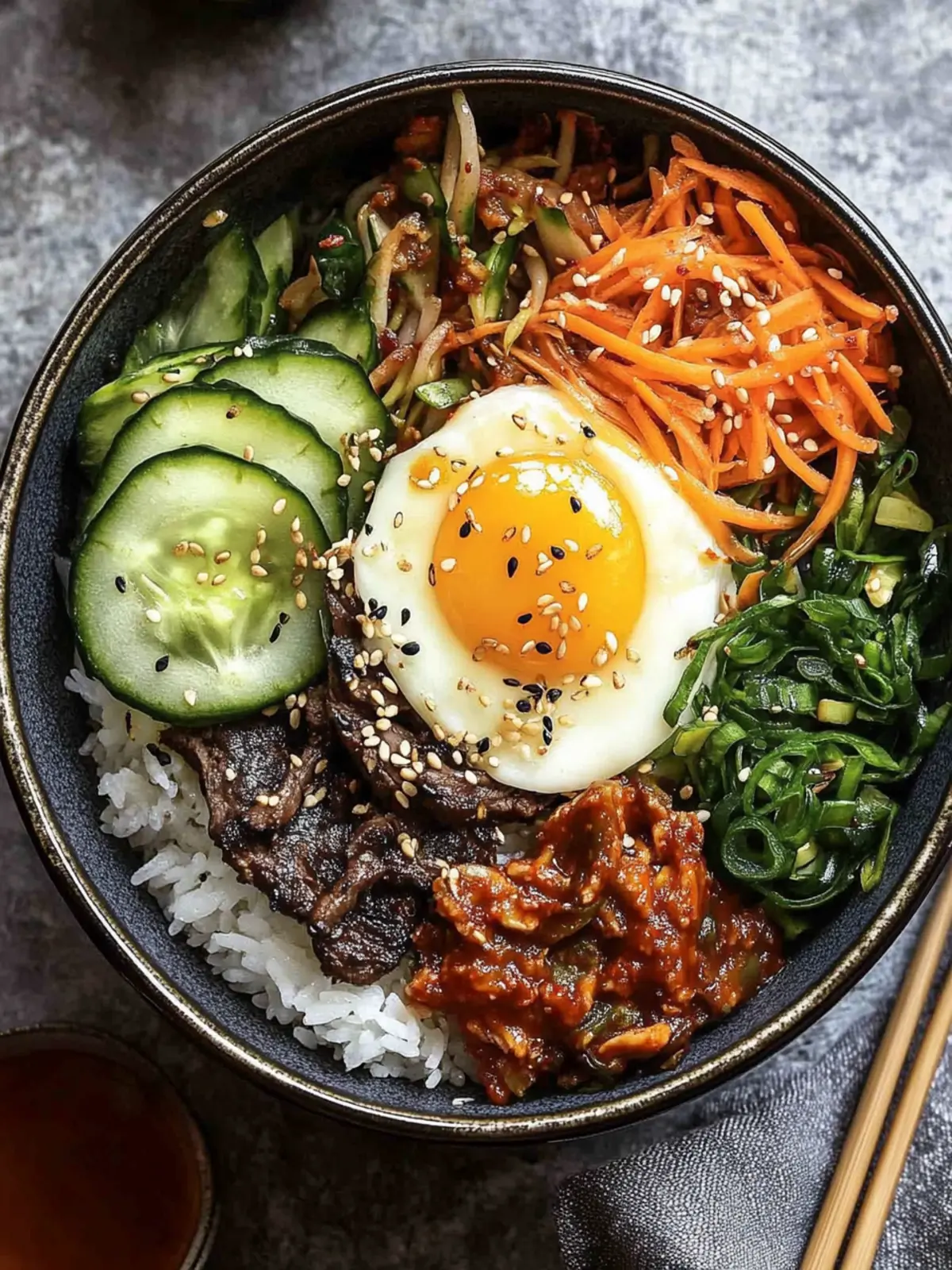
Expert Tips for Korean Rice Bowl
-
Fresh Ingredients: Always use fresh, high-quality vegetables and meats for the best flavor in your Korean rice bowl. Fresh produce enhances the dish’s vibrant colors and tastes.
-
Marinate Wisely: Don’t rush the beef marinade; letting it sit overnight deepens the flavor. However, even 30 minutes can work if time is short!
-
Cook in Batches: To achieve that perfect sear and prevent steaming, cook each vegetable separately. This technique helps maintain their unique textures and flavors.
-
Drain Well: After soaking or steaming vegetables like spinach and bean sprouts, ensure to squeeze out excess liquid. This prevents your rice bowl from becoming soggy.
-
Customize It: Feel free to mix up the protein or veggies according to what you have on hand or prefer! This keeps your Korean rice bowl exciting and tailored to your cravings.
-
Serve Immediately: For the best experience, assemble and serve your Korean rice bowl right after cooking. Enjoying it warm enhances the flavors and textures!
Korean Rice Bowl Variations
Feel free to explore these exciting twists and adjustments for your Korean Rice Bowl, and let your creativity shine!
- Vegetable Medley: Swap in seasonal vegetables like bell peppers or eggplant for new flavors. Experimenting with different textures elevates your dish.
- Spicy Kick: Add sliced jalapeños or a drizzle of Sriracha for an extra heat for spice lovers. They’ll add a zesty pop that’ll awaken your taste buds!
- Tofu Substitute: For a vegetarian option, replace beef with marinated and sautéed tofu. You’ll still get that satisfying protein without the meat.
- Noodle Addition: Toss in cooked rice noodles or soba for a fun twist on the classic. This makes your Korean rice bowl even heartier and delightful!
- Marinated Chicken: Use thinly sliced marinated chicken breast instead of beef for a lighter protein choice. It pairs wonderfully with the same marinade flavors.
- Sweet Touch: Drizzle with a bit of honey or serve with a sweet Asian dipping sauce to balance the savory elements perfectly. Sweet notes can transform the bowl.
- Vegan Version: Replace eggs with avocado slices for creaminess or use aquafaba for a light egg-like dish. You’ll love how delicious these swaps can be!
- Quinoa Base: Use quinoa instead of rice for a protein-packed alternative. This addition makes the dish gluten-free while elevating its nutritional profile!
How to Store and Freeze Bibimbap
Fridge: Store leftover Bibimbap in an airtight container for up to 3 days. Keep the sauce separate to maintain freshness and prevent sogginess.
Freezer: You can freeze the cooked beef and vegetables for up to 3 months. Cool them completely before transferring to freezer-safe bags, removing as much air as possible.
Reheating: Thaw in the refrigerator overnight, then reheat gently on the stovetop or in the microwave until heated through. Add fresh rice and a new egg for a delightful rendition of your Korean rice bowl.
Room Temperature: Avoid leaving Bibimbap at room temperature for more than 2 hours to ensure food safety.
What to Serve with Bibimbap?
Transform your meal into a delightful feast that complements the vibrant flavors of your Korean rice bowl, creating a memorable dining experience.
-
Crispy Spring Rolls: These crunchy delights add a satisfying texture and fresh flavors that pair beautifully with the tender ingredients of Bibimbap.
-
Kimchi: The tangy, spicy notes of fermented vegetables provide a perfect contrast to the mild rice and savory beef, enhancing both taste and tradition.
-
Sesame Spinach Salad: A light and refreshing salad that mirrors the greens in your bowl, it adds a crispiness and another layer of flavor to your meal.
-
Honey-Glazed Carrots: Sweet and tender, these carrots echo the gentle notes in Bibimbap while adding a touch of sweetness and color to the plate.
-
Korean Fried Chicken: Crispy and savory, this rich dish complements the lighter Korean rice bowl, creating a satisfying feast that’s hard to resist.
-
Chilled Soba Noodles: These noodles provide a refreshing contrast, while their nutty flavor meshes seamlessly with the array of tastes and textures in Bibimbap.
-
Miso Soup: Warm and comforting, it rounds out your meal with umami depth, helping to balance the myriad flavors of your Bibimbap.
-
Shaved Ice Dessert (Patbingsu): End your meal on a sweet note with this traditional Korean dessert that offers a refreshing finish to the savory flavors of your feast.
Make Ahead Options
These Korean Rice Bowls are perfect for meal prep enthusiasts! You can marinate the beef up to 24 hours in advance, allowing the flavors to deeply infuse for a more savory experience. In addition, most of the vegetables can be sautéed and stored in the refrigerator for up to 3 days; just make sure to keep them in an airtight container to maintain their vibrant colors and crisp textures. When you’re ready to serve, simply reheat the rice and vegetables, fry your eggs to your desired doneness, and assemble everything in bowls with the delicious Bibimbap Sauce drizzled on top. You’ll enjoy a fresh, restaurant-quality meal without the hassle!
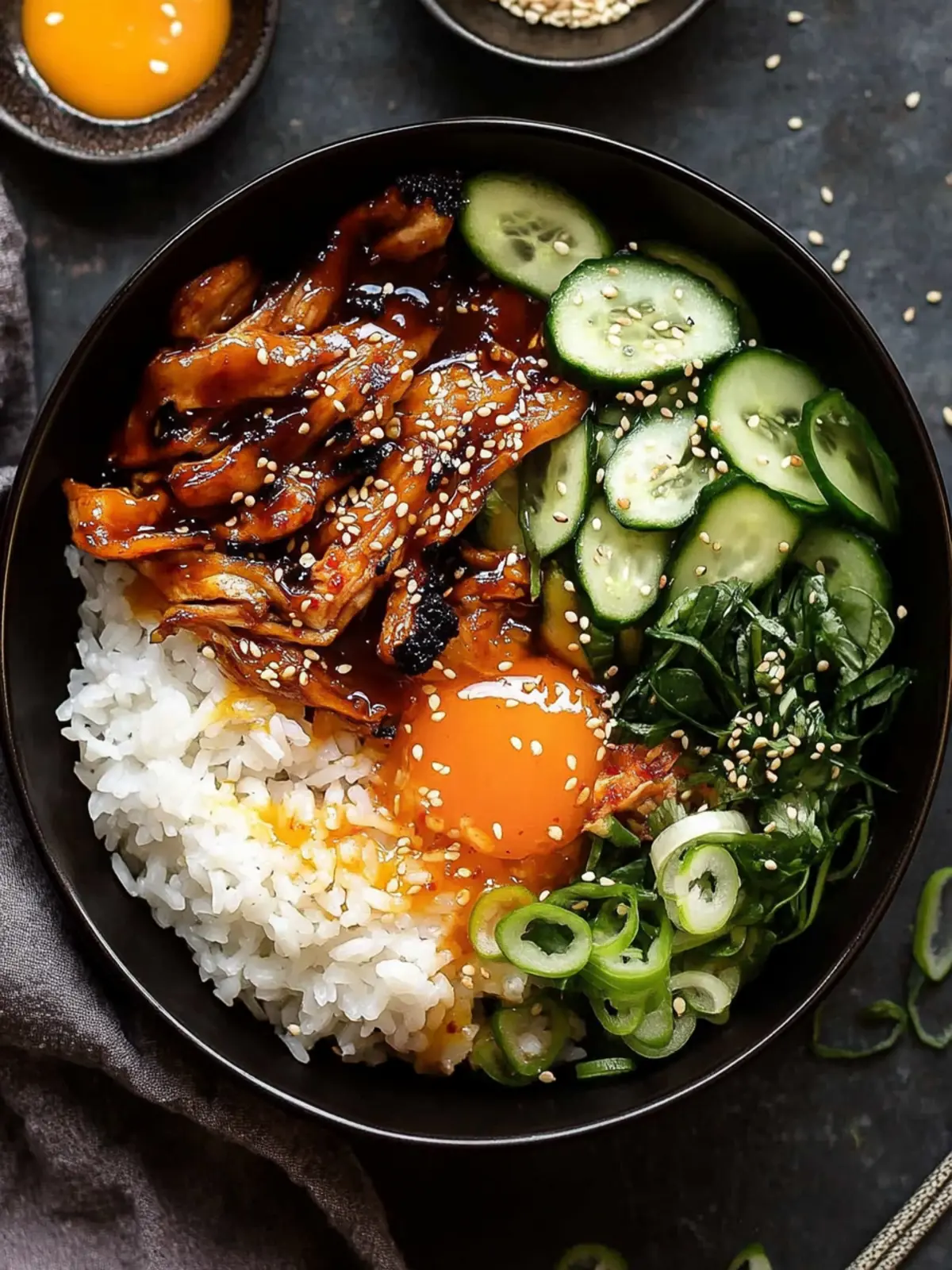
Korean Rice Bowl Recipe FAQs
How do I know if my vegetables are ripe?
Absolutely! For the best Bibimbap, choose vegetables that are vibrant and firm. Look for spinach with bright green leaves, carrots that are smooth and free of blemishes, and zucchinis that are glossy and unwrinkled. If a zucchini has dark spots, it’s time to pass on it!
What is the best way to store leftover Bibimbap?
Very! Store leftover Bibimbap in an airtight container in the refrigerator for up to 3 days. It’s essential to keep the sauce separate to maintain the freshness of your ingredients and avoid sogginess. Reheated, it’s just as delightful as when it was freshly made!
Can I freeze components of the Korean Rice Bowl?
Absolutely! You can freeze the cooked beef and sautéed vegetables for up to 3 months. Allow them to cool completely, then transfer into freezer-safe bags, making sure to remove as much air as possible. When you’re ready to enjoy again, just thaw in the refrigerator overnight.
What if my rice clumps together after cooking?
Very understandable! After cooking, make sure to fluff the rice with a fork before using it in your Bibimbap. If it’s still a bit clumpy, you can sprinkle a little bit of water over it and reheat gently in a steamer or microwave to loosen it up without compromising the texture.
Can I make this dish allergy-friendly?
Absolutely! For a gluten-free version, simply swap the soy sauce for a gluten-free alternative, like tamari. Additionally, if you’re concerned about allergies, you can omit ingredients like gochujang paste or fish sauce and substitute with your favorite flavors. The beauty of this Korean Rice Bowl is its versatility!
How long does it take to marinate the beef?
For the best flavor, marinate the beef for at least 30 minutes, but if you have the time, letting it sit overnight is even better! This extra time allows the flavors to penetrate deeply, ensuring every bite is savory and satisfying.
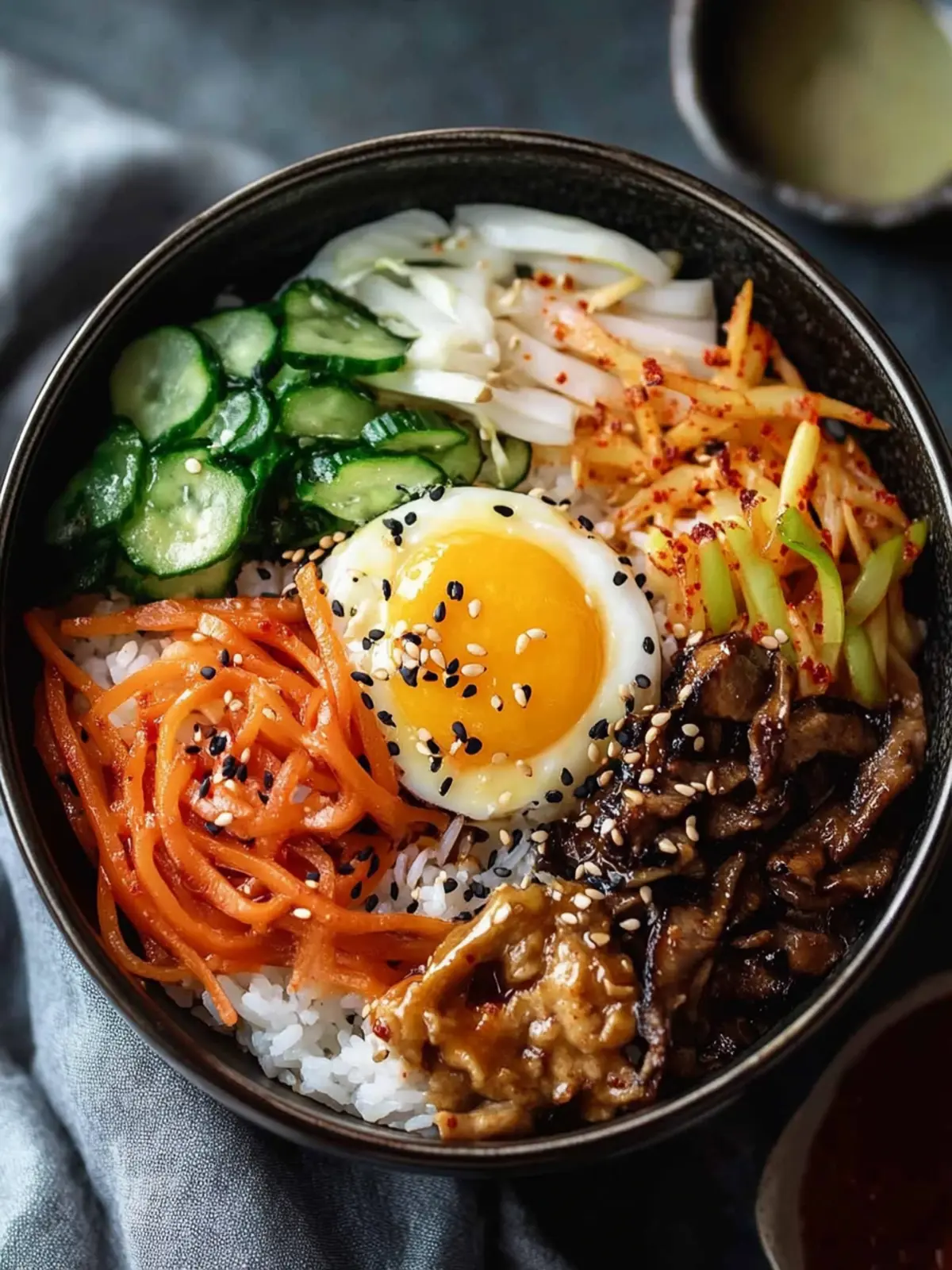
Korean Rice Bowl: Vibrant Flavors That Spark Joy
Ingredients
Equipment
Method
- In a bowl, combine the Bibimbap Sauce ingredients, stirring until the sugar dissolves completely.
- In another bowl, mix the beef marinade ingredients and add the sliced beef. Let it marinate for at least 30 minutes.
- Heat 2 teaspoons of oil in a large skillet over high heat. Remove excess marinade from the beef and add it to the skillet. Cook for about 3 to 4 minutes, until browned.
- Soak the shiitake mushrooms in boiling water for 30 minutes. Drain, squeeze out extra water, and slice.
- In the same skillet, heat 2 teaspoons of oil over medium-high heat. Cook the shiitake mushrooms for about 2 minutes and add soy sauce, sugar, and garlic.
- Add another 2 teaspoons of oil to the skillet. Cook the carrot batons for 5 to 8 minutes.
- Repeat with the zucchini, cooking for about 4 minutes.
- Heat 2 teaspoons of vegetable oil with a splash of sesame oil. Sauté the spinach until it starts to wilt.
- Simmer the bean sprouts in water for 5 minutes. Mix with sesame oil, garlic, and fish sauce.
- Fry the eggs as desired.
- Assemble bowls with warm rice, sautéed vegetables, marinated beef, and a fried egg. Sprinkle with sesame seeds.