
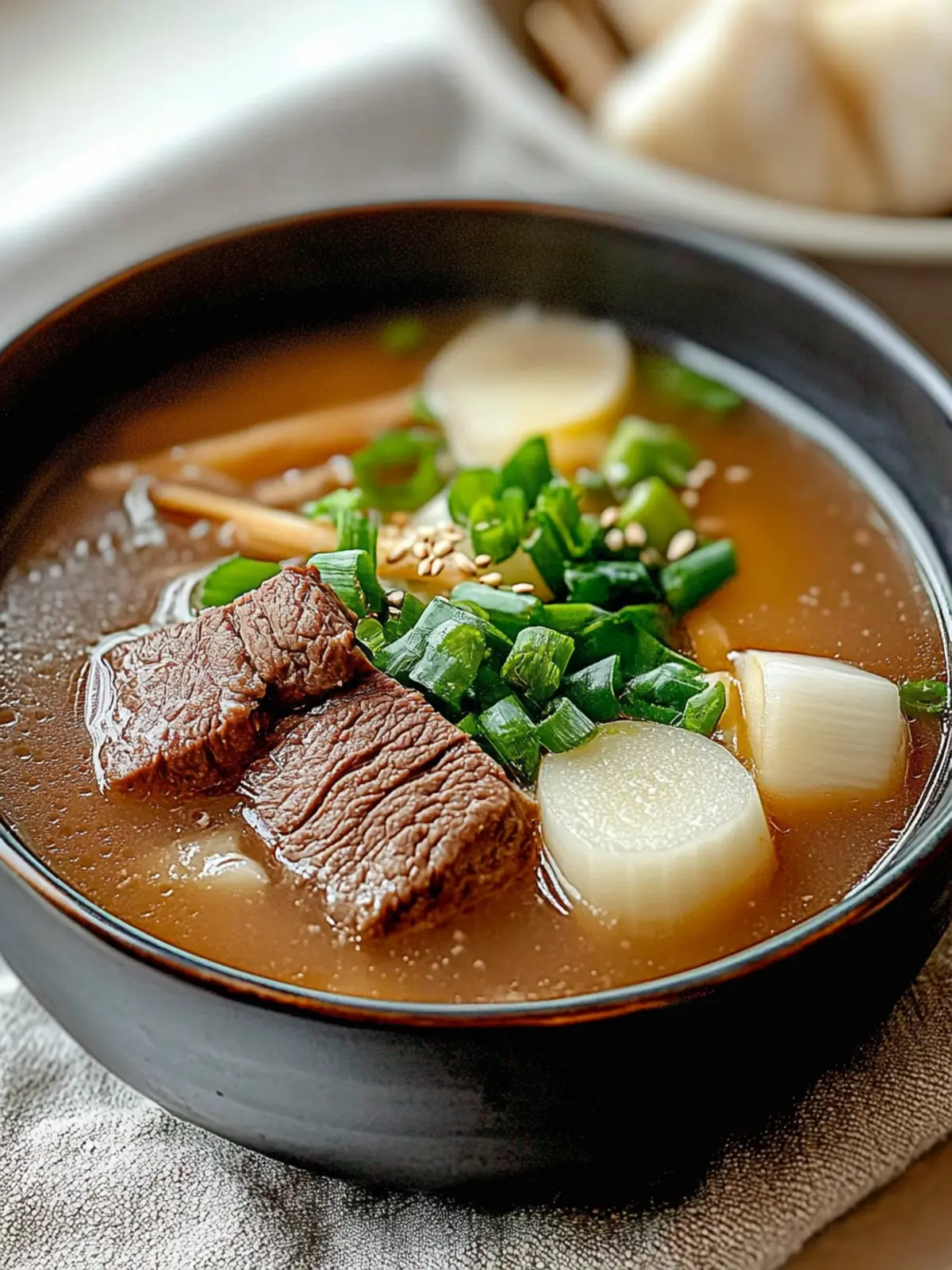
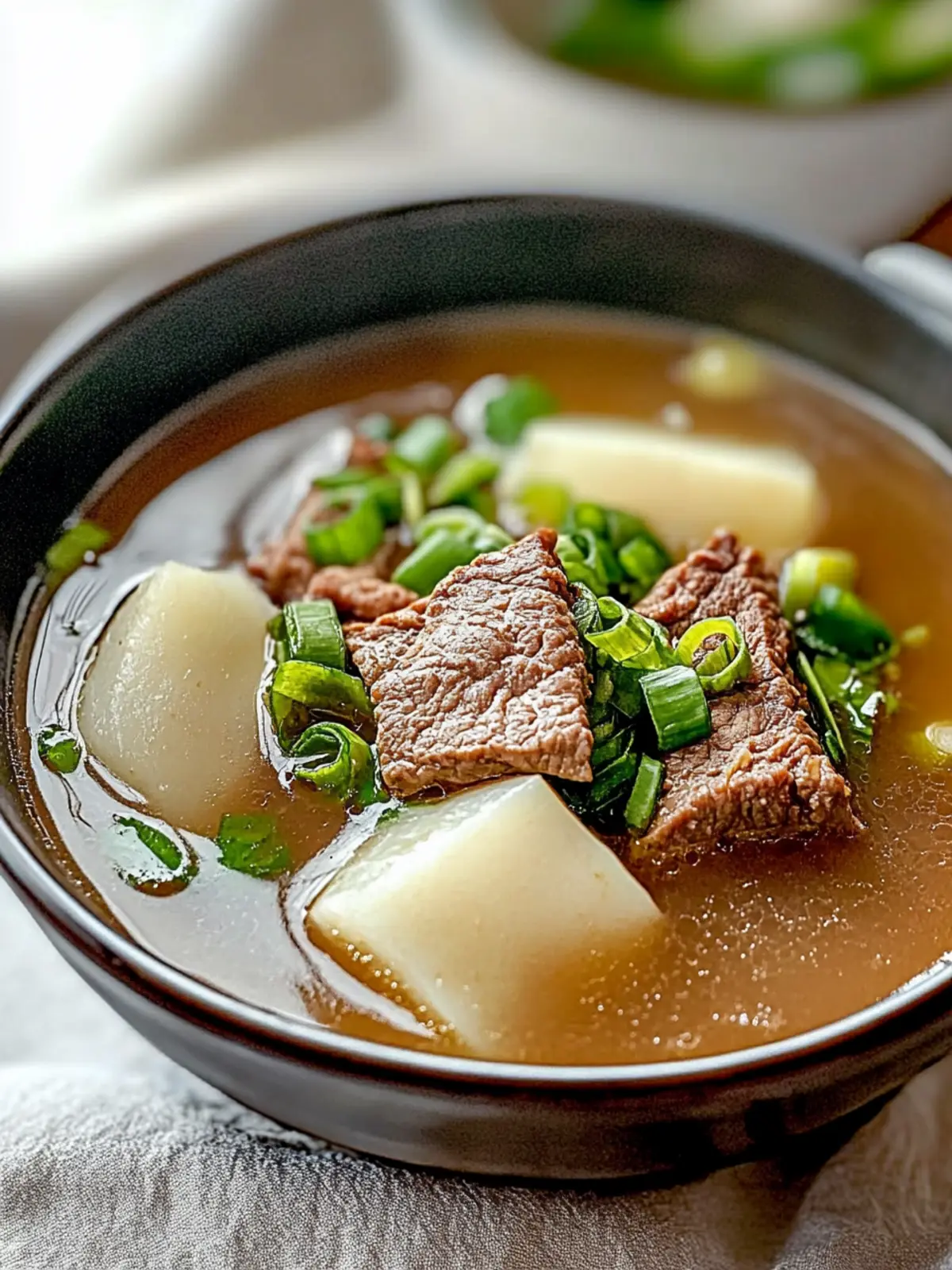
As the nights grow longer and the chill of winter settles in, there’s nothing quite like the comfort of a warm bowl of homemade soup. The first time I ladled this Korean Winter Soup into my bowl, I was immediately enveloped in its rich aroma—a delightful blend of tender beef, velvety tofu, and aromatic vegetables simmering away in a savory broth. It was a blissful moment, one that made me forget the cold beyond my window.
This dish is not just a meal; it’s a cozy experience that warms your heart as much as it does your body. With its flexible ingredients, you can easily cater to your dietary preferences without sacrificing flavor. Whether you’re craving the comforting taste of beef, the softness of tofu, or a vegetarian twist, this soup is your go-to solution for these chilly evenings. Prepare to indulge in a bowl that’s as satisfying as it is nourishing—perfect for a family gathering or a solo evening indulgence. Let’s dive into this delightful recipe that promises to warm not just your kitchen but also your spirit!

Why is Korean Winter Soup a Must-Try?
Comforting warmth: This soup envelops you in a cozy embrace, making it the perfect antidote to cold winter nights.
Flavorful depth: The rich broth, infused with tender beef and aromatic vegetables, delivers an irresistible taste that lingers.
Flexible ingredients: Easily adapt this recipe with substitutions for dietary preferences, so everyone can enjoy.
Quick prep: With minimal effort, you can create a hearty meal that feels like a warm hug in a bowl.
Looking for variations? The recipe’s adaptability allows for unique twists, making it a versatile addition to your cooking repertoire.
Korean Winter Soup Ingredients
For the Broth
• Beef short ribs – Provides rich flavor and tender texture; substitute with beef shank or oxtail for similar results.
• Guk ganjang (Korean soup soy sauce) – Deepens the savory notes of the broth; can be replaced with standard soy sauce and a dash of fish sauce.
• Garlic – Enhances the overall flavor profile; ensure to chop finely for even distribution.
• Ginger – Adds warmth and spice; use fresh ginger, sliced or crushed, for best flavor.
For the Soup Base
• Tofu – Adds creaminess and protein; opt for soft tofu for a delicate texture.
• Radish – Contributes depth and a slight sweetness; use Korean radish or daikon, cut into slices.
• Korean leeks (or substitutes) – Provides a distinctive aromatic flavor; substitute with regular leeks or a mix of green onions and chives.
For Garnishing
• Green onions – Used for garnish and added flavor at serving; freshly sliced before serving is best.
This flavorful Korean Winter Soup is sure to deliver warmth and comfort on those chilly nights!
How to Make Korean Winter Soup
-
Soak the Ribs: Begin by soaking the beef short ribs in cold water for 1 hour. This step helps draw out any excess blood and results in a clearer broth. Alternatively, you can flash boil and discard the water for quicker prep.
-
Prepare Aromatics: While the ribs soak, prepare your aromatics. Keep the skin on the whole yellow onion, and slice the ginger and garlic. Chop the green onions as well; these will enhance the depth of flavor in your soup.
-
Combine Ingredients: In a large stock pot, combine the soaked ribs, prepared aromatics, and 10 cups of water. This mixture will form the backbone of your savory broth.
-
Boil and Skim Foam: Bring the pot to a boil over medium-high heat. You’ll notice foam rising to the surface; skim it off periodically to maintain a clear broth.
-
Simmer Gently: Once boiling, reduce the heat to medium-low and let it simmer uncovered for about 1 hour. Remember to skim the foam every now and then for a beautifully clear soup.
-
Add Radish: After the hour of simmering, add the radish slices. Continue simmering for an additional 20 minutes, or until the radish is tender and absorbs the broth’s flavors.
-
Season the Broth: Discard the aromatics from the pot. Season your broth with guk ganjang and salt, then simmer for another 10 minutes to meld all the wonderful flavors together.
-
Serve: Ladle the soup into bowls and garnish with freshly sliced green onions and a sprinkle of black pepper. Serve it alongside warm rice for a complete and comforting meal.
Optional: Add a dash of sesame oil for an extra layer of flavor.
Exact quantities are listed in the recipe card below.
What to Serve with Korean Winter Soup?
As the rich aroma of your savory stew fills the kitchen, consider these delightful pairings to create a comforting meal that warms both heart and soul.
-
Steamed Rice: A classic accompaniment, the fluffy grains absorb the broth beautifully, making each bite even more satisfying.
-
Kimchi: This traditional Korean side dish adds a tangy crunch that contrasts wonderfully with the soup’s warmth, enhancing your dining experience.
-
Fresh Green Salad: Crisp greens with a light vinaigrette offer a refreshing balance to the rich flavors of the soup, making for a vibrant plate.
-
Pickled Radishes: Their sharp, sweet flavor brightens each spoonful, complementing the earthiness of the broth while adding a delightful pop of color.
-
Sesame Spinach: This savory side, lightly sautéed and sprinkled with sesame seeds, echoes the Korean theme while introducing a healthy green element to the table.
-
Korean Pancakes: These crispy, savory treats pair perfectly, adding texture and an additional layer of flavor that complements the comfort of the soup.
-
Hot Tea or Soju: For drinks, serve with a warm cup of Korean barley tea or a glass of soju, both enhancing the meal’s authenticity and warmth.
Enjoy crafting a meal that not only soothes on those chilly evenings but also brings loved ones together for cozy moments.
Expert Tips for Korean Winter Soup
-
Clear Broth Reminder: Skim foam regularly while simmering. This ensures a beautifully clear broth, enhancing the aesthetic and taste of your Korean Winter Soup.
-
Flavor Gradation: Adjust seasoning in small increments. Especially when using substitutes, taste frequently to achieve the perfect balance without overwhelming the broth.
-
Tofu Texture Tips: For softer texture, use soft tofu, while firm tofu holds its shape better. Adjust cooking times based on your choice to maintain the ideal texture in your soup.
-
Vegetarian Swap: For a vegetarian version, replace beef with hearty portobello mushrooms or seitan, adjusting cooking times for each to keep flavors robust.
-
Ingredient Flexibility: Feel free to incorporate seasonal vegetables like carrots or mushrooms. This not only adds nutrition but also customizes the soup to your taste.
-
Serving Suggestions: Serve hot with a side of steamed rice and pickled vegetables for a complete, comforting meal that warms both body and soul.
Make Ahead Options
These comforting Korean Winter Soup options are perfect for meal prep enthusiasts! You can soak the beef short ribs and prepare the aromatics up to 24 hours in advance; just store them separately in the refrigerator to maintain freshness. The soup base can be simmered and cooled completely, then refrigerated for up to 3 days. To finish, simply add the radish and reheat the soup over low heat, ensuring it warms gently to preserve the tenderness of the beef and tofu. By prepping ahead, you’ll save precious time on busy weeknights while still enjoying a deliciously warm and nourishing bowl of Korean Winter Soup!
Storage Tips for Korean Winter Soup
Fridge: Store your leftover Korean Winter Soup in an airtight container for up to 3 days. Ensure it’s cooled completely before sealing to maintain freshness.
Freezer: For longer storage, freeze the soup in individual portions. It can last up to 3 months. Thaw overnight in the fridge before reheating.
Reheating: Gently reheat on the stove or in the microwave, adding a splash of water if needed to revive the broth’s consistency. Enjoy this cozy soup warm!
Korean Winter Soup Variations
Feel free to get creative and customize your soup to fit your taste and dietary needs!
-
Dairy-Free: Replace any dairy-based ingredients with coconut milk for a subtle sweetness and creamy texture.
You’ll enjoy a lush broth that still feels indulgent and hearty, perfect for those who prefer a dairy-free option! -
Vegetarian: Swap beef for large portobello mushrooms or seitan, giving you that satisfying umami flavor without meat.
This twist remains comforting while allowing the earthiness of mushrooms to shine through in every spoonful. -
Gluten-Free: Use tamari instead of soy sauce to keep it gluten-free while still ensuring a savory broth.
The rich flavor of the tamari will seamlessly blend, keeping the essence of this comforting soup intact. -
Hearty Veggie Boost: Add diced carrots, bok choy, or baby spinach for an extra layer of nutrition and vibrant color.
These additions not only enhance the flavor but also bring in more textures that elevate your soup experience. -
Spicy Kick: Toss in a few sliced jalapeños or a dash of gochugaru for a delightful heat that warms body and soul.
This fiery variation offers an exciting twist, making your soup feel lively and invigorating on chilly days. -
Rich Broth Variation: Experiment with adding a splash of red wine or a spoonful of miso paste for a deeper flavor profile.
Both options elevate the savory tones, delivering an even richer experience that feels sophisticated yet comforting. -
Noodle Addition: Incorporate rice noodles or your favorite pasta for a heartier meal that fills you up.
These little carbs add a lovely texture that keeps you satisfied and ready for seconds or thirds! -
Seasonal Swaps: Use seasonal vegetables like squash or zucchini to embrace what’s fresh and add your unique spin.
This adaptable recipe allows you to enjoy it year-round, enhancing flavors to reflect each season’s best offerings!
Korean Winter Soup Recipe FAQs
What type of beef should I use for Korean Winter Soup?
Absolutely! While beef short ribs provide a wonderful richness, you can also use beef shank or oxtail for similar flavor and tenderness. Both options work beautifully, adding depth to the broth and making the soup feel like a warm hug on chilly evenings.
How long can I store leftover Korean Winter Soup?
You can store your delicious soup in an airtight container in the refrigerator for up to 3 days. Make sure it’s cooled completely before sealing to keep it fresh and tasty. If you want to save it for later, it can be frozen for up to 3 months. Just remember to thaw it overnight in the fridge when you’re ready to enjoy it again!
Can I freeze Korean Winter Soup?
Certainly! To freeze, allow the soup to cool before transferring it to individual portions in freezer-safe containers. This way, you can pull out just what you need later on. When you’re ready to serve, thaw it overnight in the fridge and reheat gently on the stove, adding a splash of water if necessary to revive the broth’s consistency.
What if my broth turns cloudy during cooking?
If your broth becomes cloudy, it might be due to the foam that forms while the soup simmers. Skimming off this foam regularly helps maintain a clearer broth. If you haven’t done so, make sure to skim foam while it simmers to keep that beautiful clear look we all love.
Can I make a vegetarian version of Korean Winter Soup?
Very much! To create a vegetarian version, simply replace the beef with hearty options like large portobello mushrooms or seitan. Adjust the cooking times accordingly to ensure everything is cooked through and the flavors meld together nicely. You can still enjoy all the warmth and comfort of this wonderful soup without any meat!
What types of substitutions can I use for dietary restrictions?
There are plenty of substitutions! For a gluten-free option, you can replace guk ganjang with tamari. If you prefer a plant-based protein, consider using beans or lentils instead of tofu. The key is to keep the seasoning balanced, so make sure to taste as you go along for the best results. Enjoy experimenting!
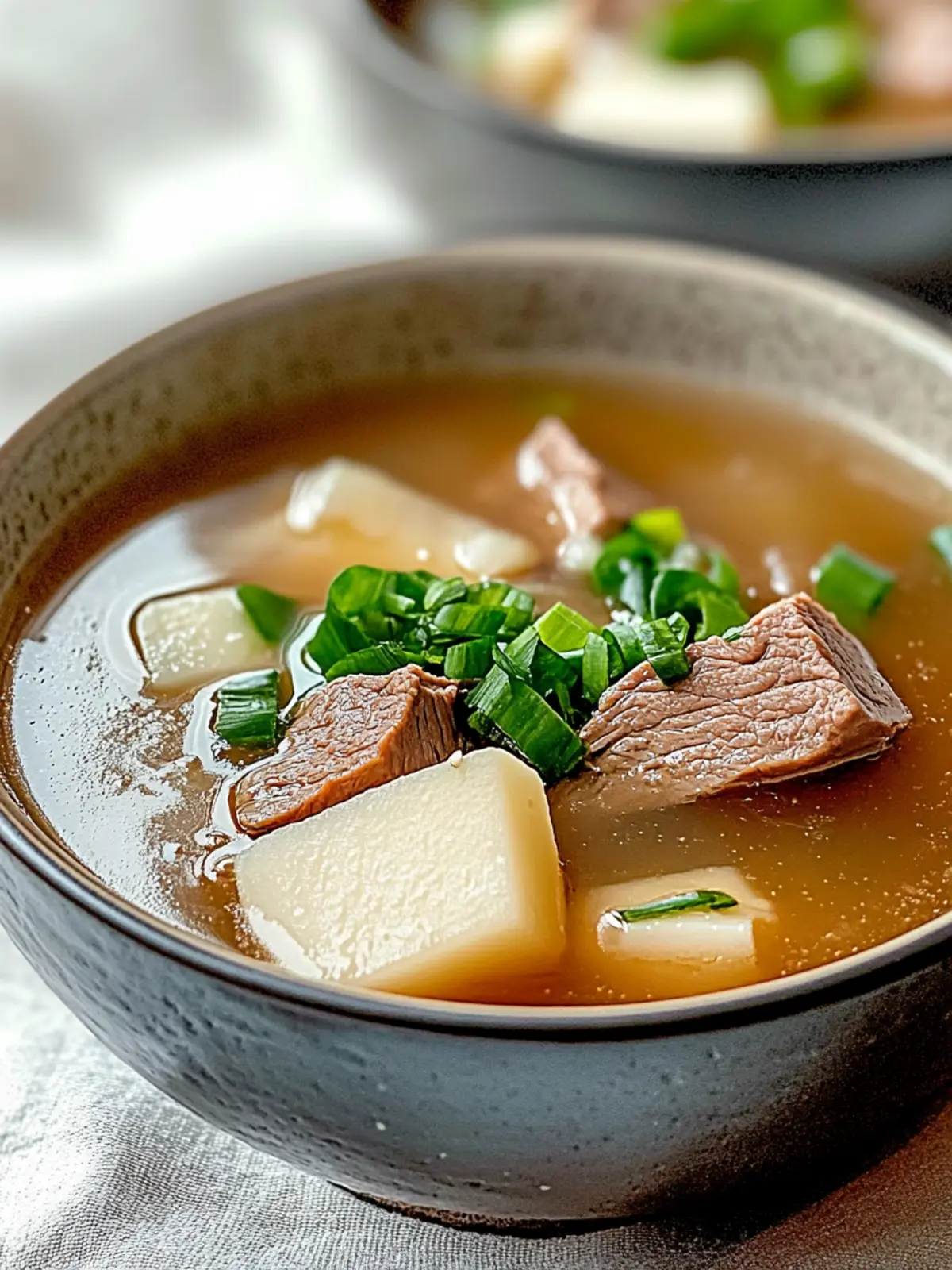
Warm Up with Korean Winter Soup: A Cozy Comfort Fix
Ingredients
Equipment
Method
- Soak the beef short ribs in cold water for 1 hour to help draw out excess blood.
- Prepare garlic, ginger, and green onions while the ribs soak.
- Combine soaked ribs, prepared aromatics, and 10 cups of water in a large stock pot.
- Bring to a boil over medium-high heat, skimming foam that rises to the surface.
- Reduce heat to medium-low and simmer uncovered for about 1 hour, skimming foam occasionally.
- Add radish slices and simmer for an additional 20 minutes until tender.
- Discard aromatics, season broth with guk ganjang and salt, simmer for another 10 minutes.
- Ladle soup into bowls, garnish with green onions and serve it with warm rice.