
When I first bit into a Gimmari, I was taken aback by the delightful crunch that enveloped the chewy goodness within. This simple yet enchanting dish beautifully marries the flavors of Korean glass noodles and the delicate, salty essence of seaweed. Imagining a gathering of friends, I realized these crispy seaweed rolls would be the star of the table—perfect for those who are tired of fast food and craving something homemade yet surprisingly accessible.
It’s often the simplest recipes that evoke the most joy in the kitchen. These fried seaweed rolls might look a bit fancy, but they come together quickly, making them a great choice for weeknight dinners or special occasions. With a unique blend of ingredients and a dipping sauce to tie everything together, Gimmari is not just a meal—it’s an experience worth sharing. So grab your frying pan, and let’s dive into this deliciously comforting recipe that brings a taste of Korea straight to your home!
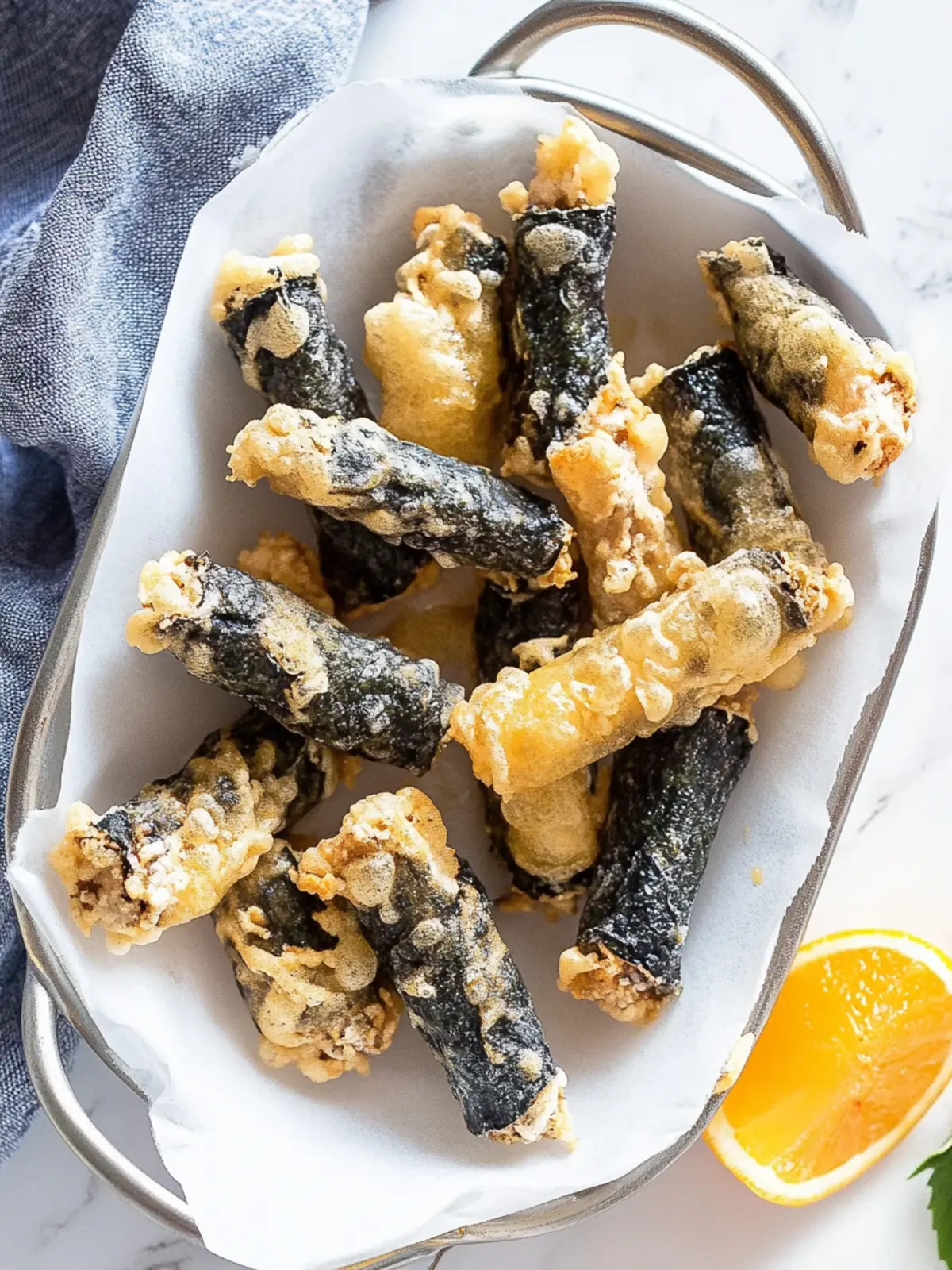
Why is Gimmari your new favorite snack?
Crispy texture: The delightful crunch of fried seaweed adds a fun twist to your snacking routine.
Savory goodness: Combining glass noodles and fresh veggies creates a mouthwatering filling.
Quick prep: With just 30 minutes from start to finish, it’s a time-saver for busy cooks.
Perfect for sharing: Wow your friends and family with these impressive, bite-sized delights at any gathering.
Versatile option: Enjoy them on their own or with a delicious Korean soy dipping sauce for an added flavor boost.
Now, gather your ingredients and elevate your homemade snack game with this fantastic recipe!
Gimmari Ingredients
• Let’s gather everything you’ll need to make these crunchy delights!
For the Seaweed Rolls
• Dried seaweed sheets – These serve as a crisp wrapper with a delightful umami flavor.
• Korean glass noodles – They add a chewy texture that pairs beautifully with the seaweed.
• Carrot – Adds a pop of color and sweetness (optional but recommended!).
• Garlic chives – They bring a fresh, subtle onion flavor to the filling for added sophistication.
For the Batter
• Cooking oil for deep frying – Essential for achieving that golden, crispy finish.
• Soy sauce – A splash adds depth of flavor to the filling.
• Fine sea salt – Enhances the overall taste of the dish.
• Sesame oil – Just a hint for that rich, nutty essence!
• Ground black pepper – A few sprinkles add a touch of warmth.
For Frying
• Potato starch (or cornstarch) – Creates a light, crispy batter when fried.
• Water – Helps to combine the starch and create the batter consistency.
• Cooking oil or cornstarch, sifted – Ensures a smooth batter without lumps.
• Egg white, sifted – Adds a lightness to the batter for crispier rolls.
With these ingredients, you’re just moments away from tasting the wonderful Gimmari. Happy cooking!
How to Make Gimmari
-
Soak noodles: Begin by soaking the glass noodles in a large bowl of water for 10 minutes. This step softens the noodles and makes them easier to work with. After soaking, boil them for 5 minutes on medium-high heat.
-
Prepare batter: In a medium-sized bowl, mix the potato starch and water to create the batter for frying. Set it aside for about 10-20 minutes while you prep the other ingredients.
-
Mix batter: Once the water has separated from the starch, discard the water. Combine the starch sediment with cooking oil and sifted egg whites, mixing until you reach a smooth consistency.
-
Combine filling: In a small bowl, mix together the soy sauce, salt, sesame oil, and black pepper. Add the diced carrots and garlic chives to the bowl with the cut glass noodles, then pour the sauce over and mix well with your hands.
-
Roll seaweed: Take the halved seaweed sheets and place a small amount of the noodle and vegetable mixture on each, covering about two-thirds of the sheet. Roll it up tightly, using water on the edge to seal, and set aside. Repeat this step until all ingredients are used.
-
Cut rolls: Use scissors to cut each rolled seaweed into three even pieces, making bite-sized portions perfect for snacking.
-
Heat oil: Fill a fryer or deep wok with cooking oil and heat it to 175°C (350°F). This high temperature is key to achieving that crispy texture.
-
Fry rolls: Dip each seaweed roll in the prepared batter before carefully adding them to the hot oil. Fry till golden and crispy, which should take about 1-2 minutes.
-
Avoid crowding: Make sure not to overcrowd the fryer; separate the rolls using deep fryer chopsticks as needed. When ready, remove the fried rolls and place them on paper towels to absorb excess oil.
-
Double fry (optional): For an extra crispy finish, consider frying the seaweed rolls a second time for 30 seconds to 1 minute. This simple step makes all the difference!
-
Serve: Enjoy your Gimmari hot and crispy, either on their own or paired with a delicious Korean soy dipping sauce for that perfect flavor complement.
Optional: Garnish with sesame seeds for an added crunch.
Exact quantities are listed in the recipe card below.
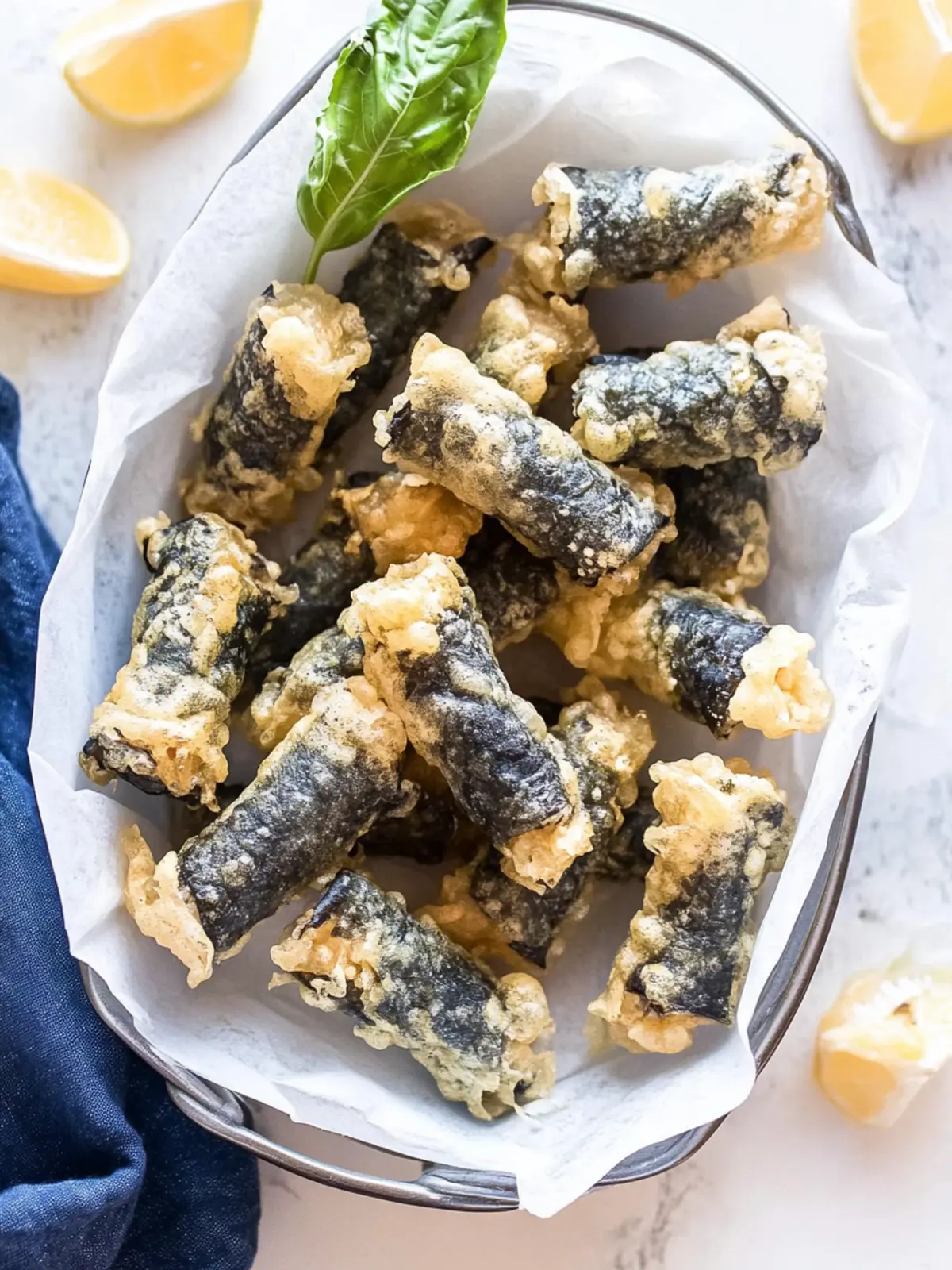
What to Serve with Gimmari?
Imagine a vibrant table filled with flavors, colors, and textures that perfectly complement these crispy seaweed rolls.
-
Spicy Dipping Sauce: A homemade sauce with a kick elevates the Gimmari, enhancing every crunchy bite with a perfect balance of heat and sweetness.
-
Soy Sauce & Sesame Oil Dip: This classic dip brings out the umami flavor in the Gimmari, creating a harmonious fusion of tastes that keeps you coming back for more.
-
Korean Fried Rice: The savory richness of fried rice adds heartiness to your meal. Pairing it with the delicate Gimmari creates a satisfying contrast that delights the palate.
-
Kimchi: This traditional side offers a fermented, tangy burst of flavor that cuts through the richness of the fried rolls. Its crunchiness complements the crispy Gimmari beautifully.
-
Fresh Cucumber Salad: A light, refreshing salad with crisp cucumbers and a zesty dressing brightens up the meal, bringing a fresh perspective that balances the savory flavors of the seaweed.
-
Green Tea: This soothing drink not only aids digestion but also refreshes the palate in between bites, making your snacking experience even more enjoyable.
-
Fruit Tart for Dessert: End the meal on a sweet note! The fruity and creamy layers of a tart provide a perfect contrast to the savory Gimmari, making your feast memorable.
With these serving ideas, your Gimmari will shine even brighter on your dinner table!
Make Ahead Options
These Gimmari are perfect for busy home cooks who love to meal prep! You can prepare the filling (noodles, carrots, and garlic chives mixed with the sauce) up to 24 hours in advance; simply store it in an airtight container in the refrigerator. To maintain quality, ensure you keep the filling tightly covered to prevent moisture loss. You can also roll your seaweed rolls ahead of time and refrigerate them for up to 8 hours before frying. When you’re ready to whip up this delightful snack, simply heat the oil, dip the rolls in the batter, and fry until golden brown—turning a bit of prep time into an effortless and delicious homemade treat!
Gimmari Variations & Substitutions
Feel free to get creative and personalize your Gimmari with these fun variations!
-
Vegetarian: Substitute glass noodles with spiralized zucchini for a fresh twist. Zucchini adds a vibrant color and lightness!
-
Spicy Kick: Add 1-2 teaspoons of gochugaru (Korean chili powder) to the filling for a fiery touch. It’s a great way to bring some heat to your snack!
-
Creamy Spin: Mix in a tablespoon of cream cheese or soft tofu in the filling for a richer taste. This variation creates a delightful, creamy texture that perfectly complements the crunch.
-
Herb Infusion: Switch garlic chives for finely chopped cilantro or parsley to add a different flavor profile. Fresh herbs brighten the rolls and enhance the overall taste.
-
Seafood Lovers: Incorporate small bits of cooked shrimp or crab meat into the noodle filling. This adds a delicious seafood twist that elevates your Gimmari!
-
Ditch the Fry: For a healthier option, try baking the rolls at 200°C (400°F) for 15-20 minutes until crispy. It’s a guilt-free way to enjoy these savory delights!
-
Nutty Flavor: Sprinkle sesame seeds both in the filling and as a garnish after frying for added crunch and a nutty flavor. It enhances that beautiful Asian-inspired taste!
-
Different Dipping Sauce: Swap the Korean soy dipping sauce for sweet chili sauce or ponzu for a tangy twist that pairs wonderfully. These options bring different flavor notes to the table, exciting your palate.
Experimenting with these variations will not only showcase your culinary flair but also allow you to adjust the recipe to your family’s tastes! Happy cooking!
How to Store and Freeze Gimmari
Room Temperature: Gimmari is best enjoyed fresh, but if left out, you can keep it at room temperature for up to 2 hours.
Fridge: Store any leftover Gimmari in an airtight container in the fridge for up to 3 days. Reheat in a hot skillet to regain some crispiness.
Freezer: If you want to freeze Gimmari, place the cooled rolls in a single layer on a baking sheet until solid, then transfer to an airtight container or freezer bag. They can stay frozen for up to 1 month.
Reheating: For the best texture, reheat frozen Gimmari in an air fryer or oven at 175°C (350°F) for about 10 minutes to warm through and re-crisp.
Expert Tips for Making Gimmari
Quality seaweed: Choose high-quality dried seaweed sheets that are crispy and fresh for the best flavor and texture.
Noodle prep: Soak the Korean glass noodles well to ensure they become tender. Overcooking can make them mushy, so boil just until soft.
Avoid soggy rolls: Pat the cooked noodles dry after rinsing to prevent excess moisture, which can lead to soggy Gimmari.
Frying temperature: Ensure your oil is hot enough before adding the rolls; otherwise, they may absorb too much oil and become greasy.
Batch frying: Fry in small batches to maintain oil temperature and ensure even cooking. This helps achieve that crispy, golden finish.
With these tips, your Gimmari will be a crunchy delight, elevating your homemade snack game!
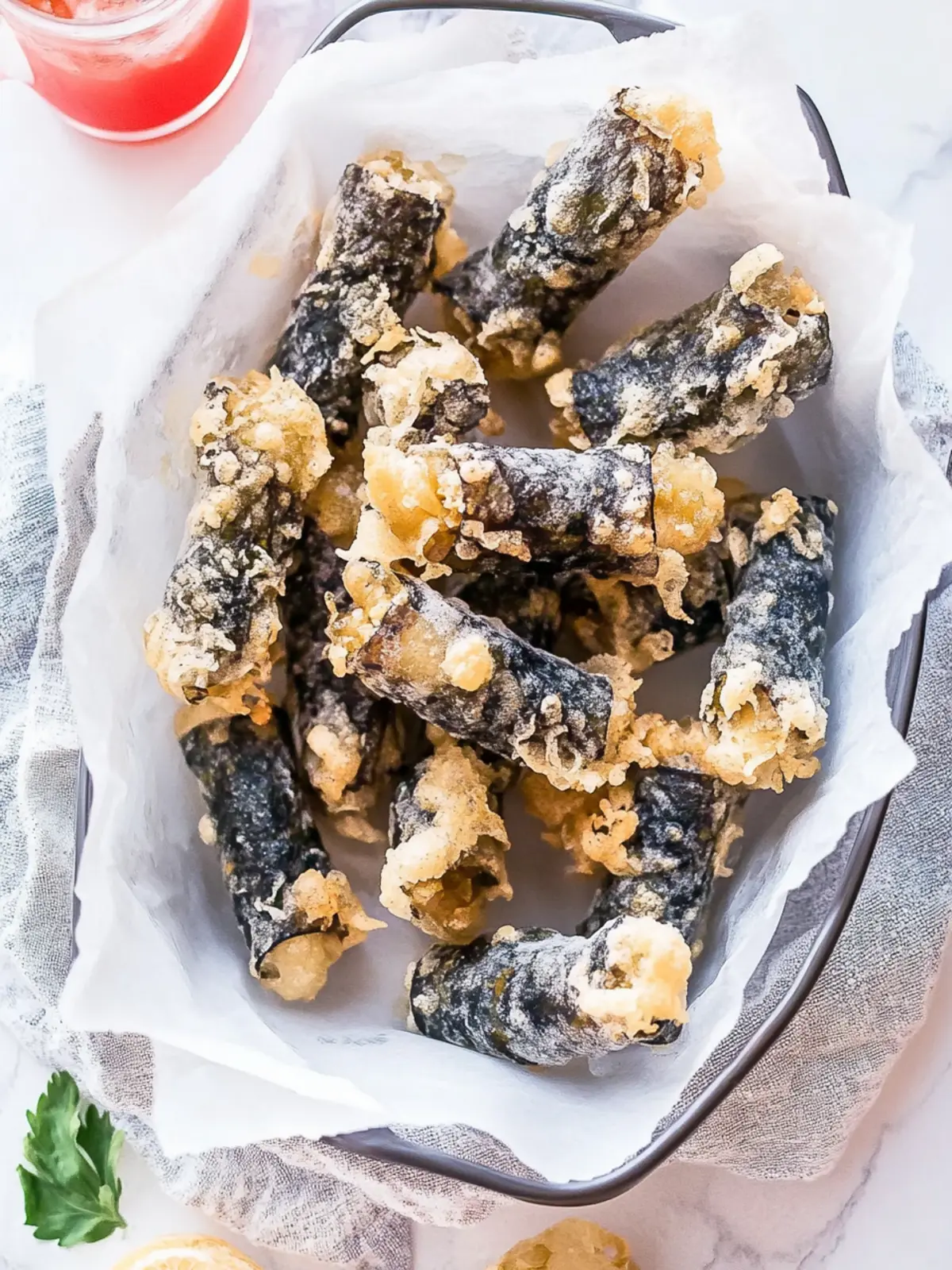
Gimmari Recipe FAQs
How do I choose the best dried seaweed for Gimmari?
Absolutely! When selecting dried seaweed sheets, look for brands that offer crispy, fresh sheets without any dark spots or signs of moisture. The quality of the seaweed greatly influences the flavor and texture of your Gimmari, so choose wisely. I often recommend checking the packaging for freshness dates to ensure you’re getting the best product possible.
How long can I store leftover Gimmari?
Yes, you can store leftover Gimmari in an airtight container in the fridge. They will stay fresh for up to 3 days. To enjoy them again, reheat in a hot skillet on medium heat for about 5 minutes. This method helps to regain some of their crispy texture while making them ready to enjoy again!
Can I freeze Gimmari? If so, how?
Absolutely! To freeze your Gimmari, first allow them to cool completely. Lay the rolls in a single layer on a baking sheet and place them in the freezer. Once frozen (about 2-3 hours), transfer them to an airtight container or freezer bag. They can be stored in the freezer for up to 1 month. When you’re ready to enjoy them, just warm them in an air fryer or oven at 175°C (350°F) for about 10 minutes for that crispy texture.
What if my Gimmari aren’t crispy after frying?
Very good question! If your Gimmari turn out less crispy than you’d like, it could be due to a few factors. Make sure the oil is hot enough—175°C (350°F) is perfect. Also, avoid overcrowding the fryer, as this can lower the oil temperature. If they are cooked but still not crispy, consider double frying them for 30 seconds to 1 minute to enhance that crunch!
Are there any dietary considerations for Gimmari?
Yes! If you or someone you’re serving has dietary restrictions, be mindful of the ingredients. Gimmari is not suitable for gluten-free diets due to the soy sauce. You can easily swap it out for a gluten-free soy sauce alternative. Additionally, the recipe contains egg, so you can look for substitutions like a flaxseed or chia seed mixture if you’re aiming for a vegan version.
Can I use other vegetables in my Gimmari filling?
Absolutely! Feel free to get creative with your filling. Some wonderful alternatives include finely shredded cabbage, bell peppers, or even mushrooms for added flavors. Whatever you choose, just remember to cut the vegetables into small pieces to maintain that delightful texture within your Gimmari rolls.
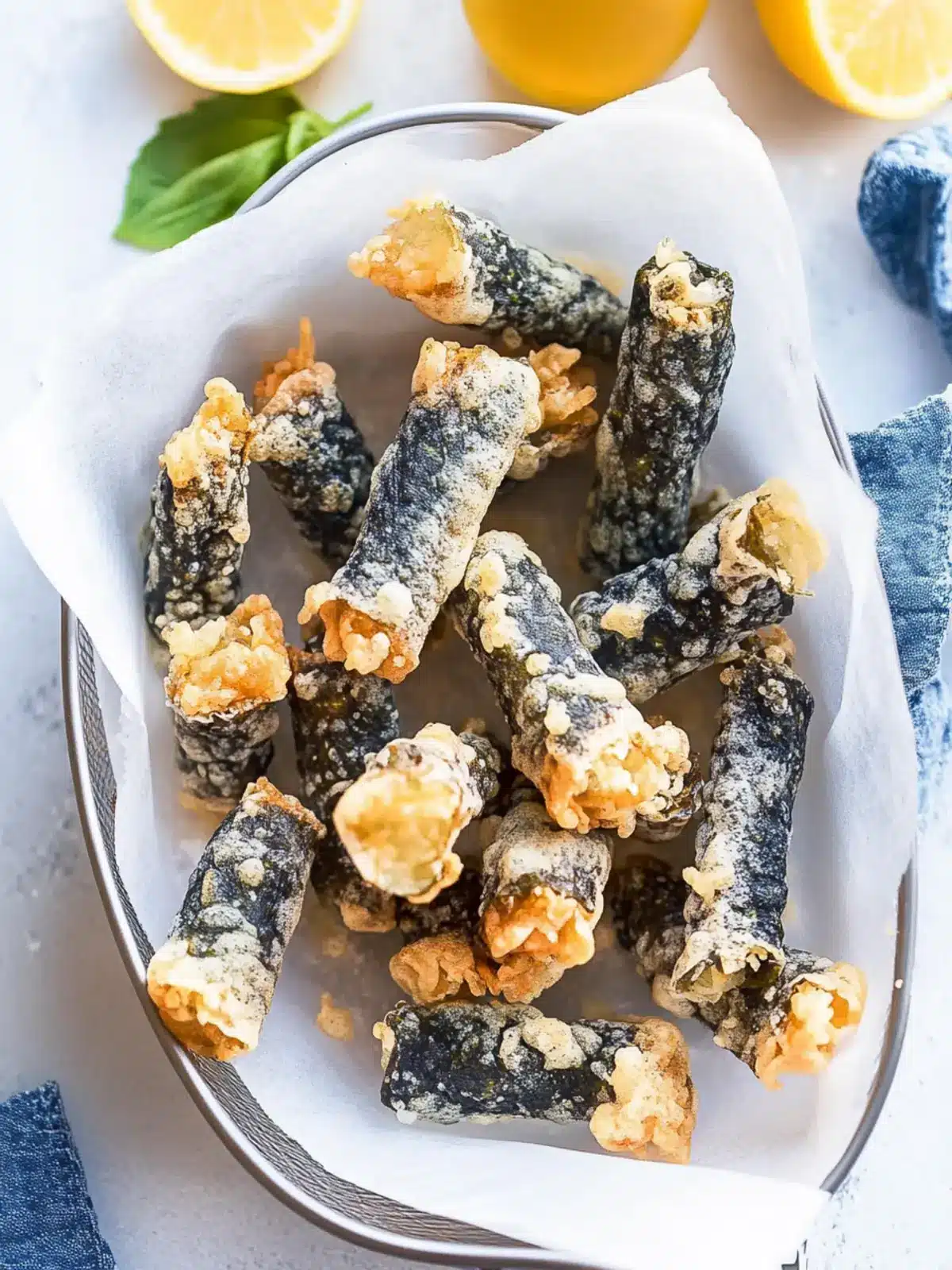
Crispy Gimmari: Your New Favorite Fried Seaweed Snack
Ingredients
Equipment
Method
- Soak the glass noodles in a large bowl of water for 10 minutes. Then boil for 5 minutes.
- In a medium bowl, mix potato starch and water to create the batter. Let sit for 10-20 minutes.
- Discard excess water from the starch and combine with cooking oil and sifted egg whites, mix until smooth.
- In a small bowl, mix soy sauce, salt, sesame oil, and black pepper. Add diced carrots and garlic chives.
- Take halved seaweed sheets, place noodle mixture on each, roll tightly, sealing with water.
- Cut each rolled seaweed into three pieces for bite-sized portions.
- Heat oil in fryer or wok to 175°C (350°F) for frying.
- Dip seaweed rolls in batter and fry until golden for 1-2 minutes.
- Avoid overcrowding the fryer; remove fried rolls to paper towels after cooking.
- For extra crispiness, fry rolls a second time for 30 seconds.
- Serve Gimmari hot, with dipping sauce or garnished with sesame seeds.